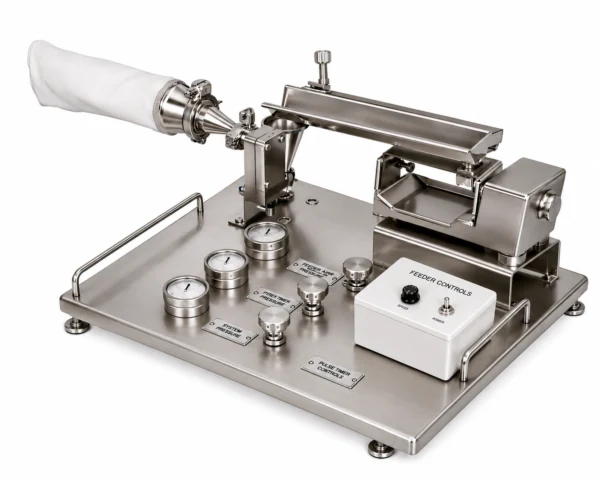
Fluid Energy Model 00 JET-O-MIZER
Dry fracture or deagglomeration when justified by the powder
Confirm: Feed behavior, gas compatibility, collection and particle damage.
View Fluid Energy Model 00 JET-O-MIZER
BATTERY CATHODE JET MILLING
Evaluate dry jet milling for cathode particle-size reduction and deagglomeration. Start with your material, retained particle properties and a feasibility review.
Cathode powder processing can include precursor mixing, mechanical activation, size reduction, deagglomeration and additive blending. The right operation depends on whether the feed is a synthesis ingredient or a finished active material, and which particle properties must be retained.
Glen Mills supplies equipment and application support for material preparation, mixing, separation and particle analysis. Start with the material and the objective; confirm equipment suitability through an application review and, where appropriate, a feasibility test.
A finer powder is not automatically a better cathode. Define the required distribution, morphology, contamination limits and exposure conditions before choosing a process.
20 MATERIAL-SPECIFIC STARTING POINTS
Choose the chemistry to review processing considerations, equipment candidates and the information needed for a useful trial.
Phosphates, layered oxides and spinels. Start with the chemistry, then identify whether the task is synthesis, deagglomeration or blending.
Layered oxides, Prussian White and phosphate research. Composition and exposure history belong in the processing brief.
Composite preparation requires attention to sulfur distribution, carbon contact, temperature and powder hazards.
| Your task | Routes to evaluate | What to check |
|---|---|---|
| Prepare synthesis ingredients | Planetary or mixer milling; blending | Composition, phase after reaction, wear and ingredient distribution |
| Separate loose clumps | Gentle handling; appropriate sieving; justified deagglomeration trial | Clumps versus primary crystals and retained particle architecture |
| Reduce a characterized dry feed | Jet or mechanical milling after suitability review | Full size distribution, surfaces, recovery and contamination |
| Distribute conductive additives | Blending or a defined composite-preparation route | Component distribution, segregation and retained morphology |
Cathode active material (CAM) is the synthesized powder intended to perform the active electrode function. Precursor preparation and finishing that active powder have different goals. For layered oxides, pCAM commonly denotes a precursor cathode active material; identify the actual precursor chemistry rather than applying that label to every material.
A representative solid-state preparation sequence, not a universal recipe. Other synthesis routes and chemistries use different stages.
Dry fracture or deagglomeration when justified by the powder
Confirm: Feed behavior, gas compatibility, collection and particle damage.
View Fluid Energy Model 00 JET-O-MIZER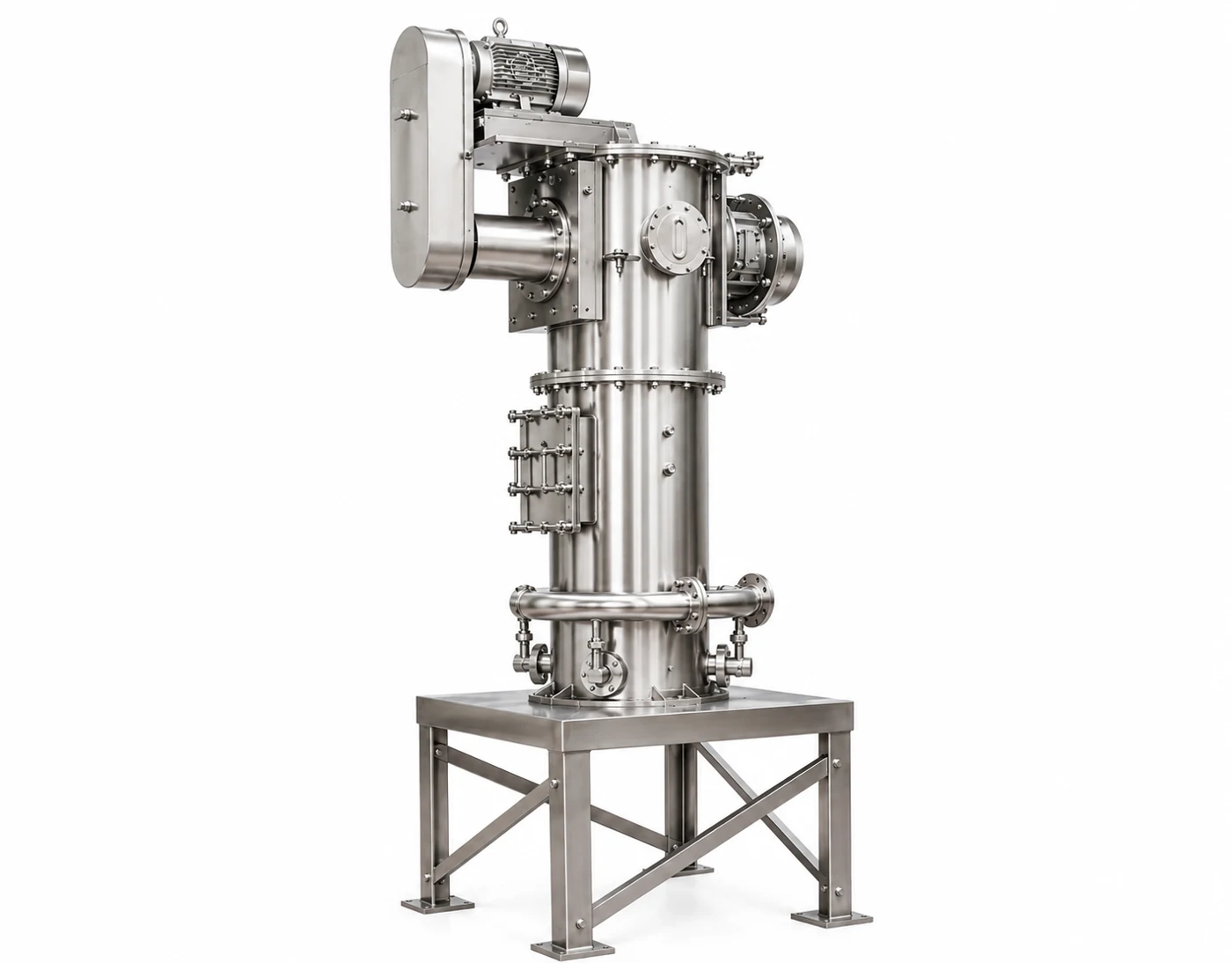
Jet-milling scale-up and active-classification review
Confirm: Material suitability, feed/collection configuration, capacity and scale-up validation.
View Fluid Energy ROTO-JET Jet MillThese are candidates for application review. Equipment listings do not establish cathode-specific performance, inert-gas capability or containment. Confirm the exact configuration with Glen Mills.
Explore the laboratory jet-mill range
Explore pilot and production jet mills
Ball milling and blending remain supporting preparation routes when the task calls for them. Compare the process mechanisms
Percentiles depend on the measurement and weighting basis. Report the method, dispersion conditions and complete curve. These labels are definitions, not target sizes or equipment guarantees.
Understand cathode particle size and morphology
Explore particle characterization equipment Discuss a quoted particle-analysis service
Share the chemistry, processing stage, quantity and current condition.
Confirm suitability, safety information, scope and acceptance measures before shipping.
Evaluate the intended change against morphology, contamination and retained function.
Review feeding, recovery, handling and the additional validation needed.
Free feasibility testing is subject to material suitability and an agreed scope. Confirm the available measurements and sample requirements before shipping. Production handling and throughput need their own validation.
Review the material-testing processChoose a mechanism around the powder change you need: precursor activation, particle fracture, loose-agglomerate separation or ingredient distribution.
A median size cannot describe an entire cathode powder. Read the distribution alongside particle architecture, sample preparation and the intended electrode process.
Atmosphere control covers the complete material path, including weighing, feeding, milling, collection and reopening the container.
Start with a laboratory jet-milling suitability review for your cathode powder. Define feed, gas, collection and retained particle properties before a trial.
No. The material, morphology, additives and process stage determine suitability. Gentle deagglomeration, precursor milling or blending may be more appropriate.
No. A precursor route may intentionally change structure and be followed by synthesis. A finished active powder may need its existing phase, coating and particle architecture preserved.
No universal size applies across these chemistries and electrode processes. Define the desired distribution and retained properties for the application.
No. The pages identify mechanisms and equipment to discuss. The exact tools, configuration and handling sequence require application-specific review.
Share material identity, SDS, working quantity, starting condition, desired change and handling limits. Agree on scope and shipping arrangements before sending a sample.
The material pages distinguish published background from proposed trial criteria. No universal fineness, cell-performance or atmosphere claim is made.
Prepared . Literature and manufacturer references support the discussion; they do not establish a tested Glen Mills recipe for your powder.
YOUR MATERIAL. YOUR NEXT STEP.
Tell us which powder you have, what needs to change and what must remain intact.
Start with a jet-milling suitability review. Request free feasibility testing or an equipment recommendation; the team will confirm whether dry jet milling fits the material and agree on scope before arranging a test.
Start with a nonconfidential description. Contact us before sharing proprietary formulations, and wait for written shipping instructions before sending material.