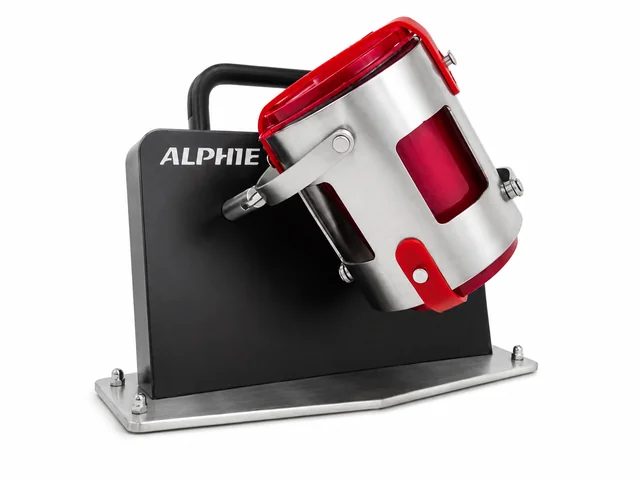
 Alphie 2 Liter Manual Powder Blender ↗
Hands-on formulation.
2 L nominal; manual operation · Maximum mixing mass: 2 kg (configuration dependent)

POWDER MIXING & BLENDING
Mix powders with different sizes, densities, shapes and concentrations. Explore 3D inversion mixing - from removable laboratory containers to fixed-drum and removable-container production systems.
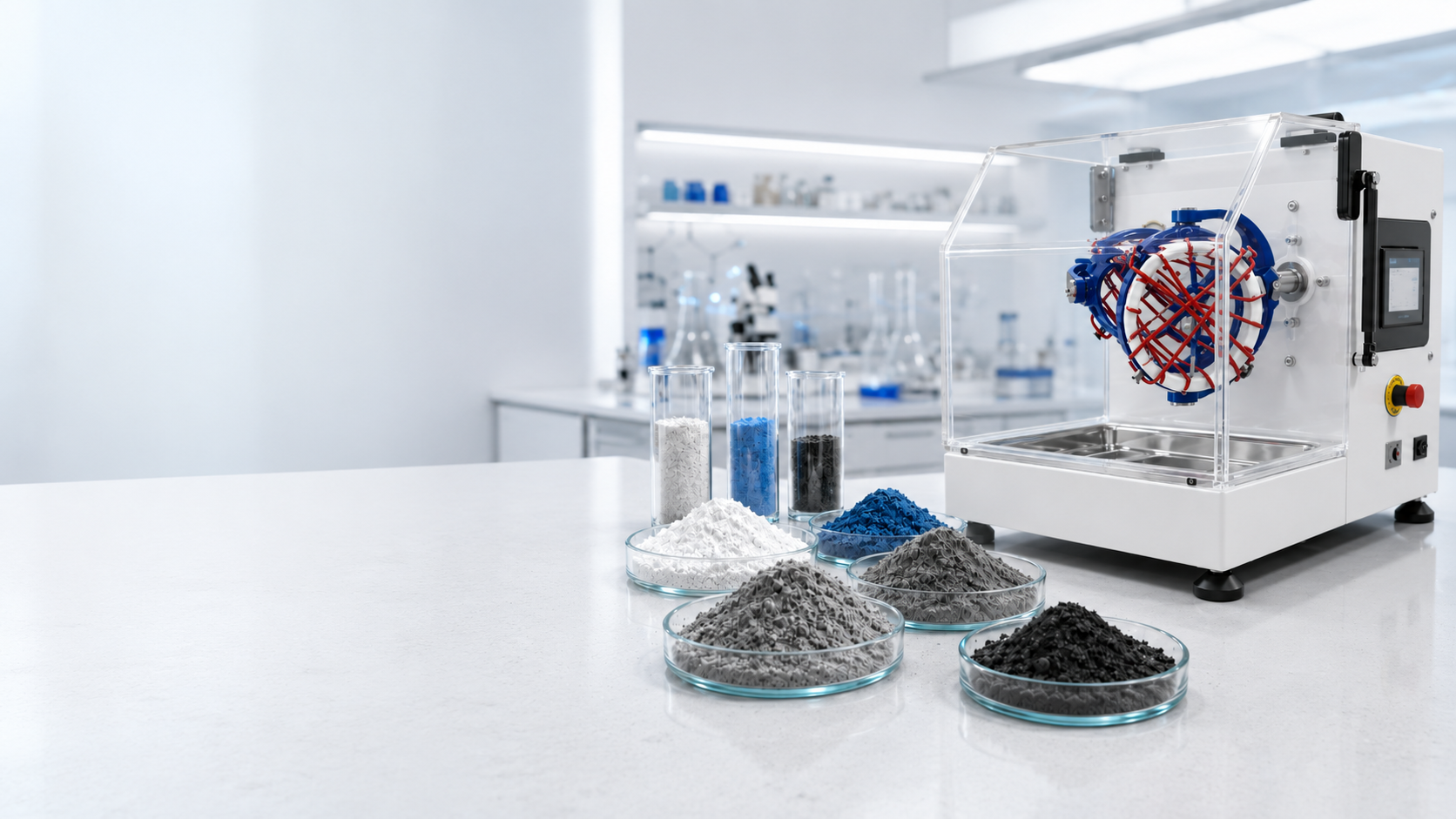
A PRACTICAL SELECTION HELPER
Compare manual, programmable and engineered production blenders using your working batch volume and mass. Keep density, useful fill and material handling in the decision.
Alphie 2 Liter Manual Powder Blender ↗Hands-on formulation.
2 L nominal; manual operation · Maximum mixing mass: 2 kg (configuration dependent)
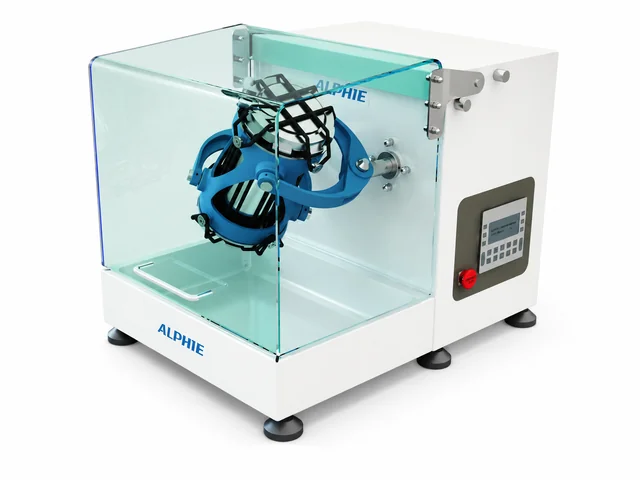 Alphie 3 Powder Blender ↗
Move from formulation to a controlled blending cycle.
3 L nominal / 2.4 L reference effective volume · Maximum mixing mass: 5 kg
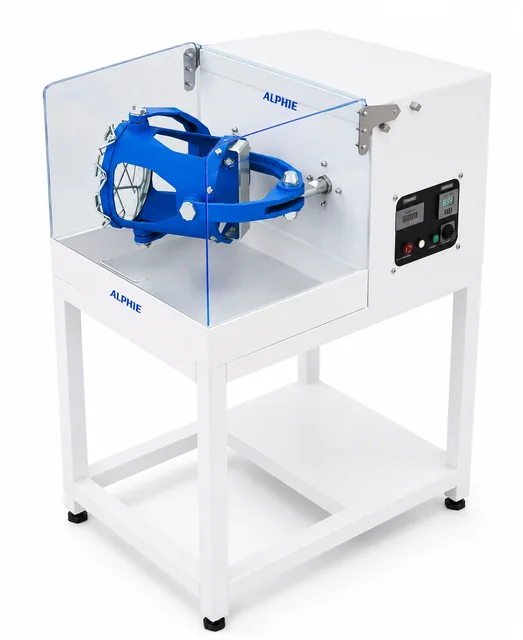 Alphie 10 Powder Blender ↗
Develop a larger laboratory batch with the same container-based approach.
10 L nominal / 8 L reference effective volume · Maximum mixing mass: 15 kg
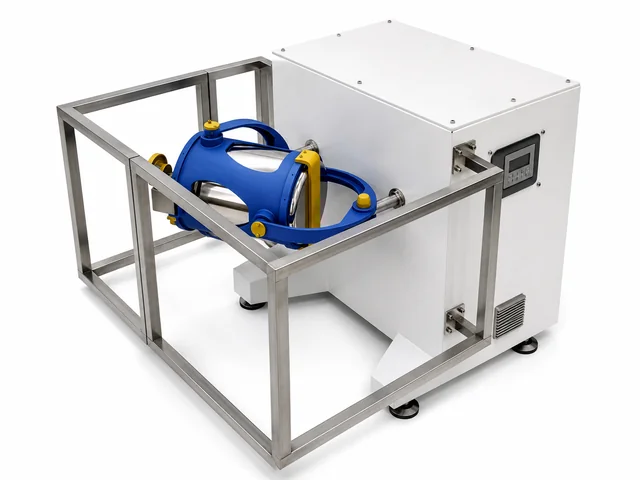 Alphie 20 Powder Blender ↗
Take your formulation into the pilot batch.
20 L nominal / 16 L reference effective volume · Maximum mixing mass: 30 kg
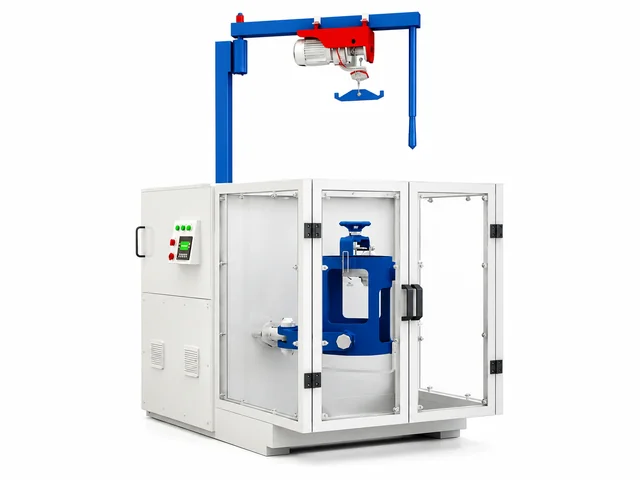 Alphie 35 Liter Powder Blender ↗
Build process knowledge at a larger batch size.
35 L nominal / 28 L reference effective volume · Maximum mixing mass: 60 kg (configuration dependent)
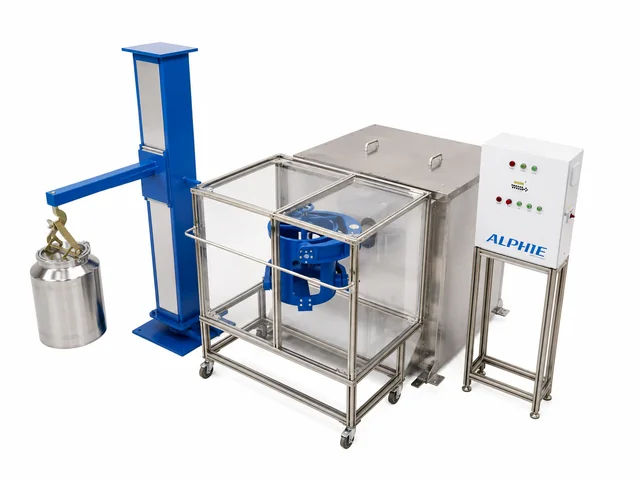 Alphie 50 Powder Blender ↗
Bridge pilot development and small production.
50 L nominal / 40 L reference effective volume · Maximum mixing mass: 90 kg (configuration dependent)
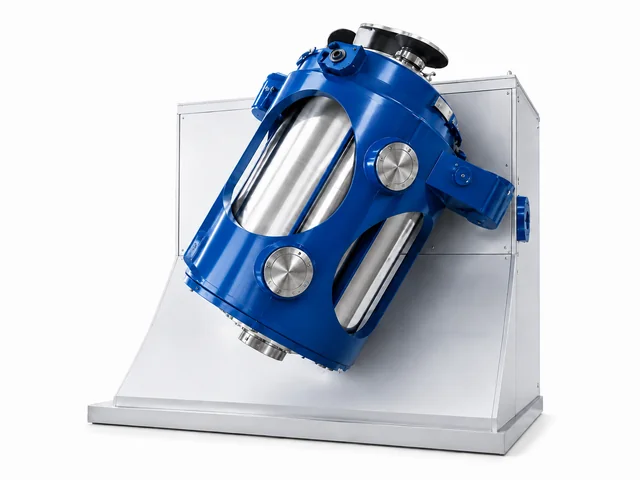 Alphie production systems ↗
Engineered larger-batch systems with removable or fixed containers. Specify the working volume, bulk density, load and handling together.
Published nominal range starts at 100 L and extends beyond 1,500 L
START WITH THE MIXING PROBLEM
Select your challenge. We’ll help match the powder, vessel, mixer size, operating conditions and validation plan.
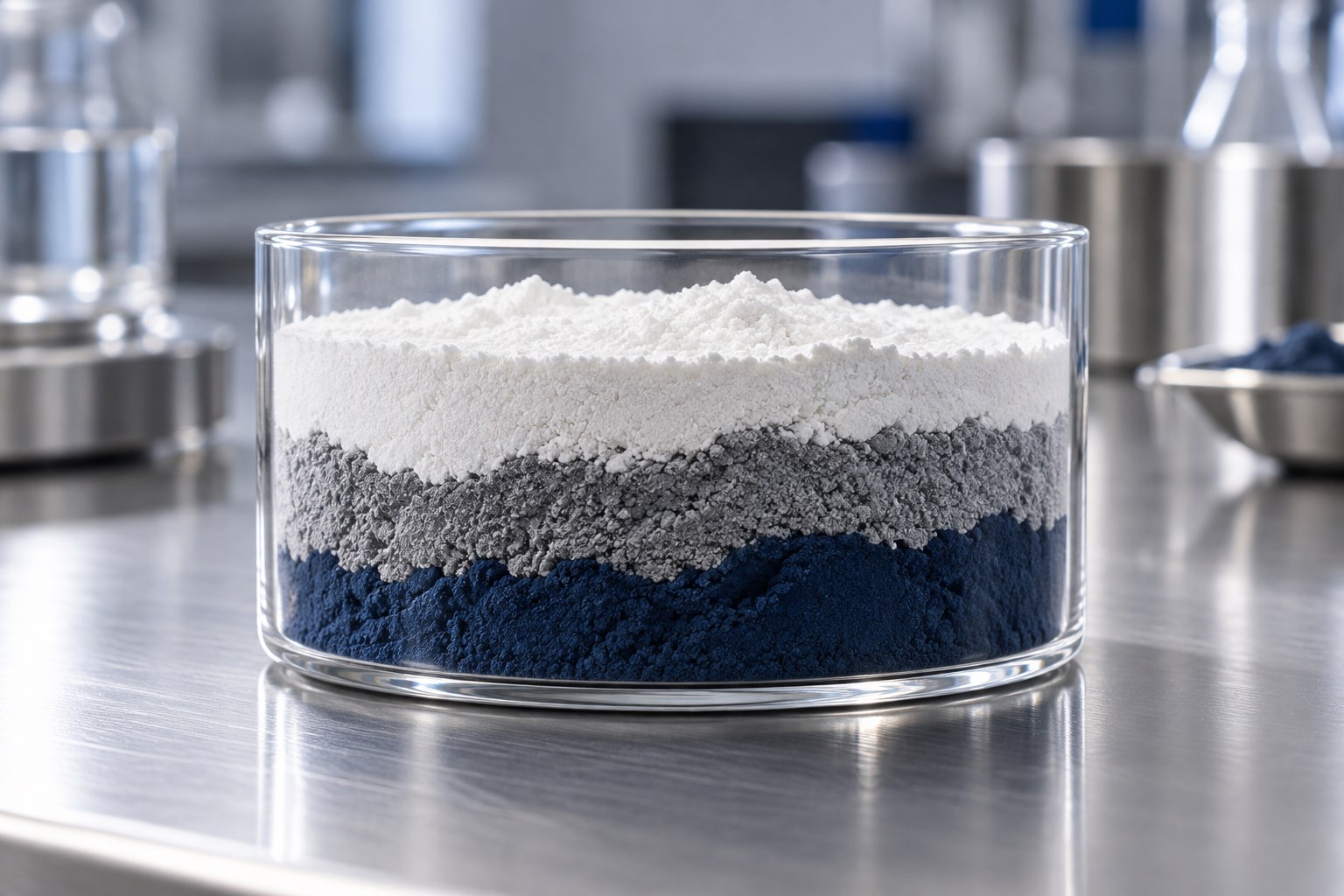
Changing container orientation helps redistribute the blend and reduce persistent layers and dead zones.
Discuss this challenge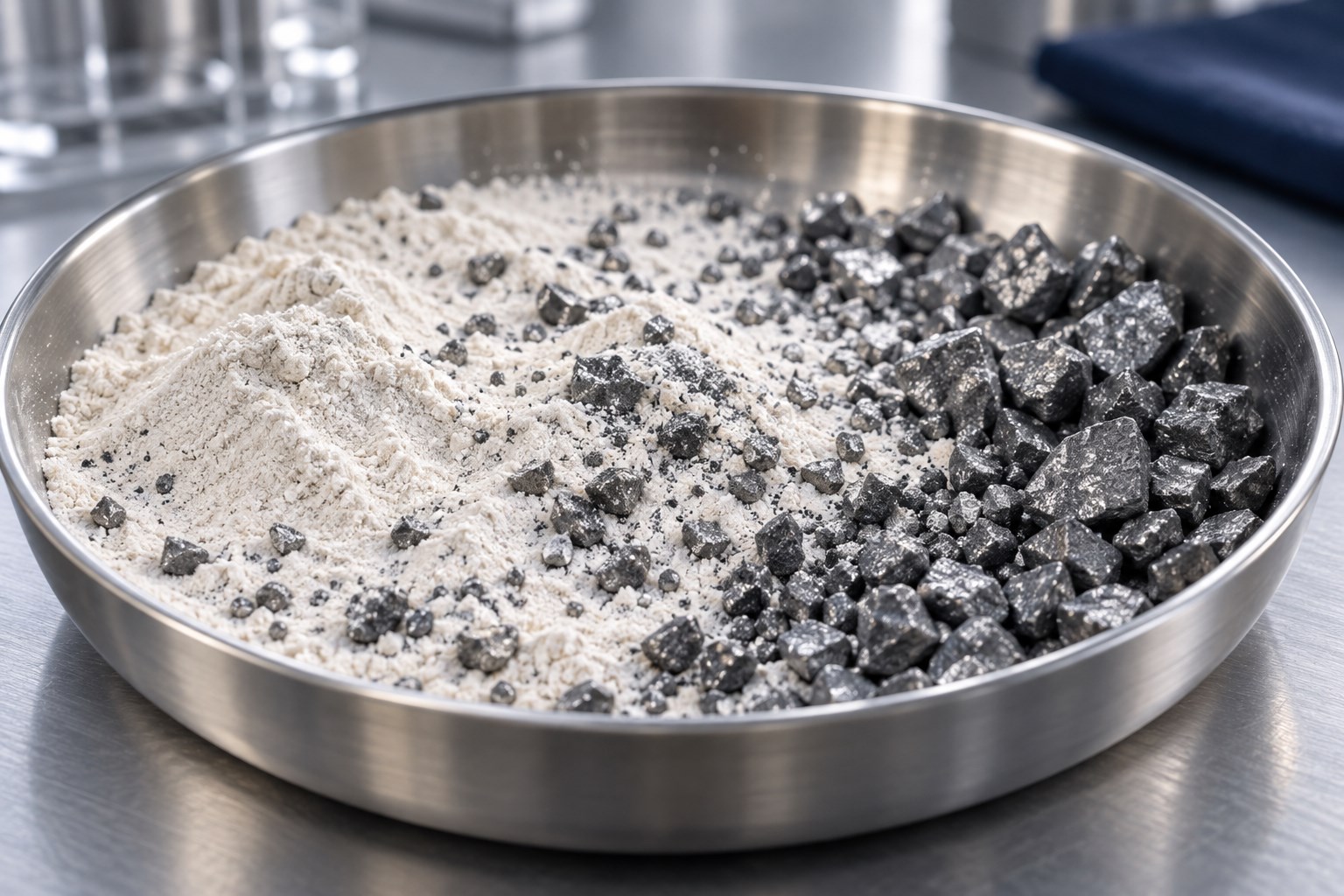
Evaluate blending dissimilar particles without high-speed internal agitators.
Discuss this challenge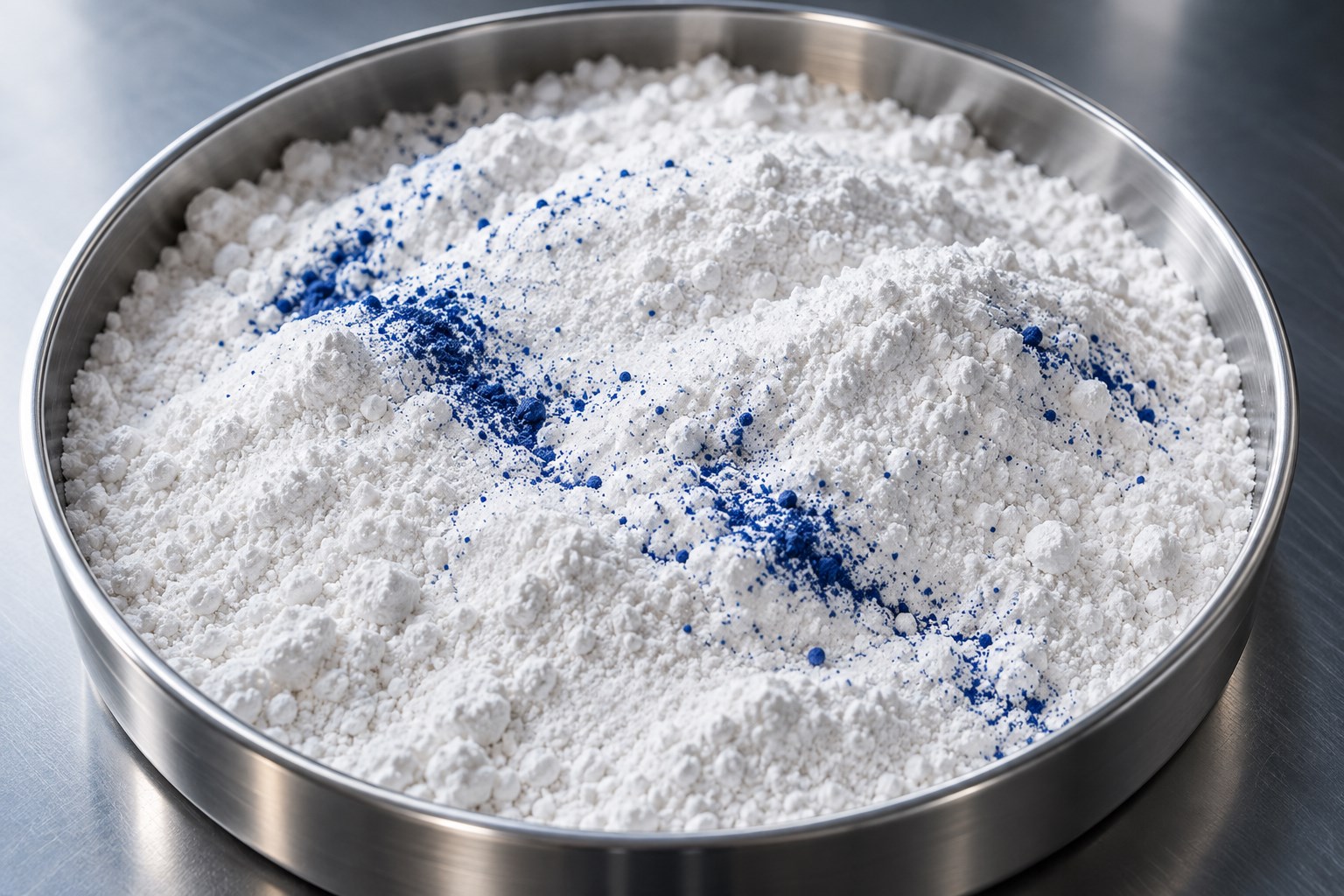
Distribute minor components, actives, colors, flavors and conductive additives through the blend.
Discuss this challenge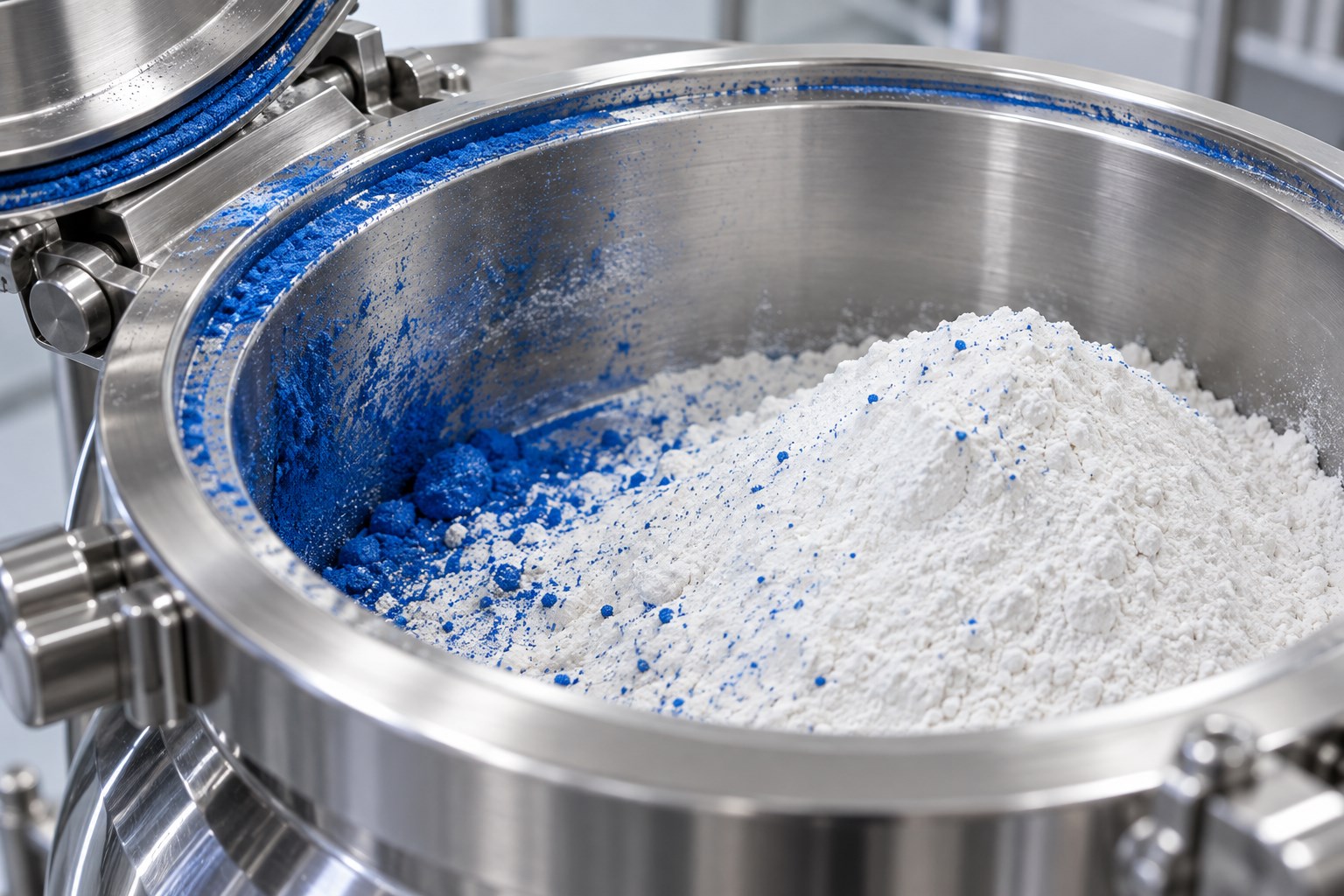
Dedicated removable containers can limit product contact with the machine itself.
Discuss this challenge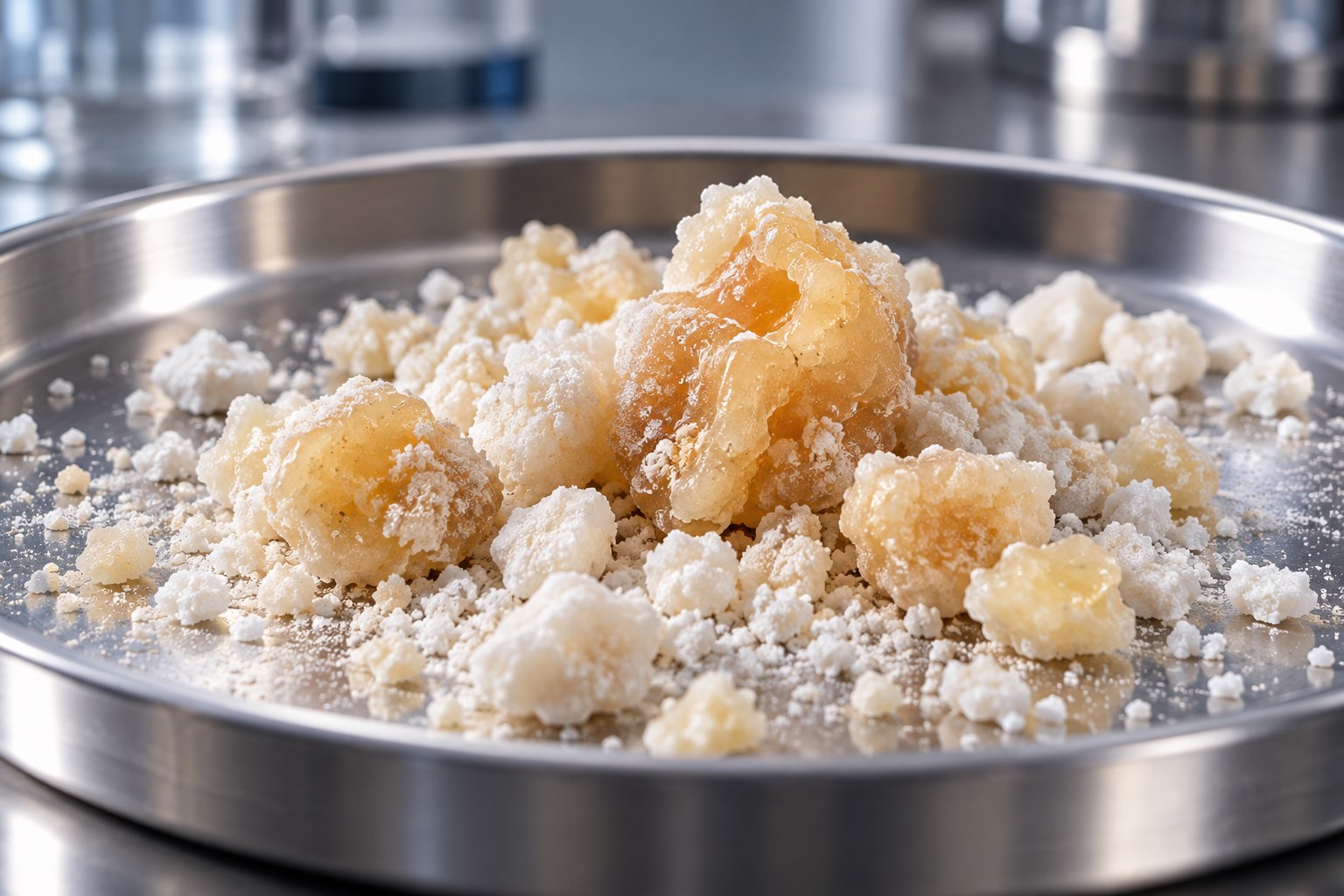
Low-shear container motion offers an alternative to blades that may generate localized heat or attrition.
Discuss this challenge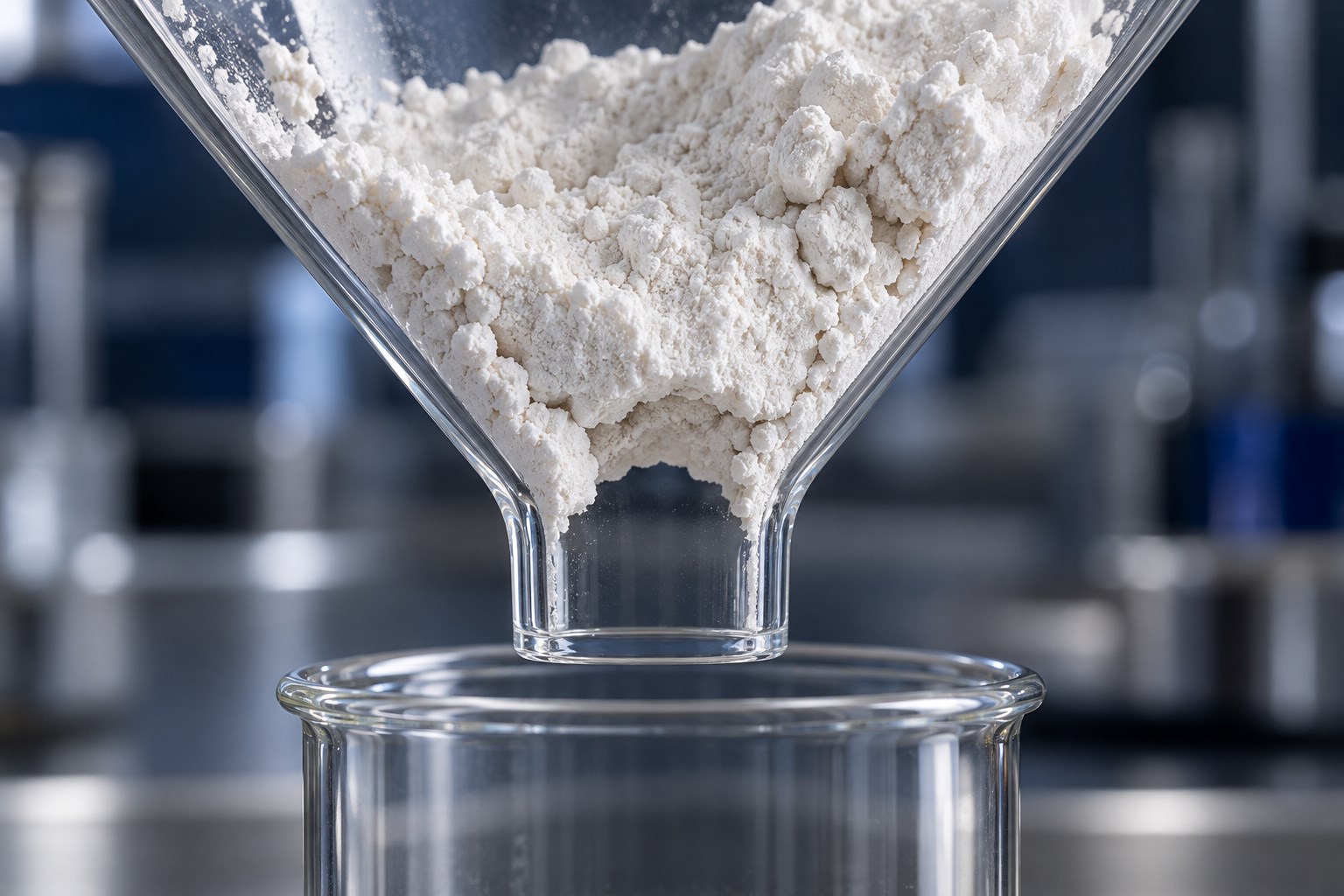
Test difficult powders to establish suitable fill level, vessel geometry, speed and mixing time.
Discuss this challenge3D INVERSION MIXING
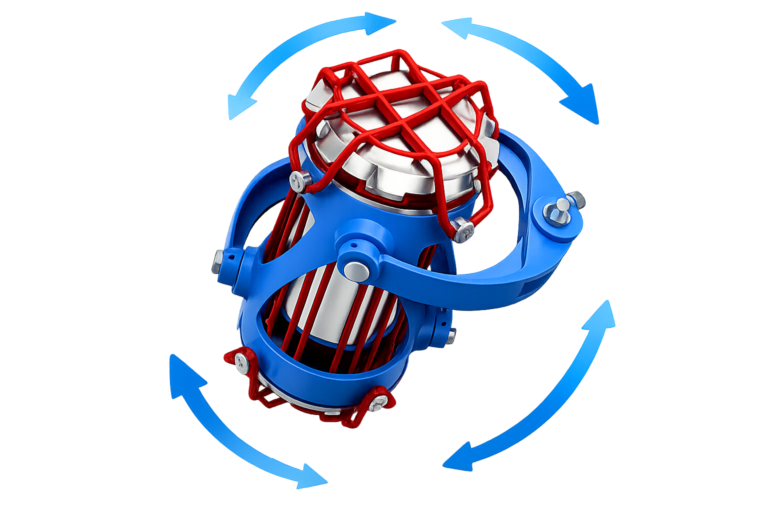
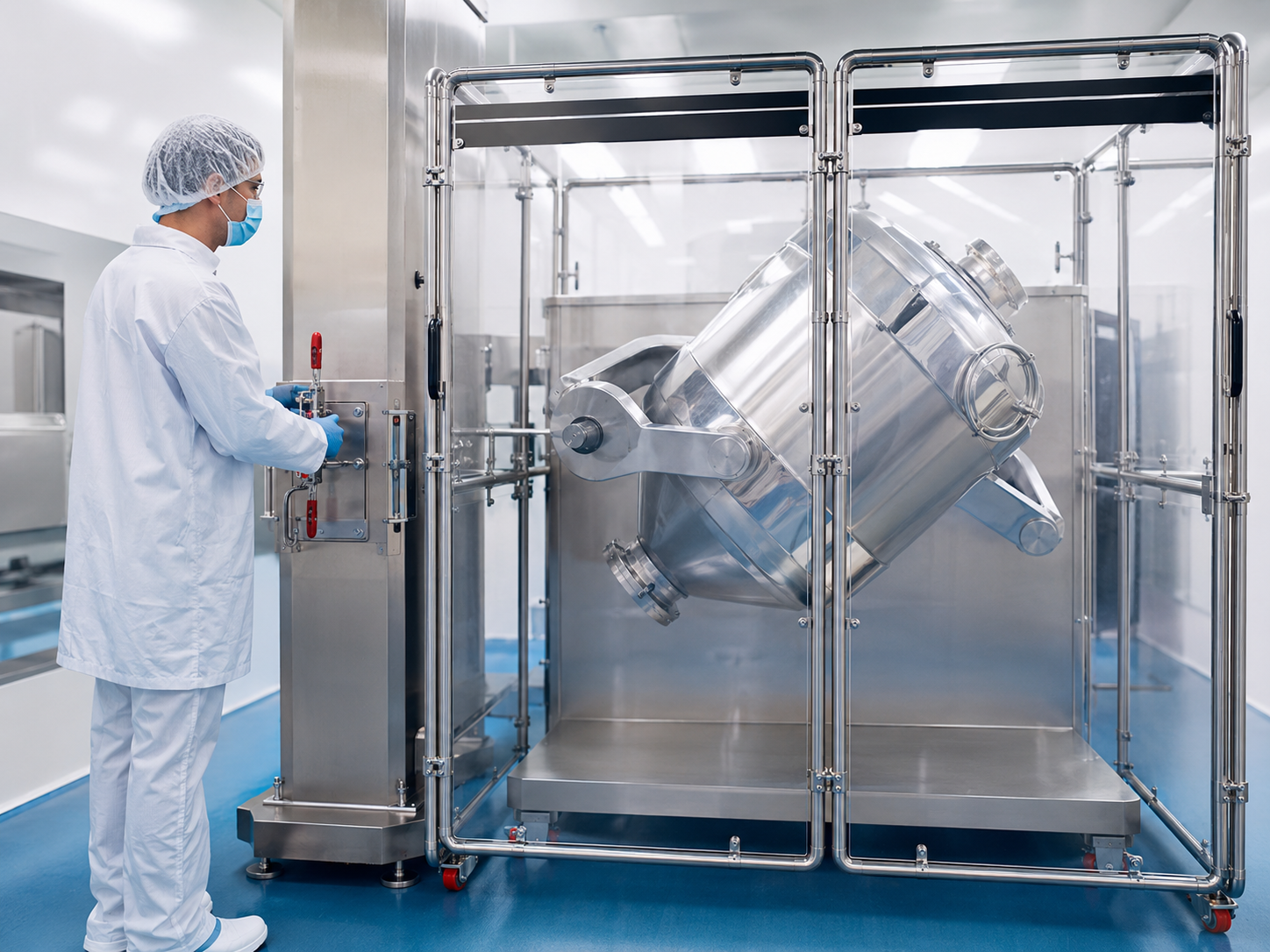
Rotation through changing axes and orientations repeatedly divides, recombines and redistributes the powder bed. No internal blades are needed, reducing internal product-contact components.
Fewer internal product-contact components.
Consider fragile or sensitive ingredients.
Removable containers or integrated fixed production drums.
From R&D work through manufacturing.
CHOOSE THE RIGHT SCALE
Select by usable container volume, material quantity, handling method, construction and process controls.
01 / LAB & R&D
Formulation, feasibility testing, small samples, glovebox applications and rapid development.
02 / PILOT & SCALE-UP
Increase batch volume using the same underlying three-dimensional mixing principle.
03 / INDUSTRIAL & PRODUCTION
Routine manufacturing with the handling, construction and controls your process requires.
Capacity and available configurations depend on the model, vessel and material. Confirm the working volume and suitability with the team.
Explore powder mixing equipment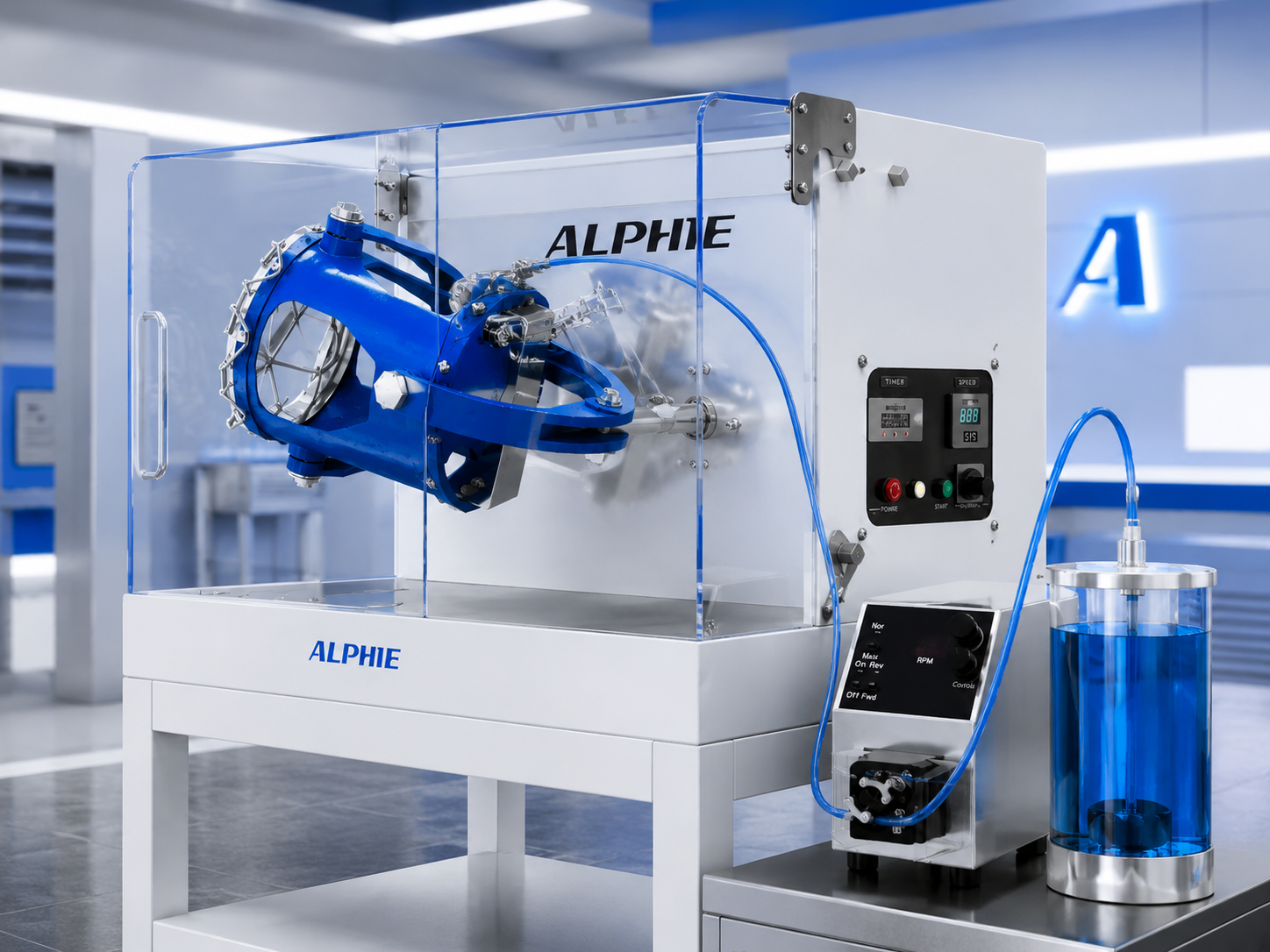
CONFIGURE THE PROCESS
Choose the container format, construction, dosing, containment and controls around the material and operating environment.
Removable-container systems accommodate different vessel sizes, shapes and materials using interchangeable holders. Fixed drums support dedicated, higher-volume production. Options span vials through large bins.
Add controlled liquid quantities with variable timing during the mixing cycle. Discuss dosing requirements, vessel compatibility and the material’s response to added liquid.
Discuss glovebox requirements for laboratory work, stainless steel construction, reduced product-contact surfaces and GMP configurations for appropriate models and applications.
INDUSTRIAL APPLICATIONS
Powder behavior, blend ratio, sensitivity, contamination limits, batch size and downstream processing guide the recommendation.
PROVE THE PROCESS. PLAN THE SCALE.
Connect material evaluation, mixer selection, vessel configuration, accessories and scale-up in one conversation.
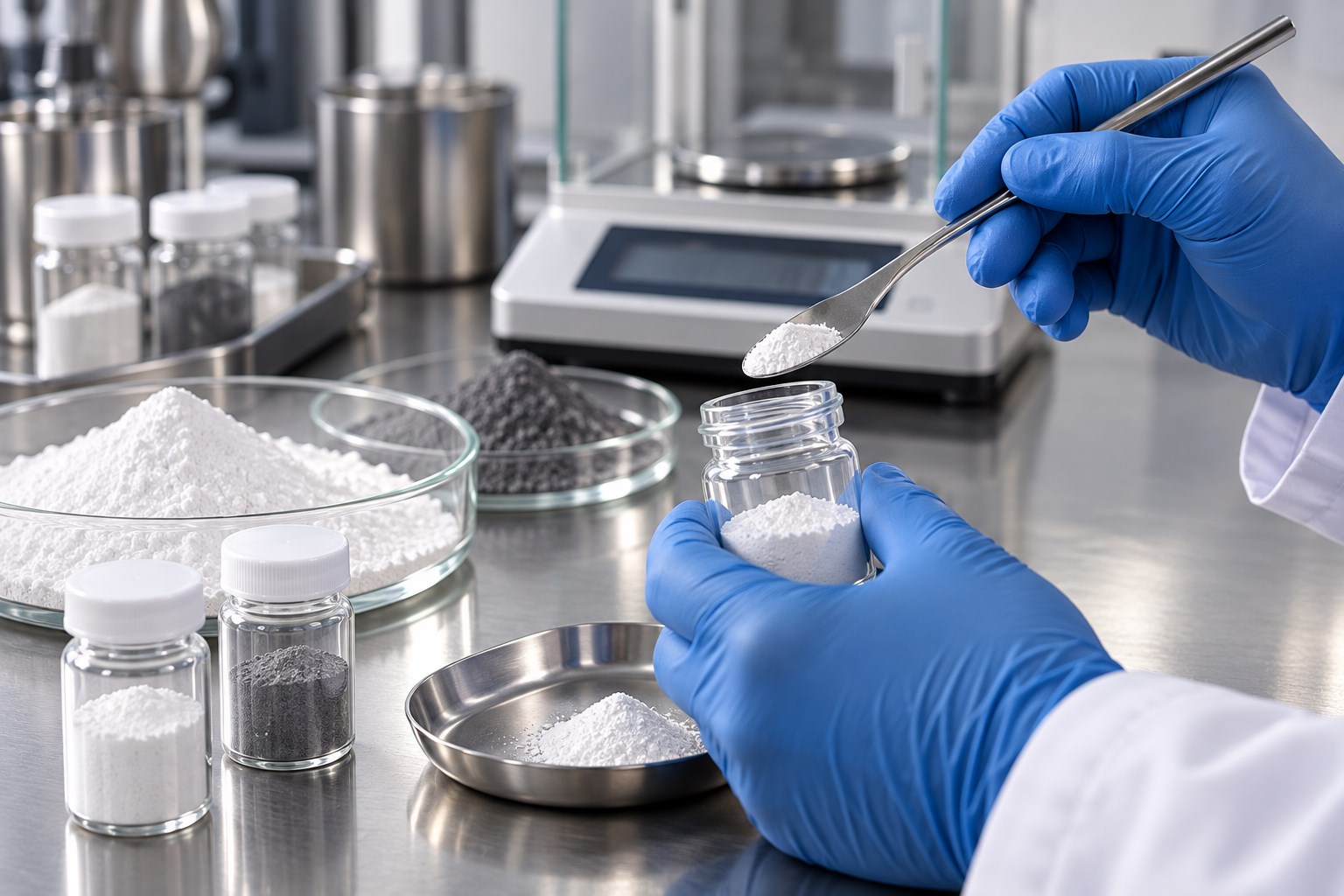
Evaluate your powders against the target blend specification.
Explore service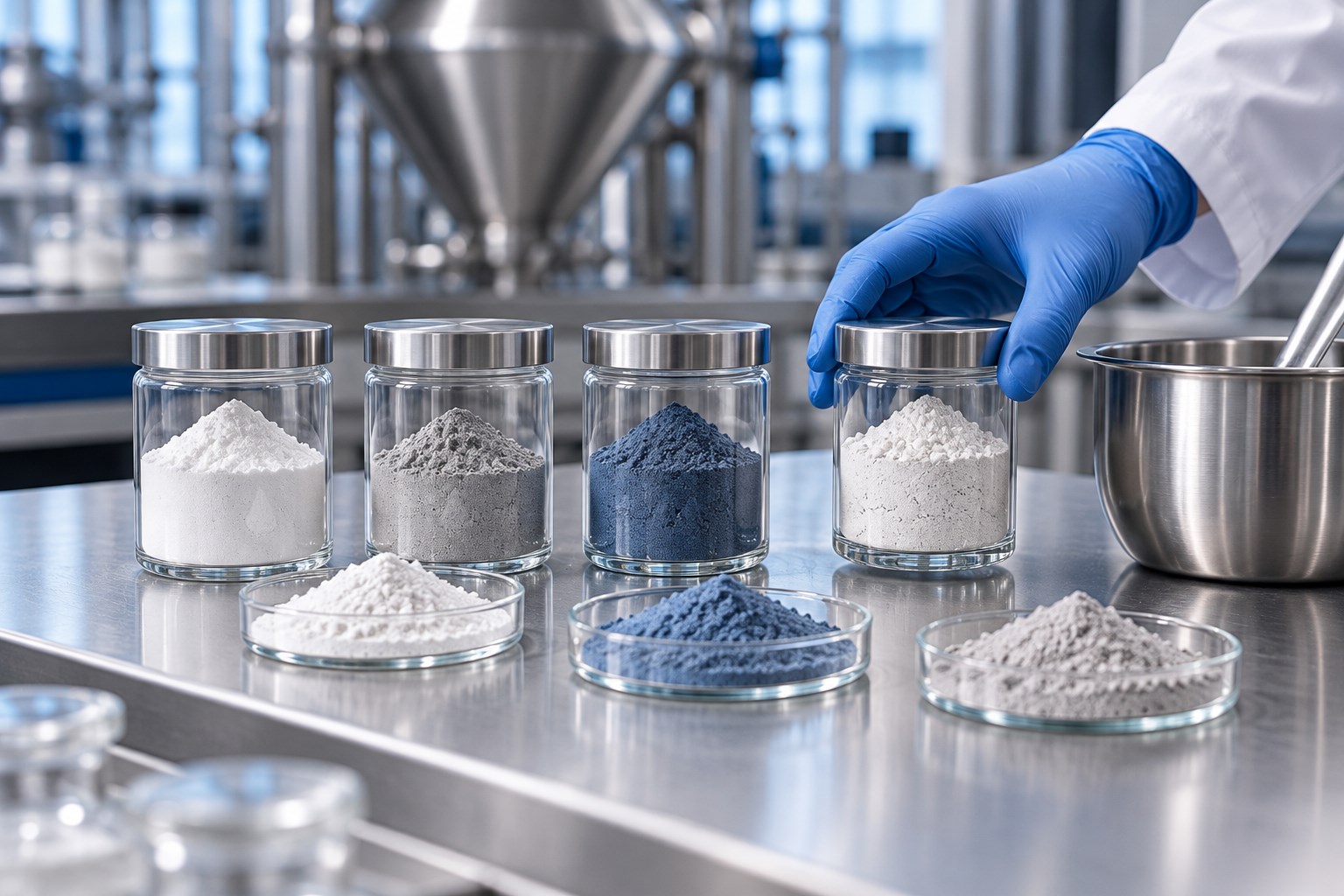
Produce representative samples with useful process information.
Explore service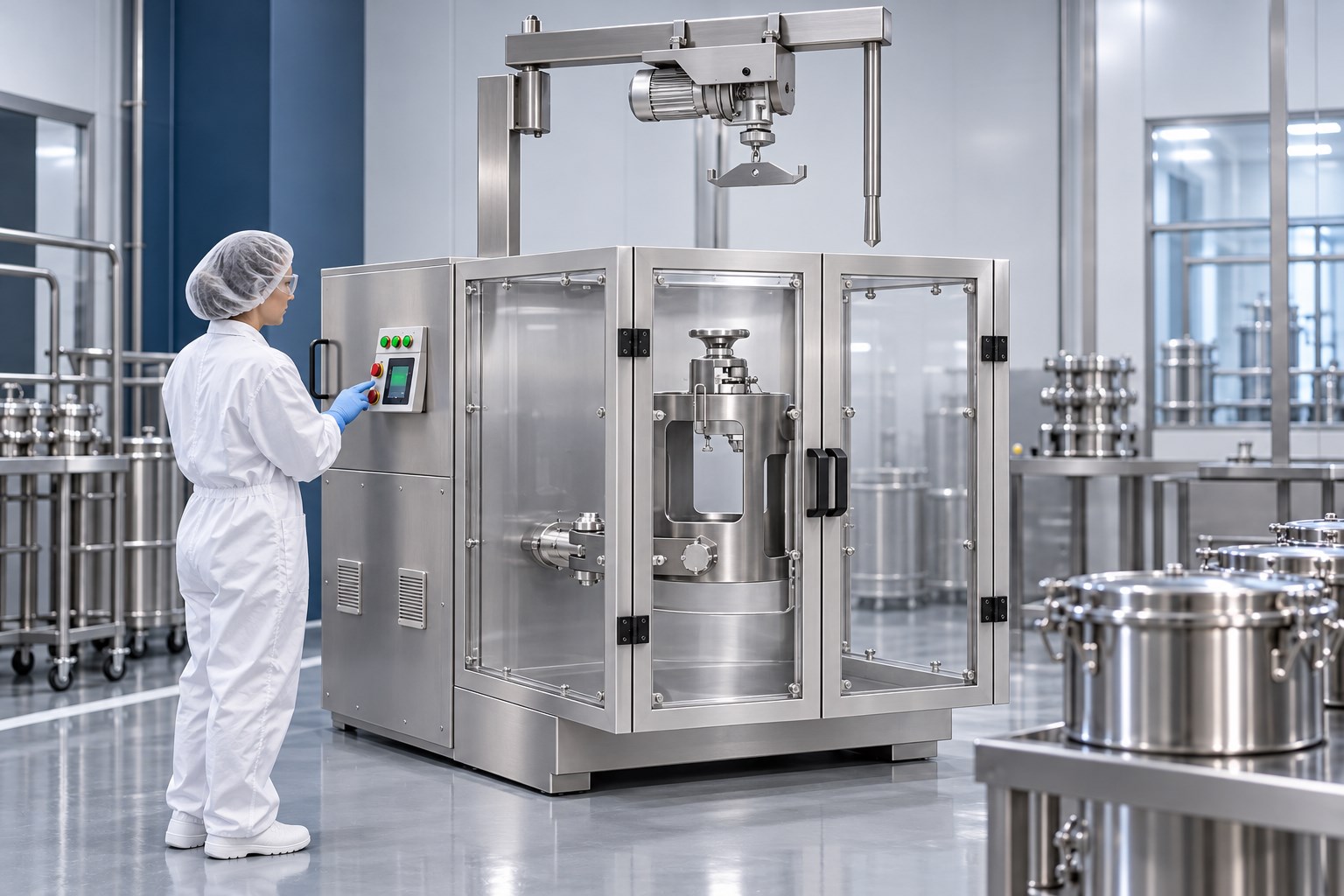
Discuss outsourcing the blending step before buying equipment.
Explore service
Evaluate equipment in your facility or meet a temporary need.
Explore service