High-pressure mechanical lysis with standard and mini-cell choices.
Standard cell reference: 35 mL / 40 kpsi; confirm working loading

BIOLOGICAL SAMPLE PREPARATION
Explore French Press systems, bead beaters, mixer mills, ultrasonic processors, rotor-stator homogenizers, cryogenic grinders and pulverizers, tissue clamps and manual macerators. Match the equipment to your sample, preparation method and downstream goals.
A PRACTICAL SELECTION HELPER
Choose a task, then answer four essential questions to find a starting point. Leave anything you don’t know blank or select “Not sure yet”.
High-pressure mechanical lysis with standard and mini-cell choices.
Standard cell reference: 35 mL / 40 kpsi; confirm working loading
Bead beating with compatible reaction-vial adapters; other jar and tube formats need configuration review.
Vial count depends on the selected adapter
Parallel biological preparations with compatible vial adapters; count depends on the vessel format.
Vial count depends on the selected adapter
A compact bead mill for individual biological samples in sealed screw-cap microvials, with digital timing and a brushless motor.
Sample capacity: 10-400 mg wet weight · Vial format: One 2 mL screw-cap microvial
A compact 16-position bead mill for microbial cells and plant or animal tissue, with digital timing and a quiet ULTRA enclosure.
Vial positions: Up to 16 × 2 mL screw-cap microvials · Speed: 3,450 rpm
A 24-position bead mill for biological sample disruption, with variable speed, runtime cycling and a quiet ULTRA enclosure.
Vial positions: Up to 24 × 2 mL screw-cap microvials · Speed: 2,400-3,800 rpm
A high-capacity bead mill for parallel disruption of biological samples in deep-well plates, microvials or larger tubes.
Plate capacity: One 2 mL deep-well plate or two 1 mL deep-well plates · Tube formats: 45 microvials; optional holders for twenty 7 mL or two 50 mL tubes
A chamber-style bead mill for disrupting aqueous suspensions of yeast, fungi and bacteria for protein, enzyme and organelle recovery.
Chamber volume: 350 mL total; 200 mL working · Motor: 3/8 hp, single speed
A stainless steel mortar and pestle system for fragmenting hard-frozen tissue before extraction or further homogenization.
Single-sample options: 10–100 mg, 0.1–1 g or 1–10 g · 12-well option: 10–100 mg per well
An insulated stainless steel mortar for grinding frozen tissue while retaining low sample temperatures.
Tissue capacity: 100 mg to 10 g · Insulated mortar for manual grinding of frozen tissue
A mechanical clamp for compressing and rapidly freezing fresh tissue into a thin wafer for subsequent sample preparation.
Fresh tissue in a poly-bag · Liquid-nitrogen-cooled compression clamp
A digitally controlled rotor-stator homogenizer for soft tissue, emulsification and liquid sample preparation across a broad range of volumes.
1–1,000 mL, probe dependent · 8,000–35,000 rpm
A hand-operated stainless steel screw press for small soft-tissue samples and undiluted extracts for downstream analysis.
Manual screw press with a 250 µm screen · Disposable sample liners
Automatic nitrogen cooling for suitable difficult biological or elastic samples.
Confirm jar, adapter and downstream assay compatibility
Compact manual sonication for routine small-volume cell disruption.
55 W; up to 50 mL · Thumb-switch or continuous output; standard 1/8 in probe
Programmable small-volume sonication with pulse mode and digital energy monitoring.
125 W; up to 50 mL · 20-100% amplitude; timer up to 10 hours
Laboratory probe sonication for cell lysis, homogenization and dispersion.
500 W; up to 1 L · 20-100% amplitude; programmable timing and pulses
Touchscreen sonication with full-range amplitude control and stored program sequences.
700 W; up to 2 L for low-viscosity liquids · 1-100% amplitude; 10 stored programs; sequences of up to 5
Industrial ultrasonic processing for larger batches, including cell lysis, with direct-probe or flow-cell configurations.
2,000 W; approximate system range 5-20 L · Programmable timing, pulses and optional temperature monitoring
High-power industrial ultrasonic processing for application-dependent large batches.
2,500 W; approximate range 5-20 L · High-intensity probe and booster; optional temperature monitoring
Dedicated cooled system for chromatin and DNA shearing in sealed sample tubes.
750 W; 50 µL to 1 mL per tube · Up to 18 tubes, rack dependent; 150 bp to 3 kb DNA fragment range · Chiller, rotating sample system and sound enclosure included
START WITH YOUR OUTCOME
TECHNOLOGY & EQUIPMENT
The appropriate system depends on your sample and desired outcome. Talk with the team to explore current equipment and options.
Sample type and working volume · Temperature and handling constraints · Downstream sample requirements
BUILD CONFIDENCE
Define the material, desired result and operating constraints.
Compare promising technologies and agree on an approach.
Test material, assess results and refine the process.
Connect the outcome to lab, pilot or production needs.
BIOLOGICAL SAMPLE PREPARATION
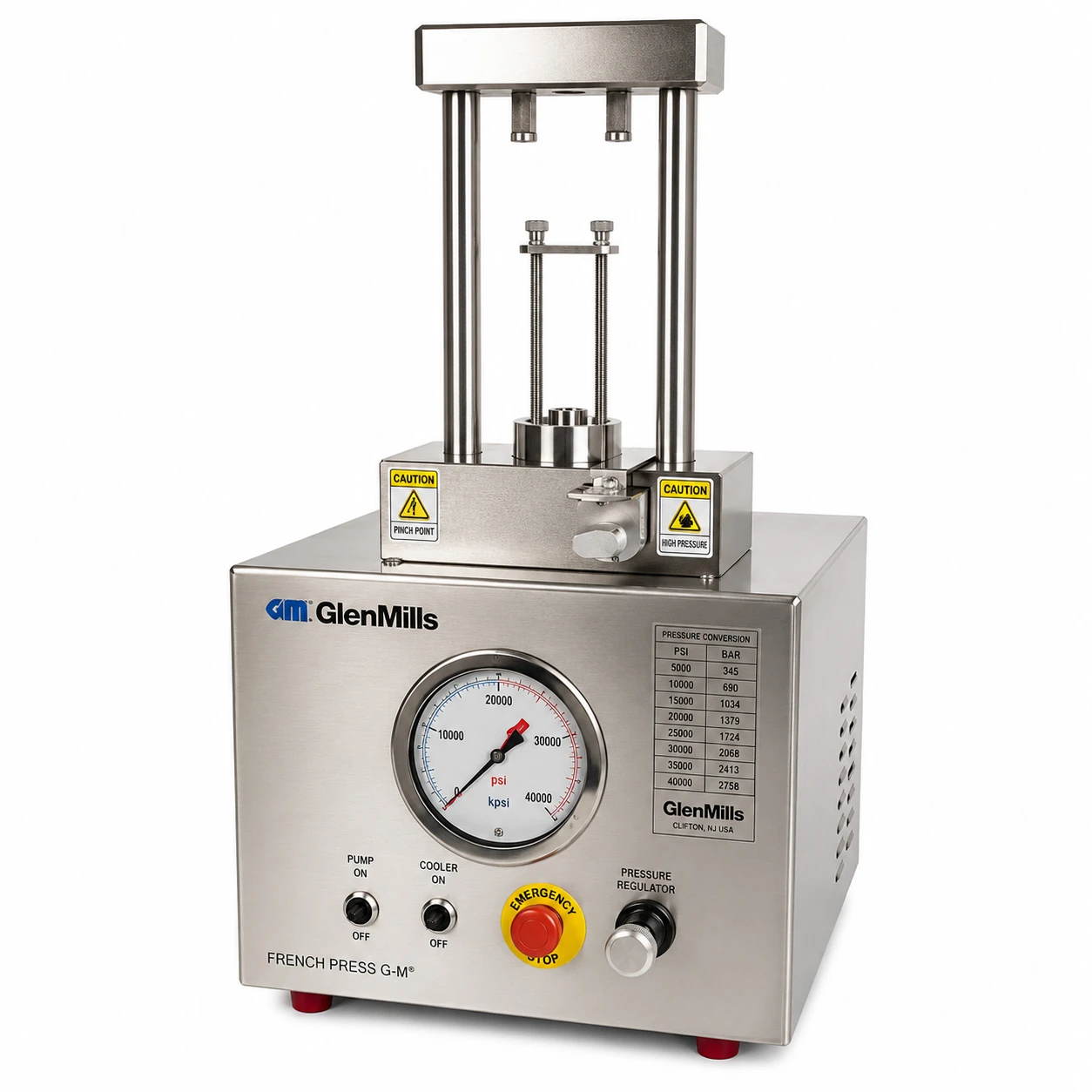
HIGH-PRESSURE CELL DISRUPTION
Explore the French Press G-M by Glen Mills for controlled mechanical lysis of cell suspensions, with standard and mini-cell configurations.
Explore French Press →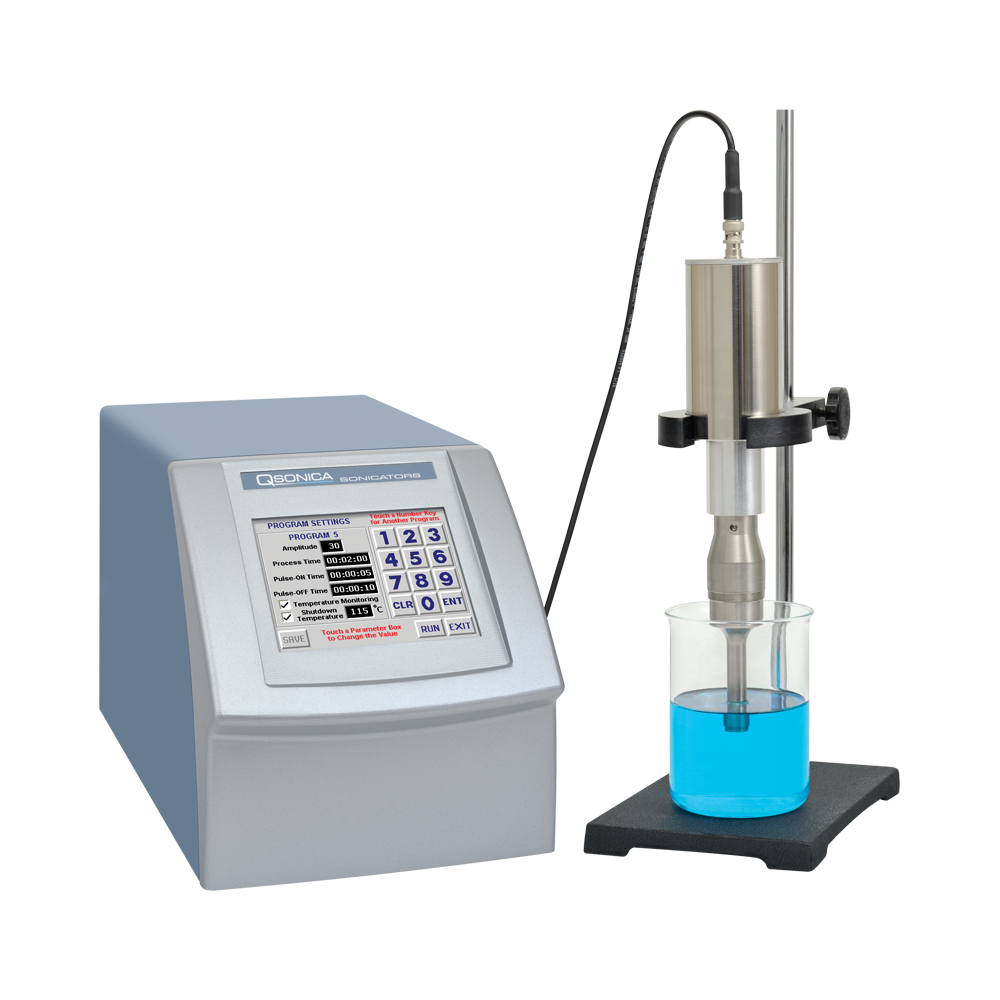
ULTRASONIC CELL DISRUPTION
Compare laboratory probe sonicators, larger-batch ultrasonic processors and a dedicated cooled system for chromatin and DNA shearing.
Explore ultrasonic cell disruption →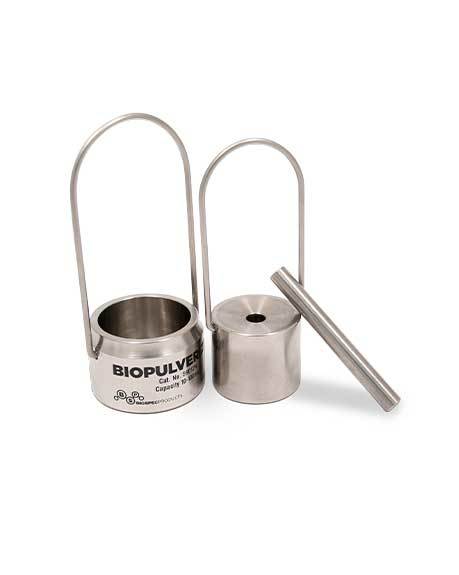
Cryogenic tissue pulverizer
A stainless steel mortar and pestle system for fragmenting hard-frozen tissue before extraction or further homogenization.
Explore product →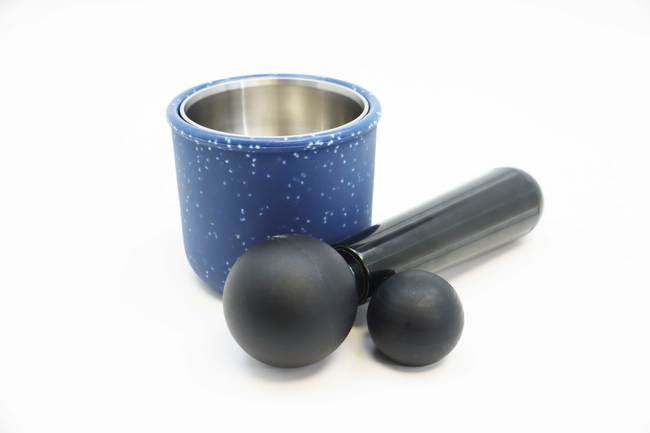
Cryogenic mortar and pestle
An insulated stainless steel mortar for grinding frozen tissue while retaining low sample temperatures.
Explore product →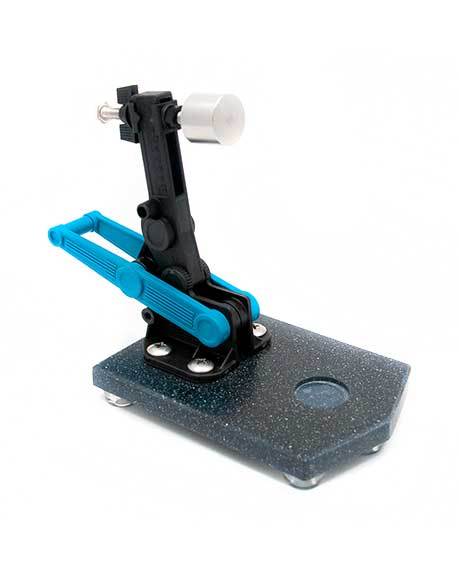
Cryogenic tissue clamp
A mechanical clamp for compressing and rapidly freezing fresh tissue into a thin wafer for subsequent sample preparation.
Explore product →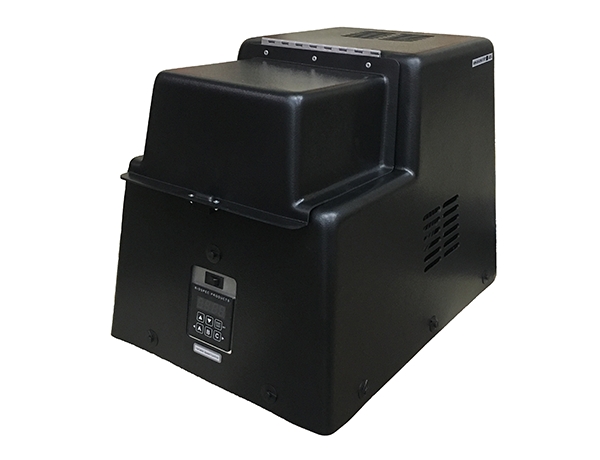
High-throughput bead mill
A high-capacity bead mill for parallel disruption of biological samples in deep-well plates, microvials or larger tubes.
Explore product →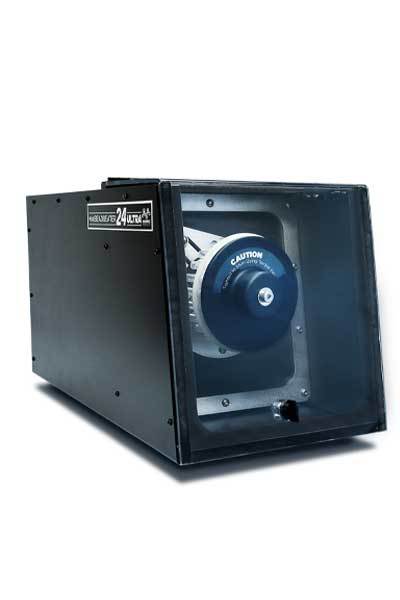
Variable-speed bead mill
A 24-position bead mill for biological sample disruption, with variable speed, runtime cycling and a quiet ULTRA enclosure.
Explore product →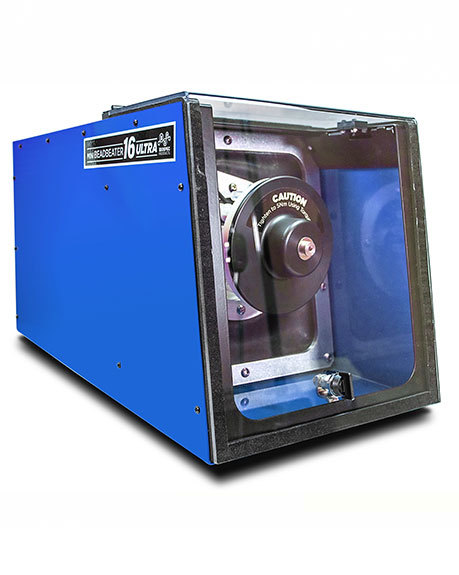
Parallel-sample bead mill
A compact 16-position bead mill for microbial cells and plant or animal tissue, with digital timing and a quiet ULTRA enclosure.
Explore product →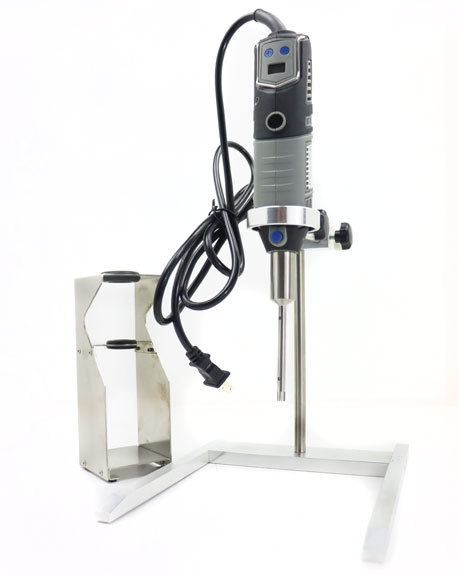
Rotor-stator homogenizer
A digitally controlled rotor-stator homogenizer for soft tissue, emulsification and liquid sample preparation across a broad range of volumes.
Explore product →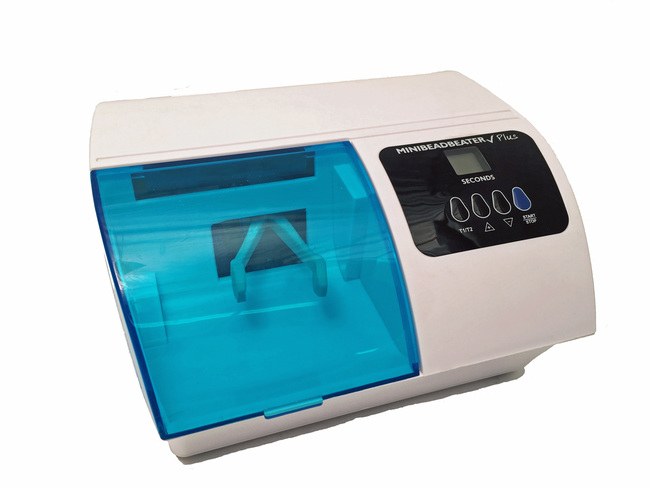
Single-sample bead mill
A compact bead mill for individual biological samples in sealed screw-cap microvials, with digital timing and a brushless motor.
Explore product →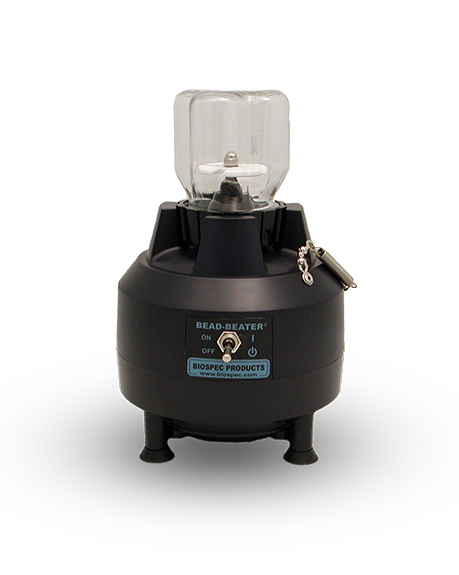
Batch microbial cell disruptor
A chamber-style bead mill for disrupting aqueous suspensions of yeast, fungi and bacteria for protein, enzyme and organelle recovery.
Explore product →
Manual tissue macerator
A hand-operated stainless steel screw press for small soft-tissue samples and undiluted extracts for downstream analysis.
Explore product →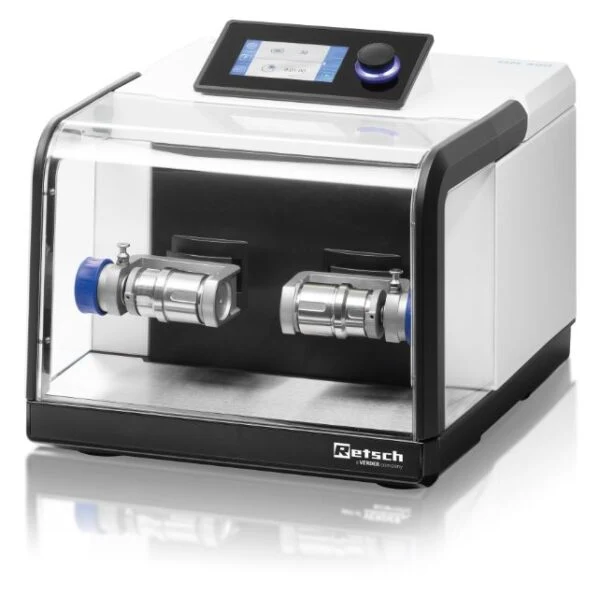
Small-sample bead beating
A versatile mixer mill for small biological samples, with compatible reaction-vial adapters for bead beating and cell disruption.
Explore product →LET’S MOVE YOUR MATERIAL FORWARD
Share the result you need. We’ll help you find a practical next step.