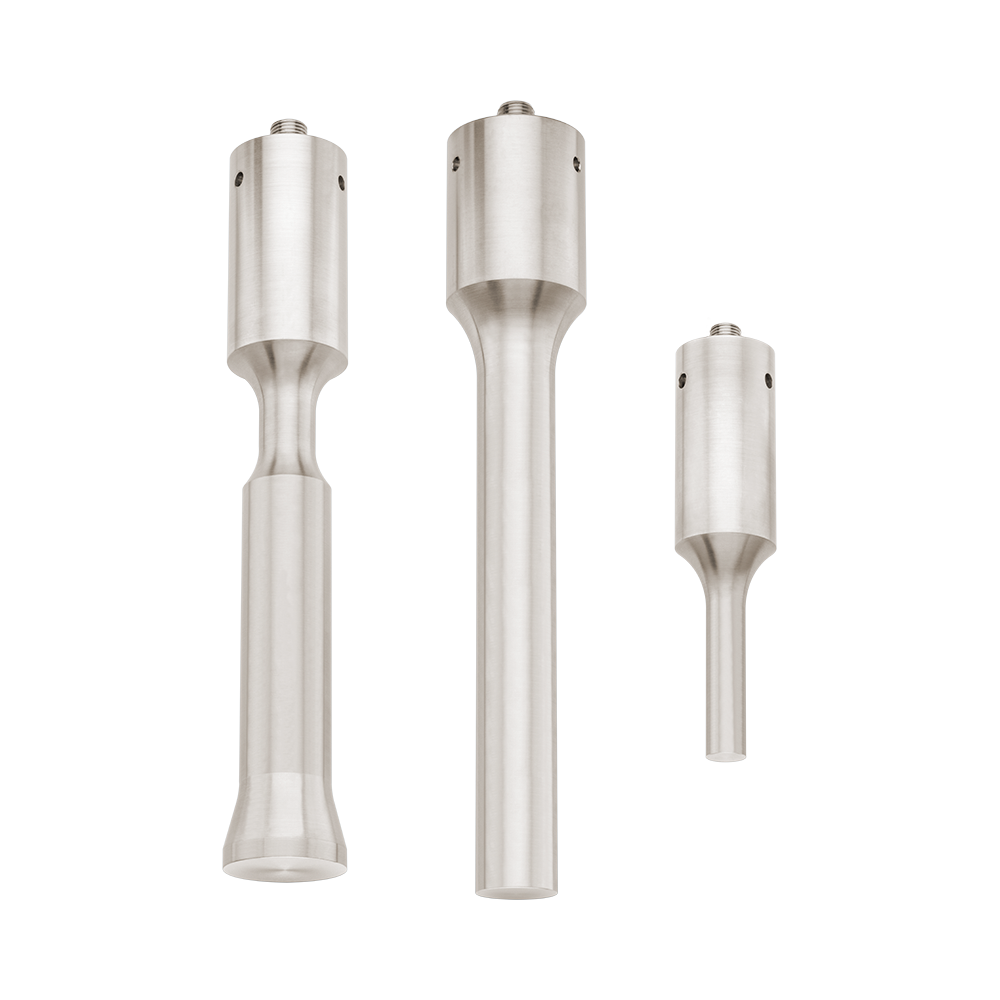
Replacement and alternative probes
Q2000 probes: 1.5 in (38 mm), 10-20 L, 90 µm amplitude; 1 in (25 mm), 1-10 L, 100 µm; 1/2 in (12 mm), 50-400 mL, 100 µm. Ranges depend on the sample and process.

Industrial batch and flow ultrasonic processor
A 2,000 W system for larger batches and inline processing, with programmable amplitude, timing and optional temperature monitoring.
PRODUCT OVERVIEW
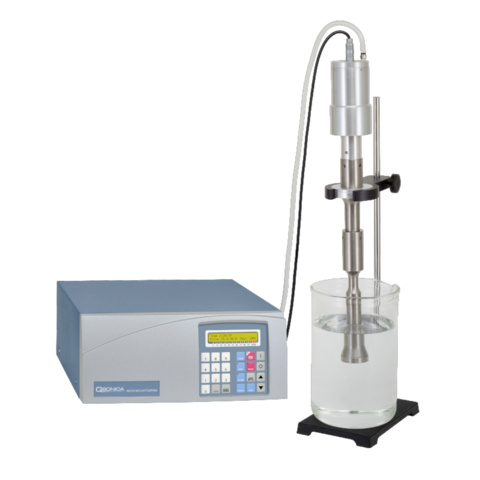
The Q2000 supports direct-probe processing of individual batches and flow-cell processing for larger or continuous workflows. Its applications include emulsification, cell lysis, degassing, homogenization, solubilization and particle dispersion.
The standard high-amplitude arrangement uses a booster and 1.5 in probe. The system description identifies an approximate 5-20 L batch range; the replacement-probe specification lists 10-20 L for the standard 1.5 in probe. Smaller 1 in and 1/2 in probes address lower volumes. Actual capacity depends on viscosity, concentration and the application.
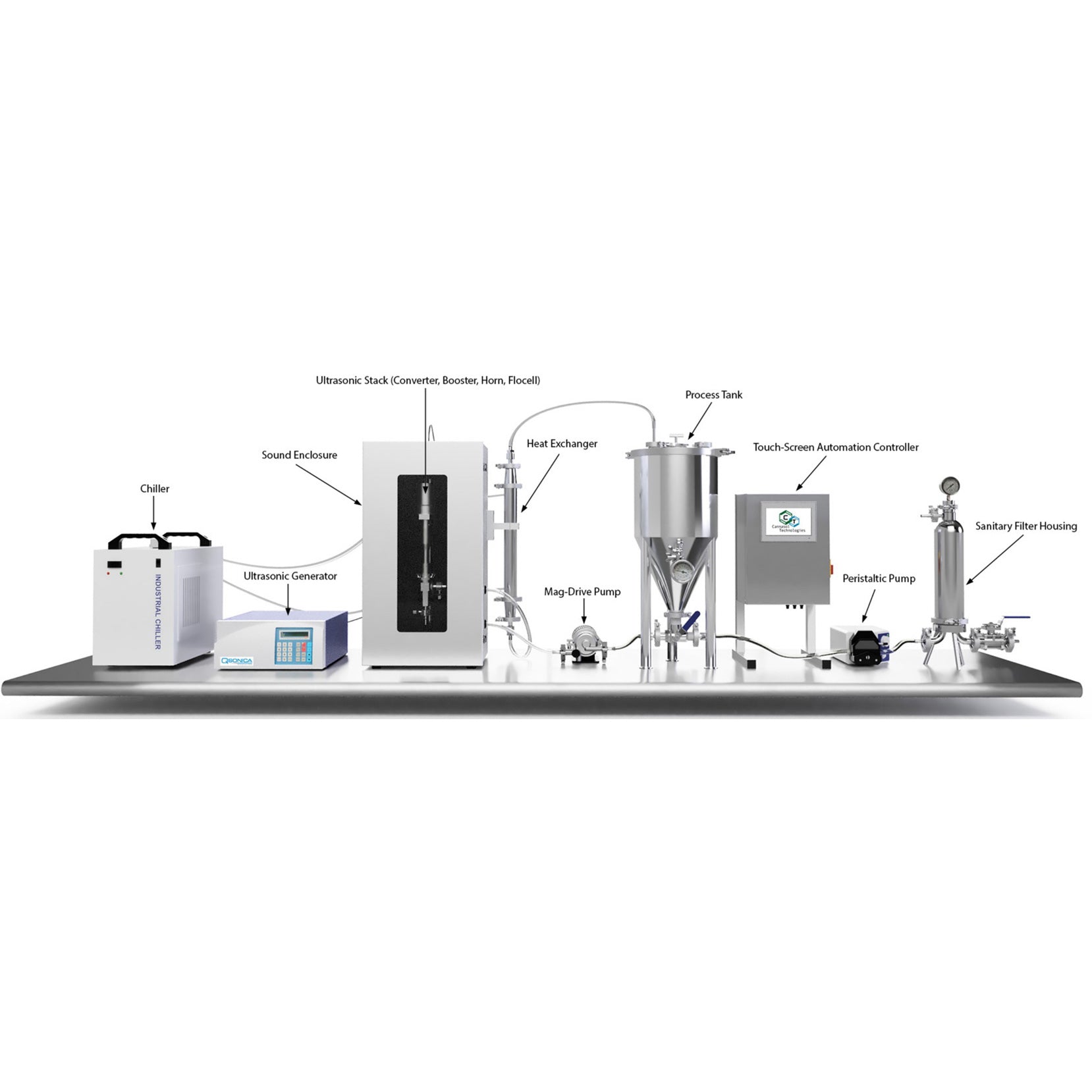
A production configuration can integrate a flow cell, chiller, heat exchanger, process tank, magnetic-drive and peristaltic pumps, automation controller and sanitary filtration. Sound enclosure, stand and portable converter air-cooling configurations are also available.
CAPABILITIES
APPLICATION FIT
Processing capacity depends on sample properties, tube or vessel geometry and the selected probe or rack.
TECHNICAL DETAILS
PARTS & ACCESSORIES
Q2000 probes: 1.5 in (38 mm), 10-20 L, 90 µm amplitude; 1 in (25 mm), 1-10 L, 100 µm; 1/2 in (12 mm), 50-400 mL, 100 µm. Ranges depend on the sample and process.
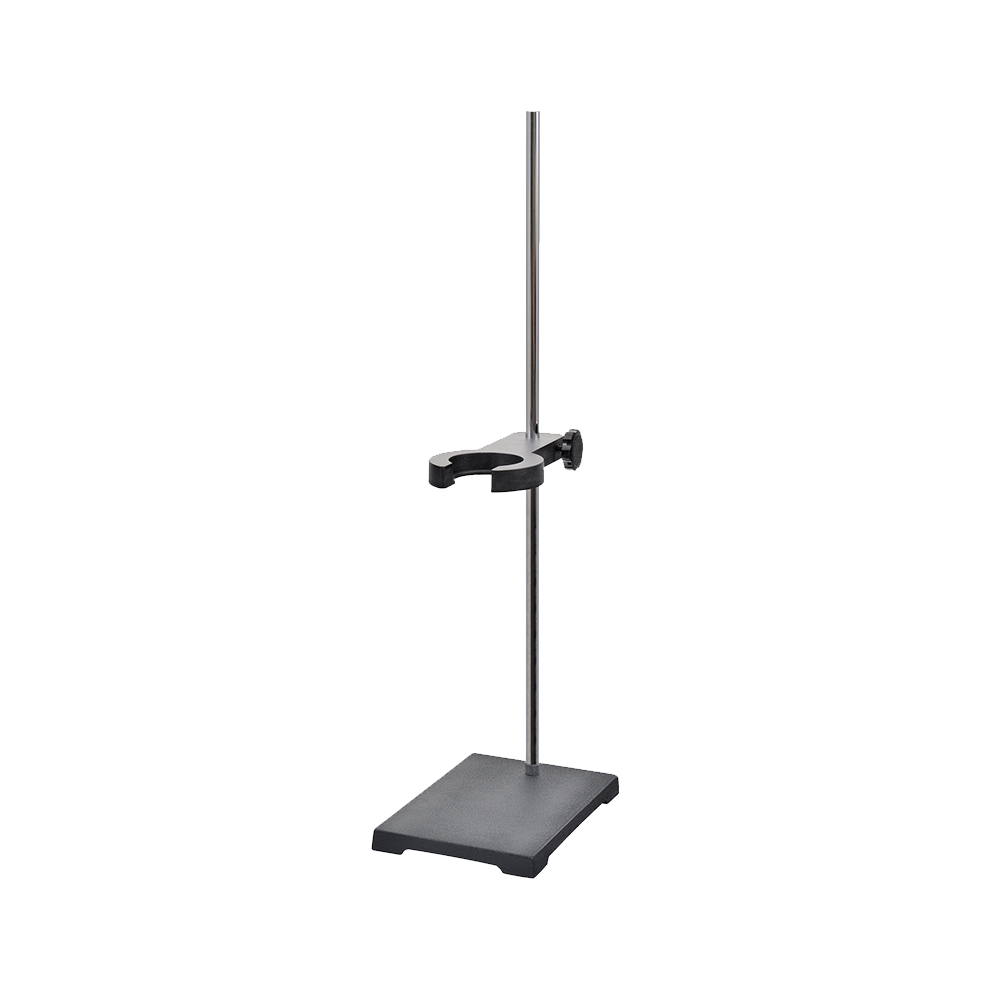
A 24 in support rod with 5.75 × 8.5 in base. Compatible with the Q2000 probe sound enclosure.
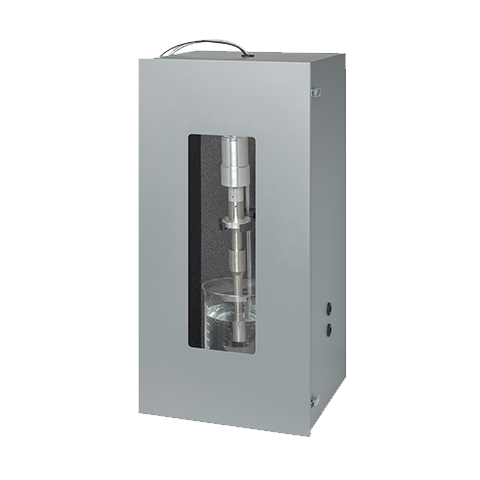
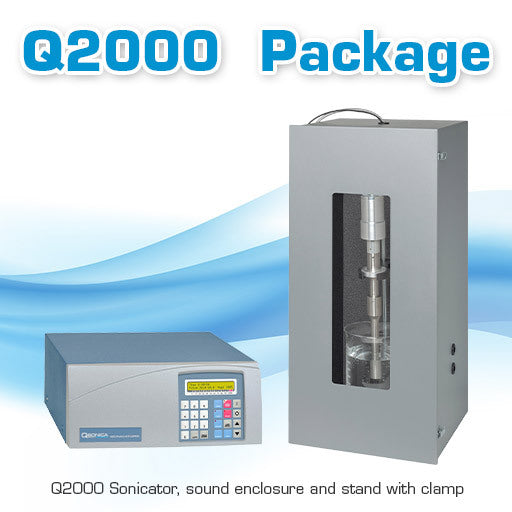
Separate configurations accommodate the direct probe or flow cell. Both have coolant/temperature-probe ports and water-resistant acoustic lining. Probe version exterior: 18 W × 17.75 L × 38 H in; flow-cell version: 14.5 × 17 × 32 in. Stand is a separate component.
GLEN MILLS APPLICATION SUPPORT
Talk with our team about Q2000 Sonicator, sample volumes and available configurations.