
Is maximum disruption always the correct biological endpoint?
No. The method must recover material suitable for the intended assay. Target preservation and contamination controls matter alongside breakage.
Biological samples come in all shapes and sizes: hard bones, tough and fibrous plants, tough and viscous sputum, soft muscles, tumor or liver tissue. Not to mention the millions of cells such as yeast, bacteria or algae, which have to be disrupted for applications such as DNA or RNA isolation or protein extraction. For research in genomics, transcriptomics or metabolomics, all kinds of biological samples have to be prepared as sample preparation is the first step of every analytical process.
RETSCH offers a range of mills and grinders for easy and reproducible pulverization of solid sample materials some of which are also suitable for cell disruption and homogenization of biological sample materials. From Bead Beating for cell disruption over homogenization and pulverization to cryogenic grinding – RETSCH provides convenient and reliable solutions for sample preparation in areas like biotechnology, diagnostics, forensics, agriculture and microbiology.
This article explains the use of RETSCH mills for the following applications:
Cell disruption of yeasts, microalgae and bacteria (in suspension)
- Homogenization of soft and tough biological samples like sputum or liver
Cryogenic grinding of cell pellets, muscle tissue and pine needles Pulverization of forensic samples: bones, teeth and hair
- Washing procedure to obtain intact bacterial cells from infected human tissue
Cell disruption of yeasts, microalgae and bacteria (in suspension)
Cell disruption of bacteria, yeast, filamentous fungi or microalgae is a standard procedure in basic biological research, applied biotechnology or medical research to get access to nucleic acids (DNA, RNA), cell proteins or metabolites. Various methods of cell disruption can be used on a lab scale which can be roughly divided into methods using chemicals to destroy the cell membranes and structures, and mechanical methods. With mechanical methods it is possible to crack the thick walls of cells such as Bacillus spores and Mycobacterium cells which are difficult to lyse. The addition of chemicals – which might be affecting the subsequent extraction steps – is not required.
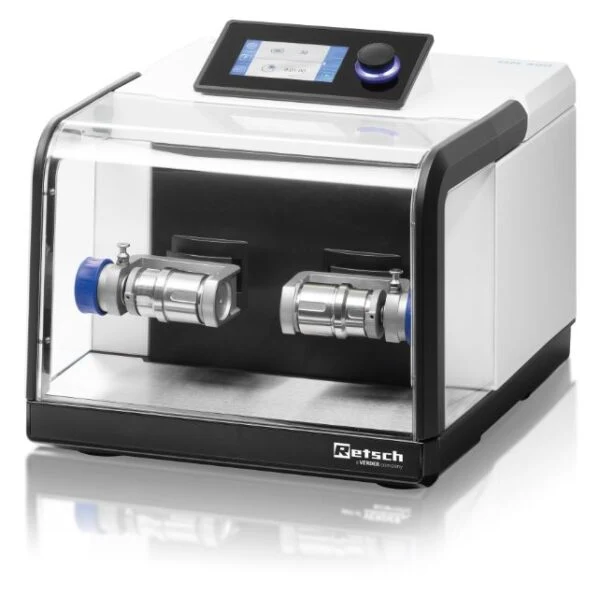
Bead beating is a widely used easy and effective mechanical method for cell disruption, using beads made of glass, ceramics or steel. The beads and the cell suspension are thoroughly mixed by stirring or shaking; shearing forces resulting from the large surface area of the glass beads crack the cell walls, leading to a release of cellular components. Bead beating is often used for small scale cell disruption in 2 ml single-use vials, but can also be transferred to larger vials such as the 50 ml disposable Falcon tubes. Advantages over other mechanical methods such as ultrasonification include the ease of use, the possibility to process several samples in one step without the risk of cross contamination and the better yield of cellular components. The simplest method for bead beating is mixing the cell suspension with an equal volume of beads, using a laboratory vortex mixer for stirring. This method, however, is time-consuming and error-prone, particularly for high sample throughput or cell disruption times up to 10 minutes. Using RETSCH's Mixer Mill MM 400 in combination with different adapters makes the process reproducible, fast and efficient. The cells are broken automatically and the operator saves time to be used for further steps in the analytical process.
For the isolation of DNA or RNA usually less than 1 ml of cell material is needed, thus cell disruption is mostly done in 1.5 ml or 2 ml Eppendorf® tubes. RETSCH offers different adapters for these vials, thus allowing to process up to 20 samples in one step. For the extraction of proteins or metabolites, however, larger amounts of cell suspension are required, therefore cell disruption in 50 ml disposable tubes (Falcon® tubes) is advisable; with the MM 400, eight samples can be processed simultaneously (8 samples of 30 ml cell suspension or, if required, 240 ml cell suspension divided to the 8 conical centrifuge tubes with subsequent pooling of the cell suspension). The missing size between 2 ml and 50 ml tubes is now available with the new 5 ml Eppendorf® tubes which can be used with the MM 400 as well.
Case study: Cell disruption of Saccharomyces cerevisiae For studying e. g. the functionality of cell proteins it is necessary to disrupt volumes of approximately 30 ml cell suspension. The automated process using the Mixer Mill MM 400 in combination with the adapter for conical centrifuge tubes (8 samples at a time) was compared to a Vortexer with manual cell disruption. Vortexing of 4 g yeast cells with 12 g disruption buffer and 16 g glass beads (0.5 mm - 0.75 mm) in 50 ml tubes required 12 x 1 min with 1 min intermediate cooling on ice to get sufficient yield of proteins. Simultaneous disruption of more than two samples could only be achieved by having a number of people working on several Vortexers in a row. Moreover, it was mandatory to exchange the samples among the operators to compensate for user-specific and hardware-specific differences. The use of the Mixer Mill MM 400 greatly simplifies lab work. With this mill several
samples of cell suspension are disrupted automatically with a frequency up to 30 Hz. The time required for cell disruption could be decreased to seven minutes to achieve even better protein yield than after 12 min vortexing . Another advantage of the automated process using the MM 400 was the low temperature rise in the cell suspension during cell disruption and the increased reproducibility .
Protein Concentration
] l / g m [ c
] C ° [
Total protein concentration after cell disruption using a Vortexer and the Mixer Mill MM 400.The required yield of proteins is achieved after 7 min (MM 400) compared to 12 mins required by vortexing.
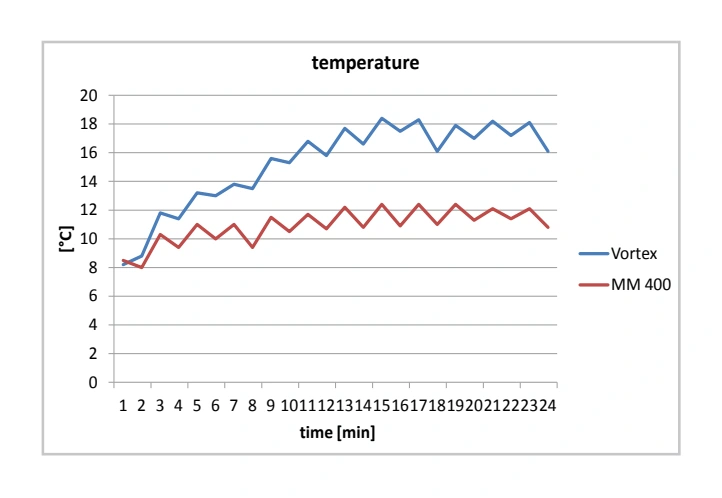
Temperature increase during cell disruption in the MM 400 (at 30 Hz) or with a Vortexer, cooling on ice after each minute of cell disruption
Increased reproducibility of total protein concentration after cell disruption, 7 min in MM 400, 12 min Vortex; error bars: % standard deviation Fig. 4: Increase of temperature, 7 min MM 400 at 20 Hz or 30 Hz, no intermediate cooling on ice
Vortex MM 400
Vortex MM 400
7 6 time [min]
temperature
time [min]
MM 400 Vortex
time [min]
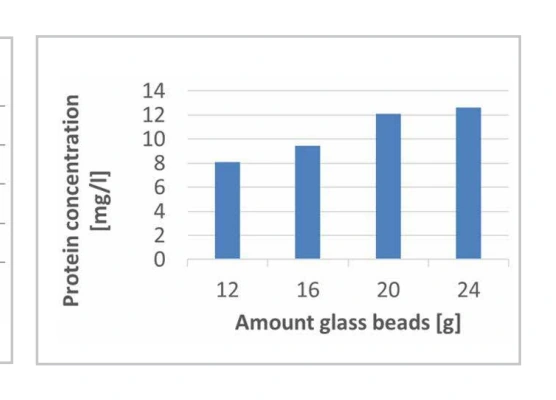
Yeast cell disruption was optimized by varying the oscillating frequency and the bead size. For the extraction of proteins, it was beneficial to reduce the speed to 20 Hz, resulting in less foaming and a slight increase in total protein content. Moreover, the temperature rise was less at 20 Hz compared to 30 Hz . Cell disruption results were slightly improved by using glass beads sized 0.75 mm - 1.00 mm instead of 0.5 mm - 0.75 mm and by increasing the mass to 24 g .
Optimization of cell disruption in the MM 400. Using a bead size range from 0.75 to 1 mm results in highest protein concentration (left); the protein concentration is influenced by the number of beads (right).
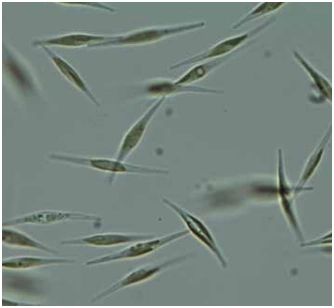
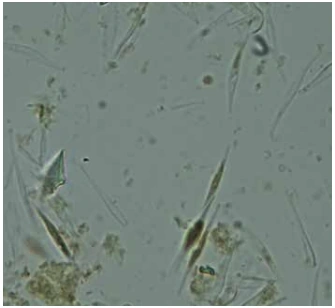
Cells of the diatom Thalassiosira pseudonana before (left) and after disruption (right) using the Mixer Mill MM 400 in combination with the tube adapter for 50 ml tubes; 20 secs at 20 Hz.
In another approach the yeast cell disruption process using the MM 400 was compared to ultrasonification. In addition, the protein concentration after cell disruption in 2 ml single-use tubes or 50 ml conical centrifuge tubes was compared. After five minutes, the protein yield achieved by bead beating was about 6 times higher compared to the yield achieved by ultrasonification (results not shown). The difference between 1 ml cell suspension (2 ml tubes) or 25 ml cell suspension (centrifuge tubes) was negligible. The obvious advantages of the automatic cell disruption process over other methods such as manual vortexing or ultrasonification have been clearly proven. The method provides a high yield of proteins, offers excellent reproducibility, permits simultaneous processing of numerous samples and keeps the temperature increase of the cell suspension during disruption within tolerable limits.
Case study: Cell disruption of microalgae Cell disruption of microalgae like diatoms can be a challenge as the cells tend to resist the shearing effects produced by the glass beads. As cell disruption of diatoms using glass beads in combination with shakers was not successful in the past, cells were often disrupted by using a French Press. In contrast to other shakers, the Mixer Mill MM 400 in combination with the adapter for conical centrifuge tubes is suitable to effectively disrupt microalgae cells. 300 ml cell suspension of the organism Thalassiosira pseudonana were centrifuged, re-suspended in 20 ml disruption buffer and filled in a 50 ml conical centrifuge tube. 40 ml glass beads (90 µm to 150 μm and 300 µm to 400 μm, ratio 1:1) were added and cell disruption was performed for 20 sec at 20 Hz. Complete cell disruption was visible through the microscope .
The MM 400 even achieved full cell disruption of the algae Phaeodactylum tricornutum which easily resists shearing effects thanks to a missing silicate cell wall. 200 ml cell culture were centrifuged and re-suspended in 20 ml disruption buffer and transferred to a 50 ml conical tube. 40 ml glass beads (90 µm to 150 μm and 300 µm to 400 μm, ratio 1:1) were added and cell disruption was performed within 3 x 60 sec at 30 Hz. After a total of 3 minutes no intact cells were visible through the microscope .
Compared to the method involving the use of a French Press the bead beating process using the MM 400 is less time-consuming as eight samples can be disrupted simultaneously and the risk of cross-contamination is reduced. The use of the MM 400 instead of other shakers is recommendable because it generates shearing forces powerful enough to efficiently disrupt even those cells which usually resist disruption via bead beating.
Homogenization of soft and tough biological samples like sputum or liver
Sometimes the preparation and homogenization of biological samples can be as tough as the material itself. The widely used 2 ml single-use tubes are often not large enough to accommodate the whole sample volume; hence, the sample needs to be divided and reunited after the homogenization process which means an additional time-consuming working step in the lab routine. While it is true that usually larger sized grinding jars, e. g. of stainless steel, are available which accommodate the complete sample volume, these have the drawback of requiring cleaning after use. The perfect solution for this situation comes in the form of new 5 ml single-use tubes which have a larger capacity and don’t require cleaning. RETSCH now offers a new adapter for the Mixer Mill MM 400 which accepts 3 of the 5 ml tubes, thus permitting simultaneous preparation of 6 x 5 ml of sample. The nature of biological samples can vary considerably, for example, very tough sputum of cystic fibrosis patients or tissue samples like liver, lung or tumors. In the following we describe the use of the MM 400 with the new adapter for 5 ml single-use tubes for homogenizing these samples.
Case study: Homogenization of very tough sputum of cystic fibrosis patients The sputum coughed up by cystic fibrosis patients is usually homogenized for routine diagnostics but also for research. It can be easily homogenized in the Mixer Mill MM 400; however, due to the use of 2 ml vials, it was not possible in the past to process more than 1 ml of each sputum sample. Dividing the tough and viscous sputum into portions for homogenization was not a suitable procedure for the partly infectious material. Another option was to use 5 ml grinding jars of stainless steel which required thorough cleaning. With the new adapter for 5 ml reaction tubes the advantages of disposable vials and higher volume are combined. In a trial up to 3 ml were homogenized with 2 to 3 zirconium oxide grinding balls (Ø 5 mm) at 30 Hz for a maximum of 2.5 min. The fact that the complete sample can now be processed in the 5 ml tubes in one step means time-saving and reduced workload; it also reduces handling of potentially infectious material to a minimum.
Adapter for MM 400 which accommodates five 5 ml tubes
Case study: Homogenization of liver tissue Tissue samples like lung, liver or tumors are routinely examined in biological basic research, toxicology, biomedicine, pharmacology, molecular diagnostics and many more areas. The problems the user has to face here are similar to those of homogenizing sputum. Hence, the new 5 ml single-use tubes in combination with the Mixer Mill MM 400 are a good solution for effective homogenization for this application as well. Some combinations of grinding ball sizes and numbers as well as sample volumes were tested for the homogenization of liver with the result that a few 10 mm balls had a much better size reduction effect on the tissue structure than many smaller balls.
Liver sample before and after homogenization in the MM 400
Different biological samples pulverized by cryogenic grinding with liquid nitrogen
For the complete homogenization of 3 g of fresh liver tissue the use of three 10 mm stainless steel grinding balls provided the best results. The reaction vial was filled up with aqueous buffer up to the maximum filling line. The sample was then homogenized for 5 minutes at 30 Hz and no tissue residues were visible after the process . The same grade of homogenization can be achieved in conical centrifuge tubes with the following parameters: 4 balls stainless steel (20 mm), 15 g sample, buffer, 30 Hz, 3 min. Due to the weight of sample/grinding ball/buffer, only 4 samples can be processed at a time with centrifuge tubes. The temperature increase is in both cases negligible.
Cryogenic grinding of cell pellets, muscle tissue and pine needles
It is possible to pulverize soft and tough but also fibrous biological samples in the absence of buffer. For materials like fibrous plants, very tough veins or fingernails, or types of animal or tumor tissue homogenization in a buffer system is not very effective. Cryogenic grinding, however, which means embrittling the samples with liquid nitrogen or dry ice before or during grinding, has proven to be a very good way to obtain homogeneously pulverized samples. Unlike the bead beating process, the method of freezing the samples before crushing is also suitable for cracking intracellular organelles, for example of yeast. Another advantage of cryogenic grinding is the very low temperature, preventing the degradation of e. g. proteins or drastically reducing the loss of volatile ingredients that may occur during milling. For sticky samples like berries, cryogenic grinding is often the only way to obtain a homogeneous sample. Table 1 gives an overview of sample materials which have been successfully pulverized by cryogenic grinding in the Mixer Mill MM 400 or the CryoMill. 2 ml steel tubes are available for cryogenic grinding in the MM 400.
| Sample | Accessories | Feed quantity | Grinding time | Speed | Final fineness (d90)/result |
|---|---|---|---|---|---|
| E. coli bacteria | • 2 grinding jars stainless steel 50 ml • 2 grinding balls 25 mm stainless steel per jar | 2 x 10 ml frozen cell pellets | 2 min | 30 Hz | complete cell disruption |
| Muscle tissue | • grinding jar stainless steel 50 ml • grinding ball 25 mm stainless steel | 10 g | 4 min | 25 Hz | <150 µm |
| Pine needles | • 2 adapters for ten 2 ml reaction vials each • 2 x balls stainless steel 5 mm per vial | 2 needles per vial | 3 min | 30 Hz | Reproducible RNA extraction of 20 samples in one step |
| Berries | • grinding jar stainless steel 50 ml • 4 x grinding balls stainless steel 15 mm | 2 g | 40 secs | 20 Hz | <200 µm |
| Finger nails | • adapter CryoMill for 4 x 2 ml vials • 4 grinding balls stainless steel 5 mm per vial | 1 finger nail per vial | 2 min | 25 Hz | <200 µm |
| Rat gut | • grinding jar stainless steel 35 ml • 1 x grinding ball stainless steel 20 mm | 1.8 g | 2 min | 30 Hz | <150 µm |
Pieces of meat before and after cryogenic grinding
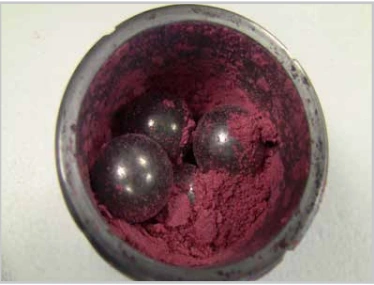
Sticky berries before and after cryogenic grinding
Pine needles before and after cryogenic grinding (incl. agarose gel for RNA separation showing good reproducibility and quantity of prepared RNA after grinding)
CryoMill with 50 l dewar
Suitable lab mills for cryogenic grinding
For small sample quantities, the use of the Mixer Mill MM 400 or the CryoMill is very effective. Suitable grinding jars of the MM 400 are made of steel or PTFE; steel vials of 2 ml or single-use vials of 1.5 or 2 ml can also be used. Care must be taken that no liquid nitrogen is enclosed in the grinding jars or tubes because the heat generated by the grinding process causes the liquid nitrogen (LN2) to become gaseous, resulting in a considerable pressure increase inside the grinding jar. With the help of tongs, the closed grinding jar is placed for 2 to 3 minutes in an insulation container filled with liquid nitrogen and is then clamped into the MM 400. Due to the high energy input and the resulting frictional heat, the grinding process should not take longer than 3 minutes to prevent the sample from warming up and to preserve its breaking properties. If longer grinding times are required, these should be interrupted by intermediate cooling of the closed grinding jars.
As an advancement of the MM 400 RETSCH has developed the CryoMill which offers the advantage of continuous cooling of the grinding jar with liquid nitrogen, maintaining the temperature of jar and sample at a consistent -196 °C even during long grinding processes. If intermediate cooling is required, cycles of grinding and cooling can be programmed. The grinding jars remain in the mill during the whole process and the user comes at no point into contact with liquid nitrogen which makes operation of the CryoMill very safe. The automatic pre-cooling function ensures that the grinding process does not start before a temperature of -196 °C is reached and maintained. For heavy-metal-free grinding a zirconium oxide grinding jar is available for use in the CryoMill.
Mixer Mill MM 500 control
Another mixer mill suitable for cryogenic sample processing is the MM 500 control which allows cold grinding down to temperatures of -100°C in two grinding jars sized 50 ml, 80 ml or 125 ml. Suitable materials for cryogenic grinding include zirconium oxide for heavy-metal free grinding, and tungsten carbide if high energy input is required to pulverize very tough samples. With special adapters accommodating up to thirty-six 2 ml single use vials or up to eighteen 2 ml steel tubes, high throughput is guaranteed.
Pulverization of forensic samples: bones, teeth and hair
Forensic materials such as hair, bones and teeth are mostly brittle and therefore usually don’t require cooling prior to pulverization. Depending on the required analytical fineness the samples may have to be submitted to preliminary crushing in a Jaw Crusher or Cutting Mill to produce particle sizes small enough for further processing in a Ball Mill (< 10 mm). Cutting Mills are used for pre-crushing bones which may be fresh and therefore not completely dry and may even contain meat residues. RETSCH offers a whole family of cutting mills for primary size reduction of soft, medium-hard, elastic, tough and fibrous sample materials. The wide range of accessories allows for perfect adaptation to a variety of applications. The SM 300 can be equipped with three different rotors and bottom sieves ranging from 0.25 mm – 20 mm. In contrast to fresh and fatty bones, dry bones may even be reduced to a size < 0.25 mm in one or two steps. To allow for optimum adaptation to sample properties with regards to breaking behavior and temperature sensitivity, the SM 300 features a variable speed from 100 - 3,000 min-1 and is powerful enough to grind also tough bones.
RETSCH offers different types of cutting mills
Application example bones In the following example, 700 g bones were pre-crushed in the SM 300, using a 6-disc rotor and a bottom sieve with 6 mm aperture size. After crushing the bones at 3000 min-1 within only 30 seconds, pieces smaller than 6 mm were obtained .
Pulverization of bones or teeth is mostly conducted in ball mills using grinding balls >5 mm made of steel, zirconium oxide or tungsten carbide. The big grinding balls have enough crushing power to pulverize the very hard samples by impact. The pre-crushed bones in the example above were pulverized in the Mixer Mill MM 400. 1 g of sample was filled into a 35 ml grinding jar of zirconium oxide and finely ground using a 20 mm zirconium oxide grinding ball. After 2 minutes at 30 Hz, the sample was pulverized to particles smaller than 200 µm, and thus ready for extraction of nucleic acids. If the sample is very tough, embrittlement with liquid nitrogen improves the breaking behavior.
Bone sample before and after grinding in a SM 300 cutting mill
Teeth before and after grinding in the MM 400 mixer mill
Application example teeth Another example is the crushing of teeth. 1 piece was added to a 25 ml grinding jar of zirconium oxide and pulverized using a 20 mm grinding ball of the same material. After 3 min at 30 Hz in the MM 400, the sample had become a powder with particles mostly smaller than 100 microns (figure 16, right).
Application example hair The MM 400 and the CryoMill – which is specially designed for cryogenic grinding - are also suitable for grinding fibrous samples like hair. Interestingly, very healthy hair requires grinding at cryogenic conditions, whereas unhealthy hair can be milled at room temperature as it breaks more easily. In contrast to the more compact bones or teeth, hair is best pulverized using smaller grinding balls, as friction rather than impact is required for the process. Attention needs to be paid to the grinding time – it should be kept as short as possible, as the samples tend to get burnt. 1 g of hair for example is put into a 25 ml grinding jar of stainless steel including 6 stainless steel balls of 10 mm diameter. After milling for 2 min at 25 Hz, the sample is pulverized to a size below 160 µm (figure 17, right) and is now suitable for analysis like drug control.
Human hair before and after fine grinding in the MM 400
With RETSCH mills, various forensic samples can be easily pulverized for analysis or extraction of nucleic acid. Also bigger samples like complete bones can be prepared easily in two steps by pre-crushing and fine grinding.
Washing procedure to obtain intact bacterial cells from human tissue
After artificial replacement of joints like elbows or knees, infections may occur: One of the main risks of joint replacements is the so-called prosthetic joint infection (PJI) caused by various species of bacteria. After prosthetic joint infections, for example, the bacteria on the tissue samples have to be washed off without destroying them, so that they can be cultivated afterwards for diagnostic reasons. At present, after multiple improvements in operating rooms, surgical techniques, prophylactic antibiotics and careful patient selection among other factors, the reported PJI rates lie in the range of 2%, which means that
there is still a significant number of infections every year. PJI may occur within 3 days after the surgical procedure, but it can also take years to break out. Since very different microorganisms cause PJI, the classification for qualitative therapies is very complex. Unfortunately, depending on the method used, the documentation rate is limited – in many cases the infection cannot be documented with traditional methods. Here the Mixer Mill MM 400 comes into play. The procedure is easy: The samples are diluted with 20 ml of sterile demineralized water and 5 ml glass beads of 1 mm diameter in an autoclaved steel jar. It is also possible to use disposable jars which are agitated for 3.5 min at 30 Hz. During this process the microorganisms are washed off the sample without being destroyed so that they can be easily reproduced later on an agar plate. With this method a good documentation rate is achieved (A.-L. Roux et. al 2010). It can basically be used on any solid infected tissue sample regardless of the presence of implanted material.
For a detailed description of the procedure please refer to:
A.-L. Roux, V. Sivadon-Tardy, T. Bauer, A. Lortat-Jacob, J.-L. Herrmann, J.-L. Gaillard and M. Rottman: Diagnosis of prosthetic joint infection by beadmill processing of a periprosthetic specimen; Clinical Microbiology and Infection, 2010, European Society of Clinical Microbiology and Infectious Diseases, CMI, 17, 445–450.
Mixer Mill MM 400: a true multi-purpose lab mill
All these application examples show that RETSCH's Mixer MIll MM 400 is very versatile in use thanks to a wide range of accessories. It is ideally suited for cell disruption in single-use vials, such as 50 ml conical centrifuge tubes or smaller reaction vials (0.2 / 1.5 / 2 / 5 ml). The MM 400 is used for the disruption or grinding of a huge variety of hard, semi-hard, brittle and soft, elastic or fibrous materials, including plants, pine needles, feathers, bones, cell tissue, pharmaceutical products, wood, minerals or chemicals. It operates with a maximum frequency of 30 Hz and achieves grind sizes down to 5 µm.
Mixer Mill MM 400 with adapter for 8 x 50 ml conical centrifuge tubes (below) and adapters for single-use reaction vials
Plan the configuration for your material.
Describe both the starting matrix and the downstream assay. A useful disruption endpoint for nucleic-acid extraction may differ from one for protein investigation. Vessel compatibility, containment and recovery also form part of the preparation method, especially when several small specimens are handled together.
| Consideration | Information to provide |
|---|---|
| Starting biology | Cells, tissue or plant material |
| Target analysis | Molecules or physical material required |
| Handling method | Vessels, containment and recovery |
How should the application examples be used?
The results describe the materials and configurations discussed here. Confirm equipment options, contact materials and operating conditions for your own sample before adopting a method. A demonstrated endpoint does not guarantee the same outcome for a different material.
Discuss material testing with Glen Mills or request further information or a quote.
Explore the equipment discussed
- RETSCH MM 400 Mixer Mill
- RETSCH CryoMill Cryogenic Mixer Mill
- RETSCH SM 300 Cutting Mill
- RETSCH MM 500 control Mixer Mill