YOUR MATERIAL. YOUR NEXT BREAKTHROUGH.Explore free feasibility testing →

JET-MILLING SUITABILITY

Lithium-rich manganese cathode milling for research

Plan lithium-rich manganese oxide experiments around the exact composition, phase mixture and purpose of mechanical treatment. Preserve controls for structural comparisons.

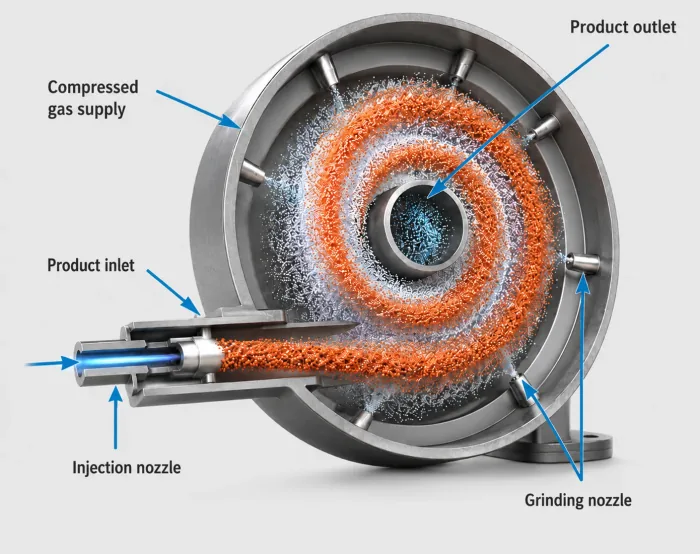
Fluid Energy jet-milling diagram showing compressed-gas flow and particle collisions
Dry gas jet-milling mechanism. The method discussion explains suitability limits and when another preparation step is needed.

What is LMR?

Lithium-rich manganese oxides are a family of cathode research materials rather than one fixed compound. The lithium excess, transition-metal content and phase description must accompany every sample and milling record.

Composition
Variable lithium-rich layered oxide compositions
Material family
Lithium-ion cathode materials
First processing decision
Distinguish a mechanochemical synthesis hypothesis from routine preparation of an existing layered powder.

What needs to be controlled in LMR processing?

Particles and process stage

Changes in phase, defect content and morphology can occur together. Reporting only a smaller powder size leaves the cause of any electrochemical difference unresolved. Define the hypothesis and the characterization needed before the run.

Handling and atmosphere

Request exact composition and the current SDS rather than a generic LMR label. Define exposure and temperature controls for the full mixture and any synthesis additives.

Technical background: Composition and structure of lithium- and manganese-rich oxides. See the source limits below before applying a published method to this powder.

Which milling or mixing route fits LMR?

Jet milling

Do not select jet milling merely because the material is a cathode powder. A finished-material trial needs a justified deagglomeration target and evidence that the desired phase and surface condition remain acceptable.

Ball milling

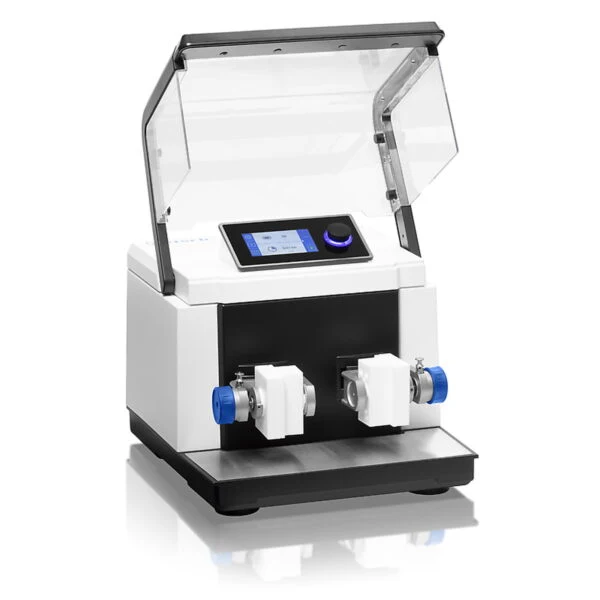
Planetary or mixer milling can be evaluated for mechanical activation and deliberate structural modification. Treat milling history as an experimental variable, including tool composition, interruptions and the subsequent thermal route.

Mixing and homogenization

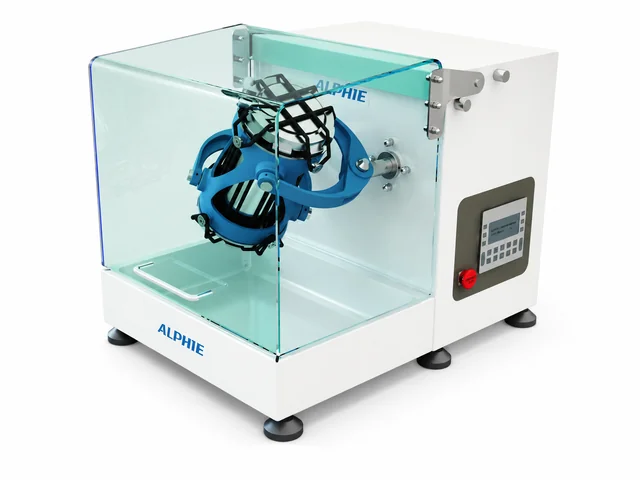
Use blending as a lower-energy reference when the objective is precursor distribution. This helps distinguish the effect of composition uniformity from the effect of mechanical activation.

What to bring to a LMR trial review

Identify the feed and task
Provide lithium excess, transition-metal composition, phase description and the mechanical-research hypothesis.
Define what must remain intact
Decide whether structure is meant to remain unchanged or is deliberately being modified by the experiment.
Agree on the comparison
Retain samples before milling, after milling and after subsequent reaction so mechanical and thermal effects can be distinguished.

A proposed evaluation brief, not a validated processing recipe.

Compare processing mechanisms

Jet-milling suitability and supporting preparation for LMR

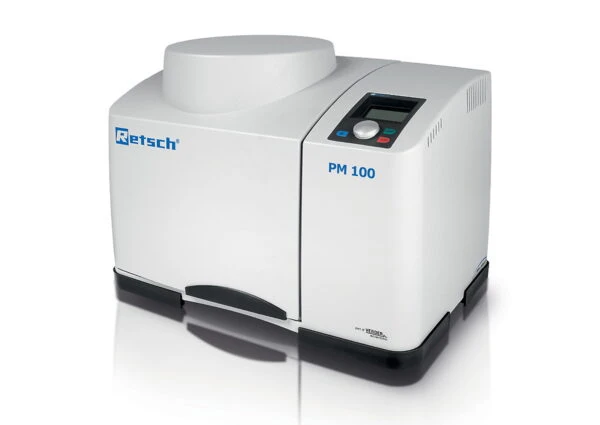
Start by checking whether the intended powder change calls for dry jet milling. Jet milling is not the first route proposed for this preparation task; review the material-specific method discussion before requesting a configuration.

Explore laboratory jet mills Explore pilot and production jet mills

Supporting preparation equipment when the task requires it

These are candidates for application review. Equipment listings do not establish cathode-specific performance, inert-gas capability or containment. Confirm the exact configuration with Glen Mills.

How should LMR particle properties be evaluated?

Combine composition and structural characterization with microscopy and size measurement. Retain material at each stage so changes after milling and after heat treatment can be evaluated separately.

D10The fine end
10% below this diameter
D50The median
50% below this diameter
D90The coarse end
90% below this diameter

Percentiles depend on the measurement and weighting basis. Report the method, dispersion conditions and complete curve. These labels are definitions, not target sizes or equipment guarantees.

Plan a LMR feasibility test

  1. Define the material

    Share the chemistry, processing stage, quantity and current condition.

  2. Agree on a trial

    Confirm suitability, safety information, scope and acceptance measures before shipping.

  3. Compare the powder

    Evaluate the intended change against morphology, contamination and retained function.

  4. Plan the next scale

    Review feeding, recovery, handling and the additional validation needed.

Free feasibility testing depends on material suitability and an agreed scope. Ask which measurements are available, how much sample is required and which handling arrangements are needed. Do not ship powder before written instructions.

Moving from a laboratory trial to pilot or production work requires review of feeding, collection, cleaning, thermal behavior and throughput. A laboratory result does not establish performance at a larger scale.

Get an equipment recommendation

LMR processing questions

Can LMR be jet milled?

It is not the primary route proposed here for LMR precursor or composite work. A dry finishing trial would require a separate objective and material review.

Which LMR particle properties should be specified?

Specify composition, processing stage, primary and secondary morphology where applicable, and the full particle-size distribution. For LMR, the first decision is: distinguish a mechanochemical synthesis hypothesis from routine preparation of an existing layered powder.

Is there one LMR composition to use as a milling reference?

No. LMR describes a family. Record lithium excess, the transition metals and phase description with the sample and experiment, rather than transferring a recipe based only on the abbreviation.

When should ball milling be considered for LMR?

Consider it when LMR precursor activation, analytical preparation or deliberate material modification is the experiment. Confirm the intended change and the measurements that would identify unwanted damage before choosing settings.

How can mechanical and heat-treatment effects be separated?

Retain material at both stages and use a consistent control route. Compare the chosen structural, composition and particle measures before attributing the final change to milling alone.

What is needed for a LMR feasibility request?

Share the exact composition or a nonconfidential description, SDS, processing stage, starting condition, desired result and quantity. Include atmosphere and impurity limits. Glen Mills must agree on suitability, scope and shipping before receiving the sample.

Technical basis and source limits

Primary research demonstrates that composition influences lithium- and manganese-rich oxide structure. The proposed comparison strategy does not claim milling resolves voltage fade or other cell limitations.

Prepared . Literature and manufacturer references support the discussion; they do not establish a tested Glen Mills recipe for your powder.

Application-selection guidance for discussion with Glen Mills. Equipment and application support since 1980

YOUR MATERIAL. YOUR NEXT STEP.

Could jet milling fit your cathode powder?

Tell us which powder you have, what needs to change and what must remain intact.

Start with a jet-milling suitability review. Request free feasibility testing or an equipment recommendation; the team will confirm whether dry jet milling fits the material and agree on scope before arranging a test.

Start with a nonconfidential description. Contact us before sharing proprietary formulations, and wait for written shipping instructions before sending material.

Explore laboratory jet mills

How feasibility testing works

973 777 0777
info@glenmills.com

Request a jet-milling suitability review

Add technical details (optional)

Include units and measurement method, if known.

Glen Mills uses your contact and application details to respond to this inquiry. Request a secure document-sharing route if SDS or confidential files are needed.

Send your inquiry directly to the Glen Mills team. Fields marked * are required.