YOUR MATERIAL. YOUR NEXT BREAKTHROUGH.Explore free feasibility testing →

JET-MILLING SUITABILITY

NMC cathode powder jet-milling evaluation

Review dry jet milling for NMC deagglomeration and size control. Define the grade, particle architecture and surface condition before proposing a configuration.

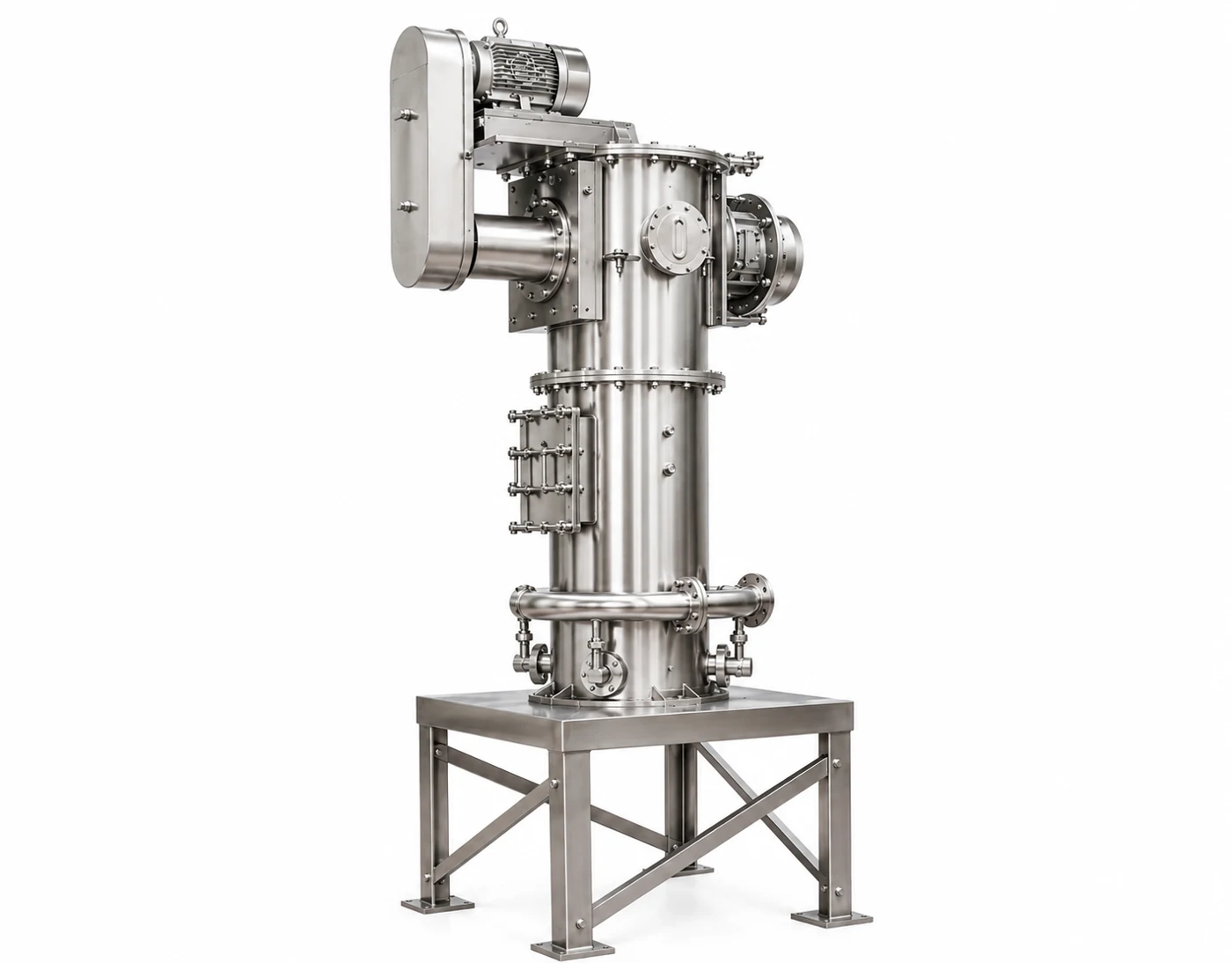
Fluid Energy Model 00 JET-O-MIZER Jet Mill for fine grinding powders using compressed gas
Fluid Energy Model 00 JET-O-MIZER. An equipment candidate for review, not a validated NMC process.

What is NMC?

NMC, also called NCM, is a family of lithium nickel manganese cobalt oxide cathodes. Grade digits depend on the stated element order. NMC 111, 532, 622 and 811 identify nominal ratios, not interchangeable powder-processing specifications.

Composition
LiNixMnyCozO2; x + y + z = 1
Material family
Lithium-ion cathode materials
First processing decision
Define the NMC grade and whether the particles are single crystals, polycrystalline secondary particles or precursor aggregates.

What needs to be controlled in NMC processing?

Particles and process stage

An NMC secondary particle may contain many primary crystallites. Breaking that architecture is a different operation from separating loose clumps. Before milling, compare dry and dispersed measurements with microscopy and the supplier’s morphology description.

Handling and atmosphere

Record composition, coating, storage and exposure history. Agree on humidity and gas compatibility for the exact grade; an NMC family name alone cannot define atmospheric limits.

Technical background: Direct observations of intergranular cracking in NMC811 particles. See the source limits below before applying a published method to this powder.

How do NMC grades compare?

NMC digits describe nominal nickel:manganese:cobalt ratios. NCM puts cobalt before manganese: nominal NMC 532 is therefore NCM 523. Confirm the formula and element order rather than equating digits alone.

Composition identifies the grade; it does not select the milling method
GradeNi:Mn:CoNominal formula
NMC 1111:1:1LiNi1/3Mn1/3Co1/3O2
NMC 5325:3:2LiNi0.5Mn0.3Co0.2O2
NMC 6226:2:2LiNi0.6Mn0.2Co0.2O2
NMC 8118:1:1LiNi0.8Mn0.1Co0.1O2

For every grade, provide the single-crystal or secondary-particle description, coating, precursor/finished-powder stage and exposure requirements. The investigation emphasis on a grade page is a starting question, not a grade-specific machine capability.

Which milling or mixing route fits NMC?

Jet milling

A dry jet-milling trial may be useful for a justified deagglomeration or size-reduction task. Establish an acceptable fraction of fractured particles and assess surfaces and contamination, rather than presuming gas-driven milling preserves every secondary particle.

Ball milling

Ball milling belongs in defined precursor activation, analytical preparation or deliberate material-modification studies. It is not a default finishing step for every commercial NMC powder. Keep an unmilled reference for structural and electrode comparisons.

Mixing and homogenization

For combining NMC with compatible additives, evaluate a powder blender before committing to grinding. Check whether the required additive dispersion is achievable without unacceptable segregation or particle damage.

What to bring to a NMC trial review

Identify the feed and task
Provide the formula and metal ratio, single-crystal or secondary-particle description, coating and process stage.
Define what must remain intact
Identify which primary crystals or secondary-particle structures are intentional, and which objects are loose agglomerates.
Agree on the comparison
Use the same dispersion method for feed and product. Compare particle images, distribution tails and contact-surface contamination.

A proposed evaluation brief, not a validated processing recipe.

Compare processing mechanisms

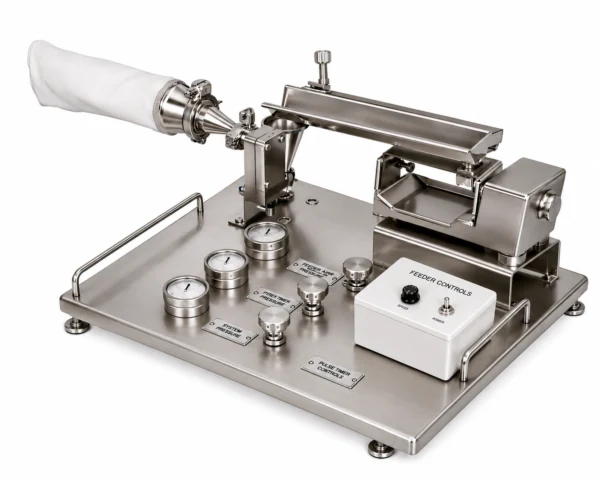
Jet-milling equipment to evaluate for NMC

These are candidates for application review. Equipment listings do not establish cathode-specific performance, inert-gas capability or containment. Confirm the exact configuration with Glen Mills.

Other preparation equipment when the task requires it

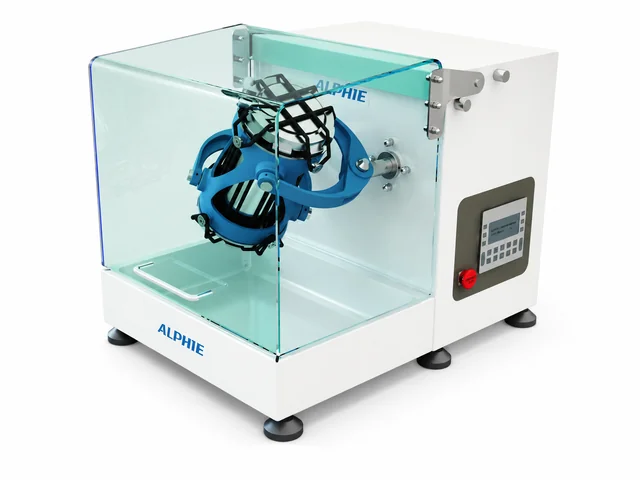
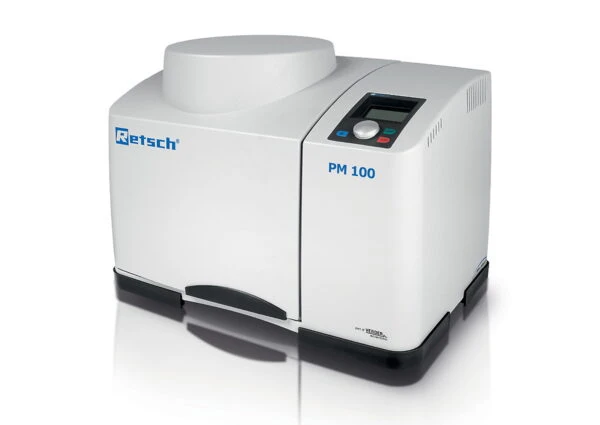
Precursor activation or ingredient blending is a different task from dry jet milling. These alternatives support a material-specific choice.

These are candidates for application review. Equipment listings do not establish cathode-specific performance, inert-gas capability or containment. Confirm the exact configuration with Glen Mills.

How should NMC particle properties be evaluated?

Use microscopy, X-ray diffraction where appropriate, contamination analysis and consistent electrode tests alongside D10, D50 and D90. Record dispersion energy so a measurement does not silently become a second milling operation.

D10The fine end
10% below this diameter
D50The median
50% below this diameter
D90The coarse end
90% below this diameter

Percentiles depend on the measurement and weighting basis. Report the method, dispersion conditions and complete curve. These labels are definitions, not target sizes or equipment guarantees.

Plan a NMC feasibility test

  1. Define the material

    Share the chemistry, processing stage, quantity and current condition.

  2. Agree on a trial

    Confirm suitability, safety information, scope and acceptance measures before shipping.

  3. Compare the powder

    Evaluate the intended change against morphology, contamination and retained function.

  4. Plan the next scale

    Review feeding, recovery, handling and the additional validation needed.

Free feasibility testing depends on material suitability and an agreed scope. Ask which measurements are available, how much sample is required and which handling arrangements are needed. Do not ship powder before written instructions.

Moving from a laboratory trial to pilot or production work requires review of feeding, collection, cleaning, thermal behavior and throughput. A laboratory result does not establish performance at a larger scale.

Get an equipment recommendation

NMC processing questions

Can NMC be jet milled?

It is an evaluation candidate for a defined NMC dry-powder task, subject to particle-integrity, handling and recovery checks. The equipment list is not a validated application result.

Which NMC particle properties should be specified?

Specify composition, processing stage, primary and secondary morphology where applicable, and the full particle-size distribution. For NMC, the first decision is: define the NMC grade and whether the particles are single crystals, polycrystalline secondary particles or precursor aggregates.

What is the difference between NMC and NCM naming?

Both names describe nickel, manganese and cobalt cathode oxides, but the letters change the order of the last two elements. Read the chemical formula and stated elemental ratio before comparing numbered grades.

When should ball milling be considered for NMC?

Consider it when NMC precursor activation, analytical preparation or deliberate material modification is the experiment. Confirm the intended change and the measurements that would identify unwanted damage before choosing settings.

Does an NMC grade number select the mill?

No. It identifies a nominal composition. Particle architecture, coating, processing stage and acceptable changes still determine the trial. The same grade can arrive in different particle forms.

What is needed for a NMC feasibility request?

Share the exact composition or a nonconfidential description, SDS, processing stage, starting condition, desired result and quantity. Include atmosphere and impurity limits. Glen Mills must agree on suitability, scope and shipping before receiving the sample.

Technical basis and source limits

NMC811 research identifies milling-related damage as a concern when interpreting particle fracture. It supports checking morphology, not a universal limit for all NMC grades.

Prepared . Literature and manufacturer references support the discussion; they do not establish a tested Glen Mills recipe for your powder.

Application-selection guidance for discussion with Glen Mills. Equipment and application support since 1980

YOUR MATERIAL. YOUR NEXT STEP.

Could jet milling fit your cathode powder?

Tell us which powder you have, what needs to change and what must remain intact.

Start with a jet-milling suitability review. Request free feasibility testing or an equipment recommendation; the team will confirm whether dry jet milling fits the material and agree on scope before arranging a test.

Start with a nonconfidential description. Contact us before sharing proprietary formulations, and wait for written shipping instructions before sending material.

Explore laboratory jet mills

How feasibility testing works

973 777 0777
info@glenmills.com

Request a jet-milling suitability review

Add technical details (optional)

Include units and measurement method, if known.

Glen Mills uses your contact and application details to respond to this inquiry. Request a secure document-sharing route if SDS or confidential files are needed.

Send your inquiry directly to the Glen Mills team. Fields marked * are required.