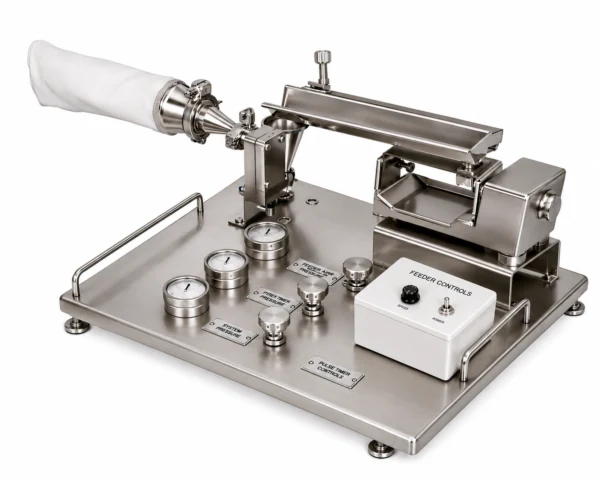
Fluid Energy Model 00 JET-O-MIZER
Dry fracture or deagglomeration when justified by the powder
Confirm: Feed behavior, gas compatibility, collection and particle damage.
View Fluid Energy Model 00 JET-O-MIZER
JET-MILLING SUITABILITY
A median size cannot describe an entire cathode powder. Read the distribution alongside particle architecture, sample preparation and the intended electrode process.
Cathode particle size can influence powder handling, electrode fabrication and electrochemical behavior, but finer is not automatically better. Primary crystals, secondary particles and loose agglomerates are different objects. A useful specification identifies what is measured, how it is dispersed and which properties must be retained.
D10, D50 and D90 are percentile diameters on a cumulative particle-size distribution: 10%, 50% and 90% of the reported distribution fall below those diameters. The weighting basis matters. A volume-based D50 is not interchangeable with a number-based median.
Specify the measurement method, wet or dry dispersion, material preparation and reporting basis. The instrument model alone does not define a comparable method. Include the full distribution, because identical D50 values can conceal different fines and coarse tails.
Percentiles depend on the measurement and weighting basis. Report the method, dispersion conditions and complete curve. These labels are definitions, not target sizes or equipment guarantees.
A secondary cathode particle may consist of several primary crystals. Loose agglomerates can form above that scale. Stronger dispersion may separate clumps or fracture particles, so a change in measurement can resemble a change in manufacturing.
Pair particle-size measurements with microscopy. Review whether dispersion pressure, sonication or a liquid medium modifies the sample. For sensitive powders, the measurement route itself needs compatibility review before its results are treated as a feed specification.
A size-reduction objective must be weighed against retained shape, surfaces, coatings and electrode fabrication needs. Additional fines can alter the powder that reaches a downstream process even when the median appears favorable. Any claim about cell benefit needs the actual electrode and testing conditions.
For NMC, check the intended particle architecture rather than assuming all secondary particles should be broken apart. For Prussian White, separate water-conditioning effects from the mechanical preparation. A single generic fineness target does not address either problem.
A size distribution reports a size model, not a complete surface description. Microscopy adds shape, fracture and aggregate information. Surface-area measurement adds another perspective, but it does not by itself establish coating quality, electrochemical accessibility or impurity content.
Choose the characterization set around the failure mode. If a trial is intended to break loose clusters while preserving crystals, compare images before and after and define an acceptable fraction of damaged particles. If the task is mixing, measure component distribution as well.
Provide the material identity, expected form, sample amount, SDS and the question to be answered. State whether the requirement is routine lot comparison, an agglomeration investigation or a comparison before and after milling. Note any restrictions on liquids, air exposure or mechanical dispersion.
Glen Mills offers particle-analysis services and equipment guidance. Agree on method, scope and reporting before shipping. Particle-analysis services are quoted by method; do not assume they are included in every free feasibility trial.
Dry fracture or deagglomeration when justified by the powder
Confirm: Feed behavior, gas compatibility, collection and particle damage.
View Fluid Energy Model 00 JET-O-MIZER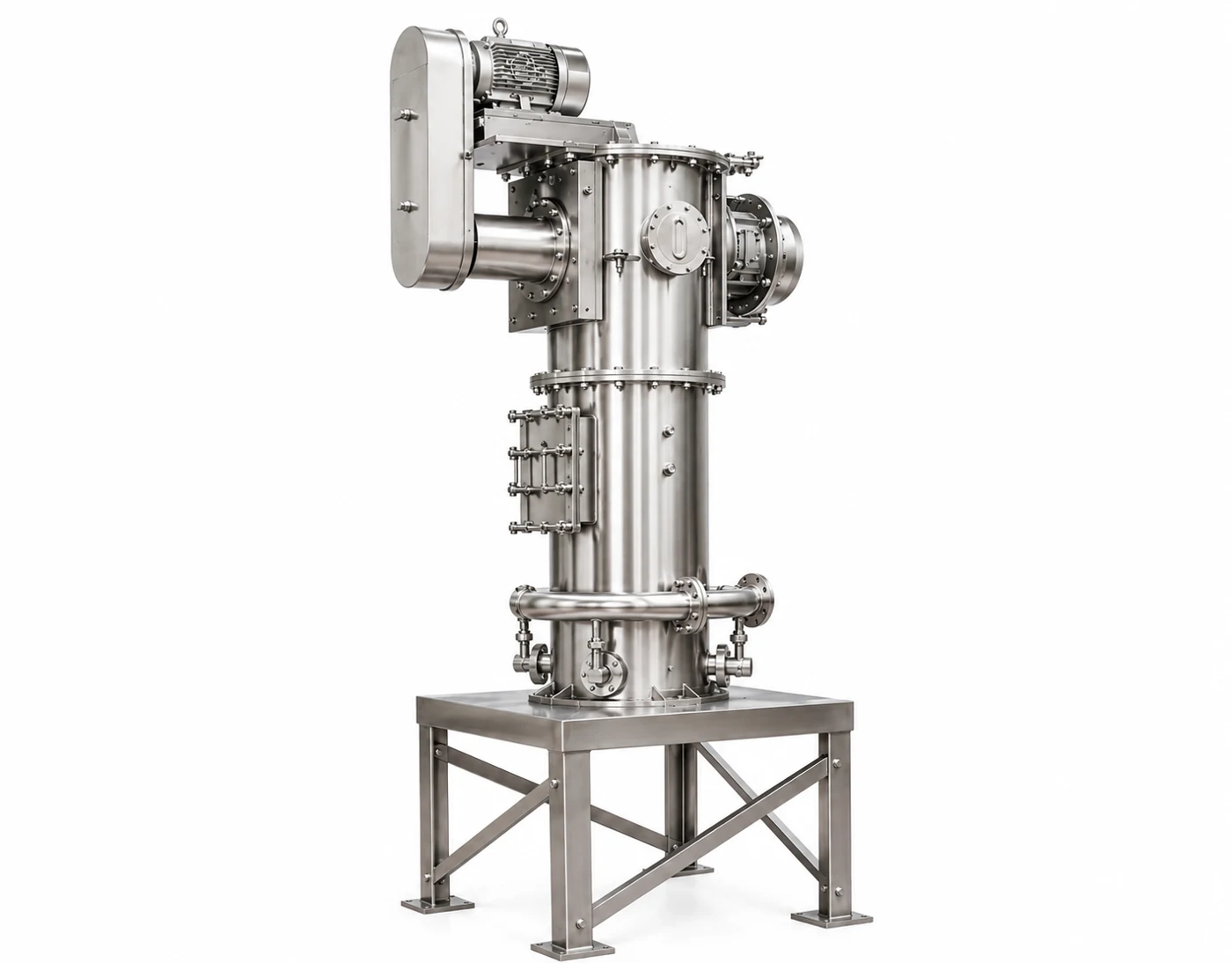
Jet-milling scale-up and active-classification review
Confirm: Material suitability, feed/collection configuration, capacity and scale-up validation.
View Fluid Energy ROTO-JET Jet MillThese are candidates for application review. Equipment listings do not establish cathode-specific performance, inert-gas capability or containment. Confirm the exact configuration with Glen Mills.
Precursor activation or ingredient blending is a different task from dry jet milling. These alternatives support a material-specific choice.
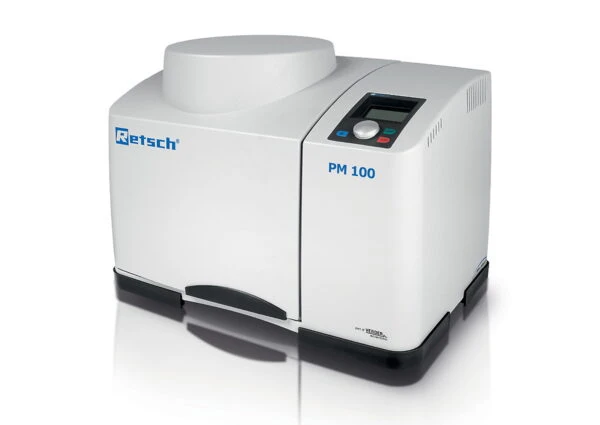
Precursor activation and defined mechanical research
Confirm: Jar and media compatibility, wear, temperature and retained phase.
View RETSCH PM 100 Planetary Ball Mill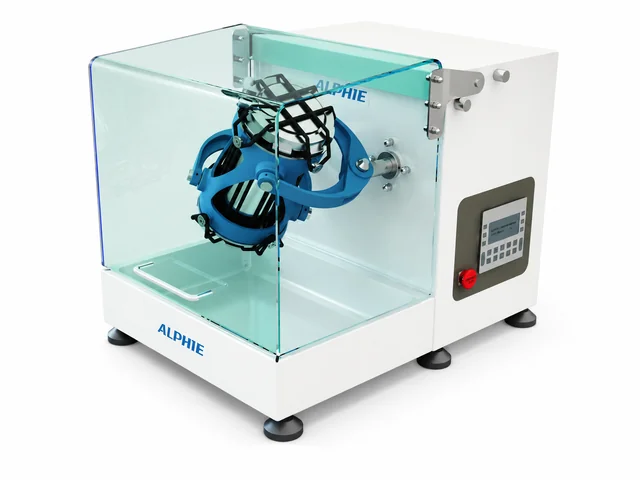
Closed-container blending without intentional grinding
Confirm: Blend uniformity, segregation and required handling configuration.
View Hexagon Product Development Alphie 3These are candidates for application review. Equipment listings do not establish cathode-specific performance, inert-gas capability or containment. Confirm the exact configuration with Glen Mills.
Not necessarily. The measured population and dispersion conditions determine whether the reported distribution represents separate particles, agglomerates or a mixture.
A D90 can define a useful coarse limit, but include the fines tolerance, measurement method and retained morphology so that another important property is not overlooked.
No. It documents one powder characteristic under a defined measurement method. Electrode and cell validation are separate steps.
Prepared . Literature and manufacturer references support the discussion; they do not establish a tested Glen Mills recipe for your powder.
Share the chemistry, processing stage, working quantity and acceptance measures. Glen Mills can review equipment candidates and whether a feasibility test is an appropriate next step.