Particles and process stage
Different layered compositions can behave differently in ambient conditions. Even a relatively stable research composition does not justify treating an uncharacterized grade as moisture tolerant.

JET-MILLING SUITABILITY
Review dry jet milling for a characterized sodium nickel manganese oxide powder. Define the layered phase, particle objective and exposure requirements first.
Sodium nickel manganese oxides are layered sodium-ion cathode materials with variable sodium and metal ratios. Phase notation and the supplier’s composition are needed to interpret both handling behavior and a powder-processing result.
Different layered compositions can behave differently in ambient conditions. Even a relatively stable research composition does not justify treating an uncharacterized grade as moisture tolerant.
Use grade-specific limits for atmospheric exposure and contact materials. The nickel content, other dopants and phase may change the handling review; the broad Na–Ni–Mn label is insufficient.
Technical background: Ambient stability of P2-layered sodium transition-metal oxides. See the source limits below before applying a published method to this powder.
Review jet milling only for a documented agglomeration or size problem. Define the acceptable morphology and exposure envelope before considering a gas source, feeder or collection configuration.
Planetary milling can be evaluated for precursor preparation or a deliberate research modification. Record composition and phase before and after the complete synthesis route to avoid confusing mixing with successful reaction.
An Alphie blender is an evaluation candidate for distributing compatible dry precursors. Establish homogeneity through sampling and confirm any required controlled-atmosphere configuration with the supplier.
A proposed evaluation brief, not a validated processing recipe.
Dry fracture or deagglomeration when justified by the powder
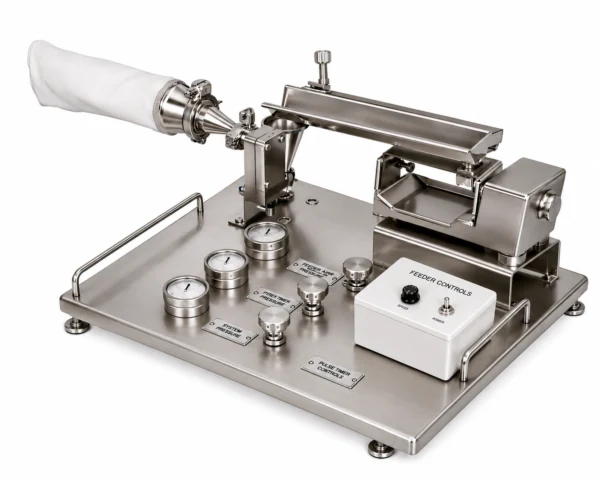
Confirm: Feed behavior, gas compatibility, collection and particle damage.
View Fluid Energy Model 00 JET-O-MIZER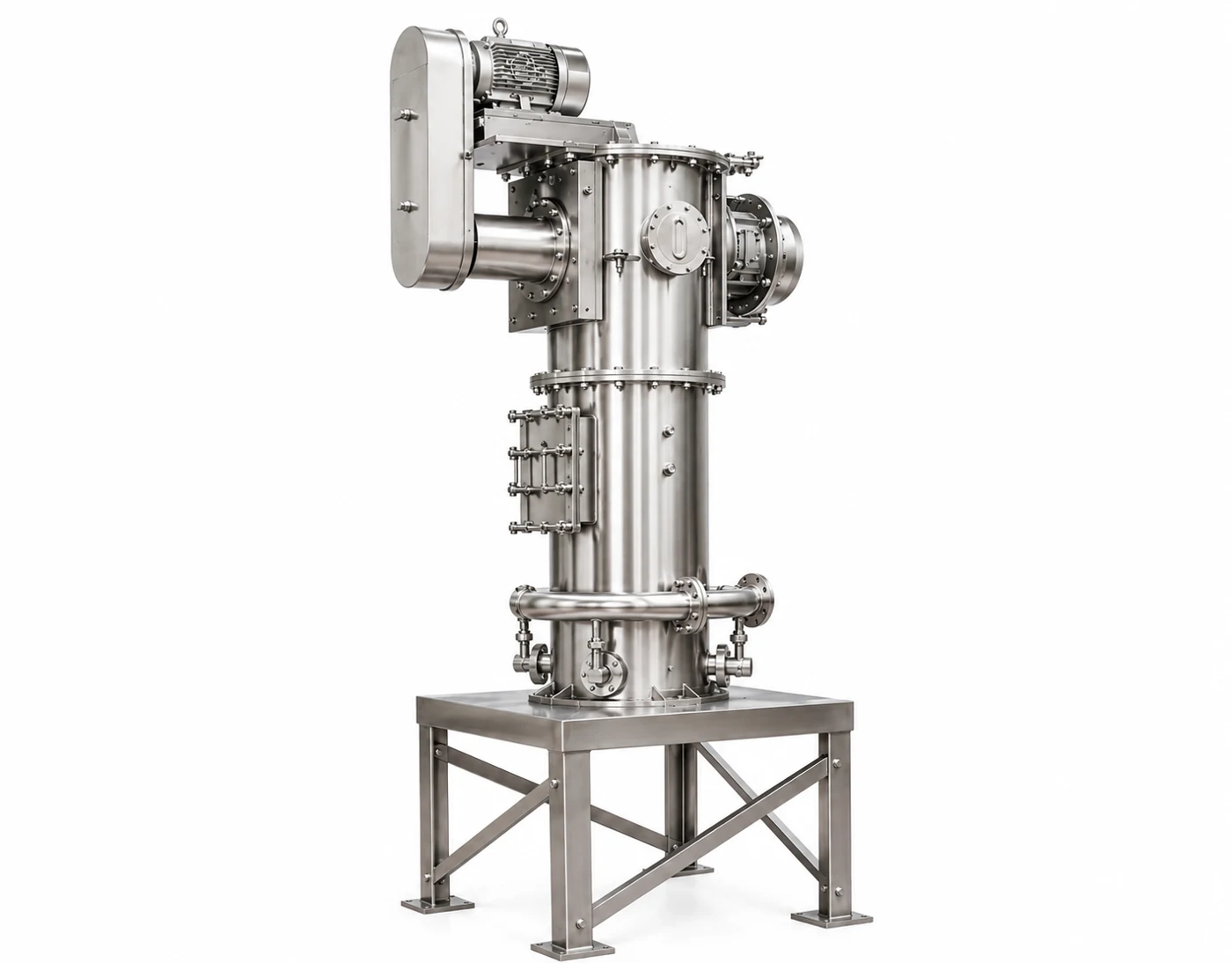
Jet-milling scale-up and active-classification review
Confirm: Material suitability, feed/collection configuration, capacity and scale-up validation.
View Fluid Energy ROTO-JET Jet MillThese are candidates for application review. Equipment listings do not establish cathode-specific performance, inert-gas capability or containment. Confirm the exact configuration with Glen Mills.
Precursor activation or ingredient blending is a different task from dry jet milling. These alternatives support a material-specific choice.
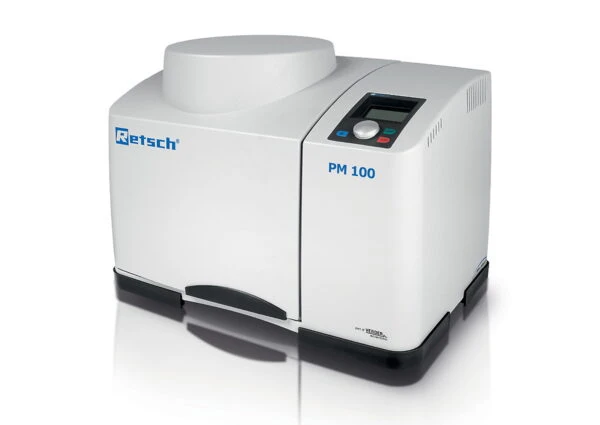
Precursor activation and defined mechanical research
Confirm: Jar and media compatibility, wear, temperature and retained phase.
View RETSCH PM 100 Planetary Ball Mill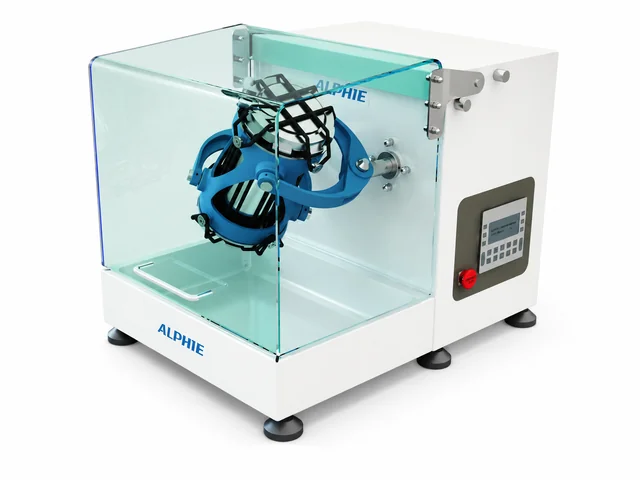
Closed-container blending without intentional grinding
Confirm: Blend uniformity, segregation and required handling configuration.
View Hexagon Product Development Alphie 3These are candidates for application review. Equipment listings do not establish cathode-specific performance, inert-gas capability or containment. Confirm the exact configuration with Glen Mills.
Compare the intended phase, particle morphology, composition and size distribution. Where ambient stability is part of the research question, include an exposure control independent of the milling trial.
Percentiles depend on the measurement and weighting basis. Report the method, dispersion conditions and complete curve. These labels are definitions, not target sizes or equipment guarantees.
Share the chemistry, processing stage, quantity and current condition.
Confirm suitability, safety information, scope and acceptance measures before shipping.
Evaluate the intended change against morphology, contamination and retained function.
Review feeding, recovery, handling and the additional validation needed.
Free feasibility testing depends on material suitability and an agreed scope. Ask which measurements are available, how much sample is required and which handling arrangements are needed. Do not ship powder before written instructions.
Moving from a laboratory trial to pilot or production work requires review of feeding, collection, cleaning, thermal behavior and throughput. A laboratory result does not establish performance at a larger scale.
Get an equipment recommendationIt is an evaluation candidate for a defined Na–Ni–Mn oxide dry-powder task, subject to particle-integrity, handling and recovery checks. The equipment list is not a validated application result.
Specify composition, processing stage, primary and secondary morphology where applicable, and the full particle-size distribution. For Na–Ni–Mn oxide, the first decision is: clarify whether the work concerns solid-state precursor distribution or preserving a finished layered cathode.
No. The relevant composition, phase and grade need their own review. Evidence for one stable formulation is not a family-wide handling specification.
Consider it when Na–Ni–Mn oxide precursor activation, analytical preparation or deliberate material modification is the experiment. Confirm the intended change and the measurements that would identify unwanted damage before choosing settings.
No. Verify the intended phase after the complete reaction route. Ingredient distribution and phase formation are distinct outcomes.
Share the exact composition or a nonconfidential description, SDS, processing stage, starting condition, desired result and quantity. Include atmosphere and impurity limits. Glen Mills must agree on suitability, scope and shipping before receiving the sample.
Primary work on P2-layered sodium oxides investigates composition-dependent ambient stability. It supports assessing the exact formulation rather than assuming all sodium cathodes require the same atmosphere.
Prepared . Literature and manufacturer references support the discussion; they do not establish a tested Glen Mills recipe for your powder.
Application-selection guidance for discussion with Glen Mills. Equipment and application support since 1980
YOUR MATERIAL. YOUR NEXT STEP.
Tell us which powder you have, what needs to change and what must remain intact.
Start with a jet-milling suitability review. Request free feasibility testing or an equipment recommendation; the team will confirm whether dry jet milling fits the material and agree on scope before arranging a test.
Start with a nonconfidential description. Contact us before sharing proprietary formulations, and wait for written shipping instructions before sending material.