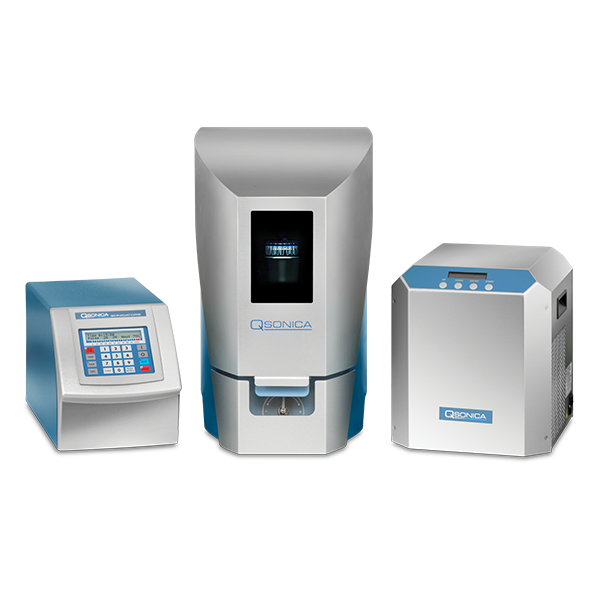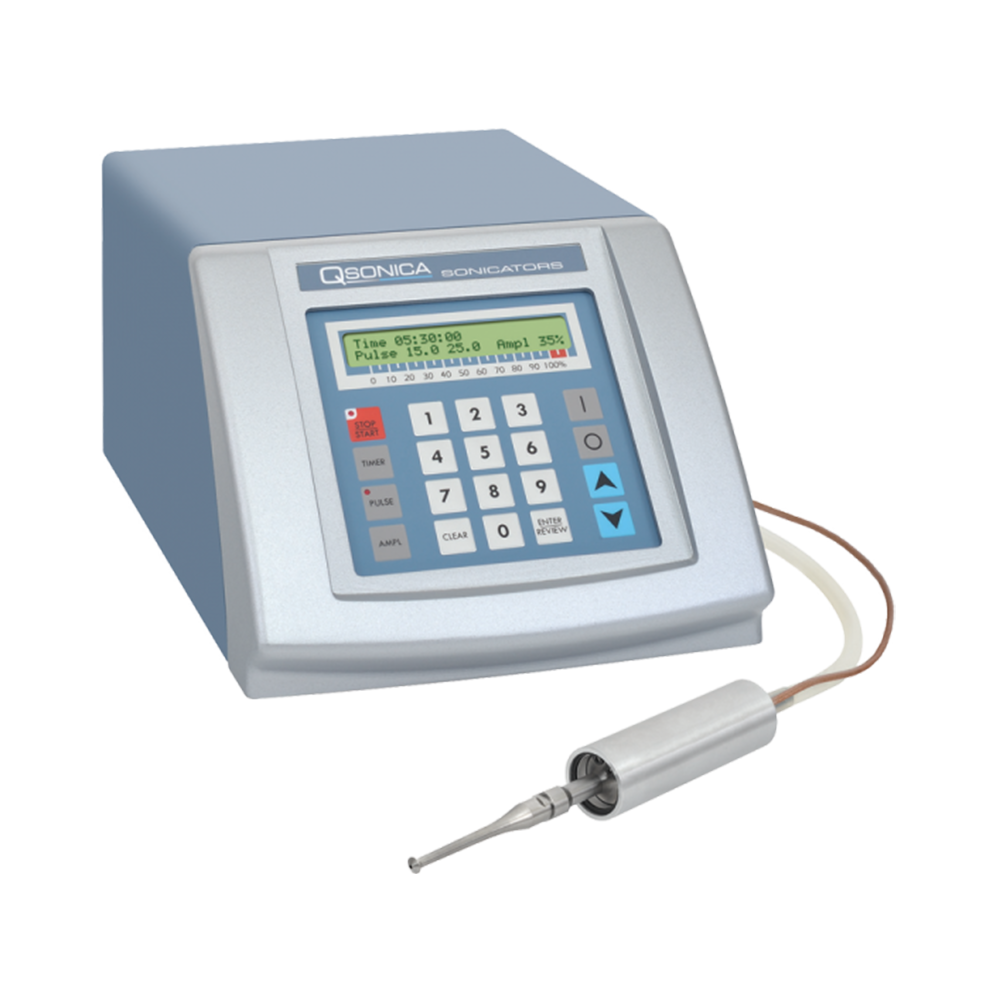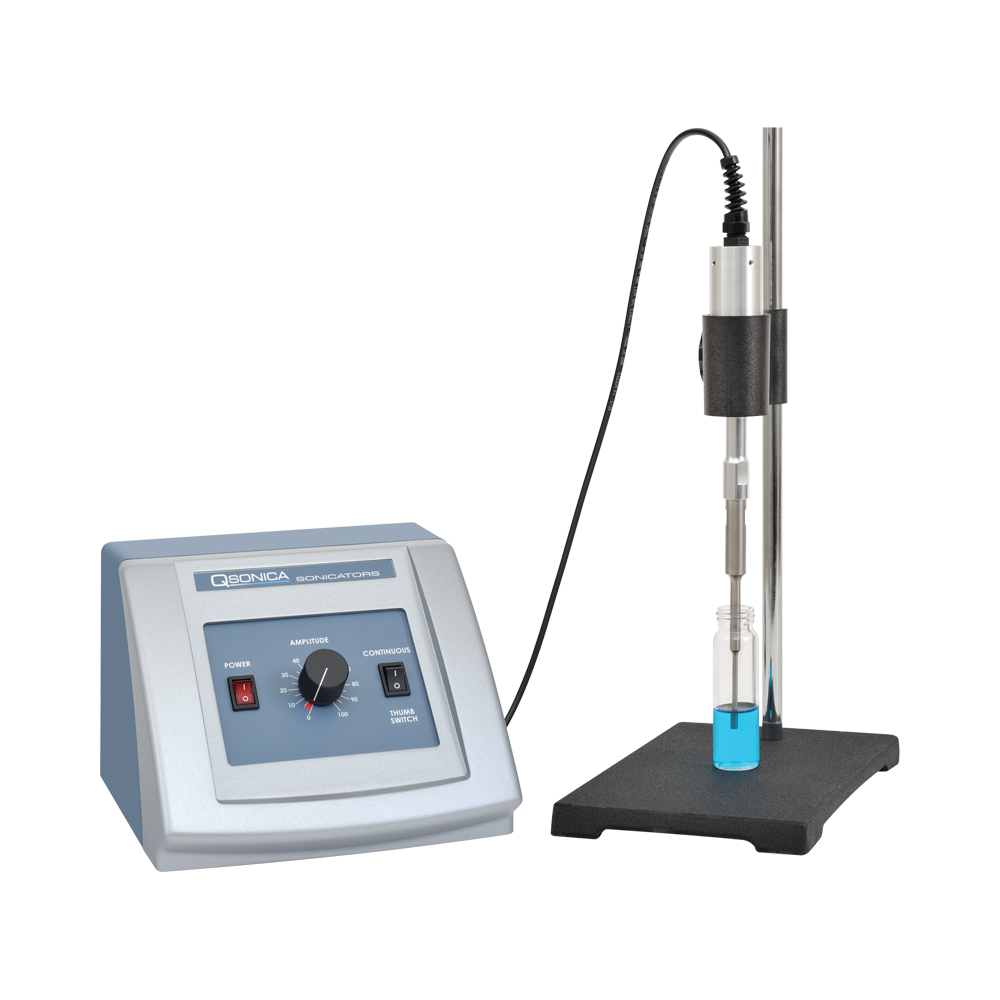
Compact small-volume ultrasonic processor
Q55 Sonicator
A space-saving 55 W ultrasonic processor for routine cell disruption and small-volume applications up to 50 mL.
Explore product →
ULTRASONIC PROCESSING
Explore small-volume laboratory systems, higher-power batch processing, parallel DNA shearing and controlled spray generation.
COMPARE THE PROCESS
Power is one part of the choice. Compare sample format, liquid behavior and the required accessories.
Swipe across the table on smaller screens.
| Model | Primary workflow | Rated power | Sample reference | Key distinction |
|---|---|---|---|---|
| Q55 Sonicator | Small-volume laboratory work | 55 W | Up to 50 mL | Thumb-switch or continuous operation |
| Q125 Sonicator | Programmable small-volume work | 125 W | Up to 50 mL | Timing, pulses and energy monitoring |
| Q500 Sonicator | Laboratory dispersion | 500 W | Up to 1 L | 20-100% amplitude; up to 10-hour timer |
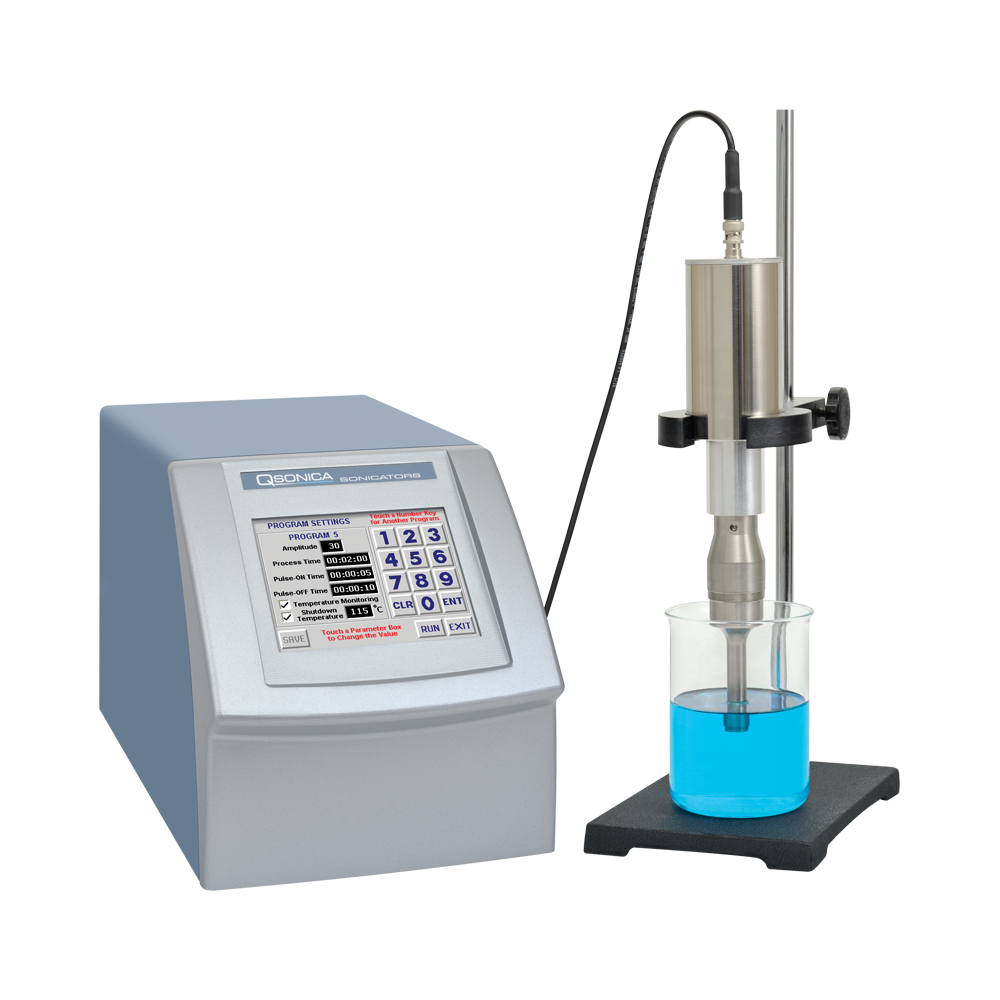
| Q700 Sonicator | Programmable laboratory workflows | 700 W | Up to 2 L, low-viscosity liquids | Touchscreen; 1-100% amplitude; sequential programs |
| Q2000 Sonicator | Larger batch / compatible flow processing | 2,000 W | Approx. 5-20 L; application dependent | Probe selection and converter cooling required |
| Q2500 Sonicator | Industrial liquid processing | 2,500 W | Approx. 5-20 L; application dependent | High-intensity probe; converter cooling required |
| Q800R3 Sonicator | Chromatin and DNA shearing | 750 W | 50 µL-1 mL; up to 18 sealed tubes | Cooled multi-sample enclosure; rack dependent |
| QA40 Ultrasonic Atomizer | Directed liquid atomization | Application-specific | Below 50 cP; below 30% solids | Separate atomizing probe; geometry defines coverage |
Capacity depends on sample properties, vessel geometry, the selected probe or rack, and temperature control. Atomization and DNA shearing are distinct workflows.
Compact small-volume ultrasonic processor
A space-saving 55 W ultrasonic processor for routine cell disruption and small-volume applications up to 50 mL.
Explore product →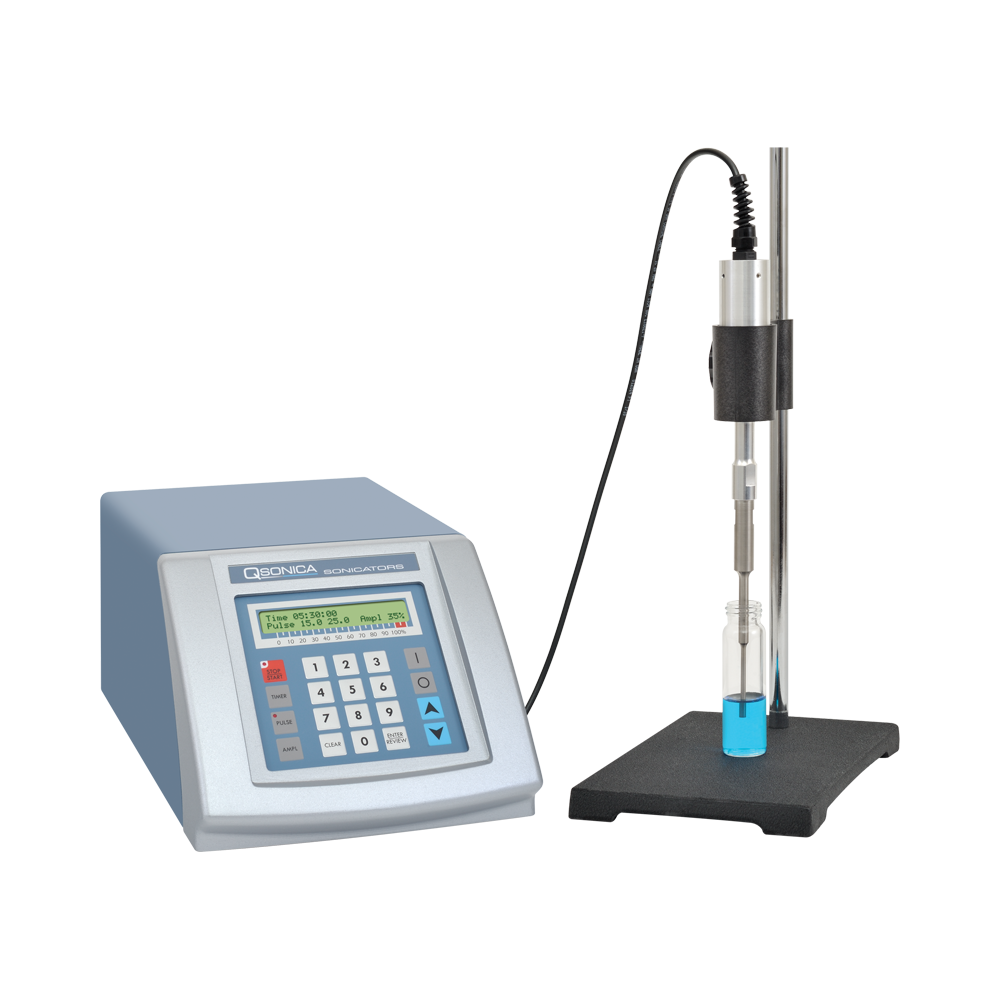
Programmable small-volume ultrasonic processor
A compact 125 W system for samples up to 50 mL, combining programmable timing, pulsed output and digital energy monitoring.
Explore product →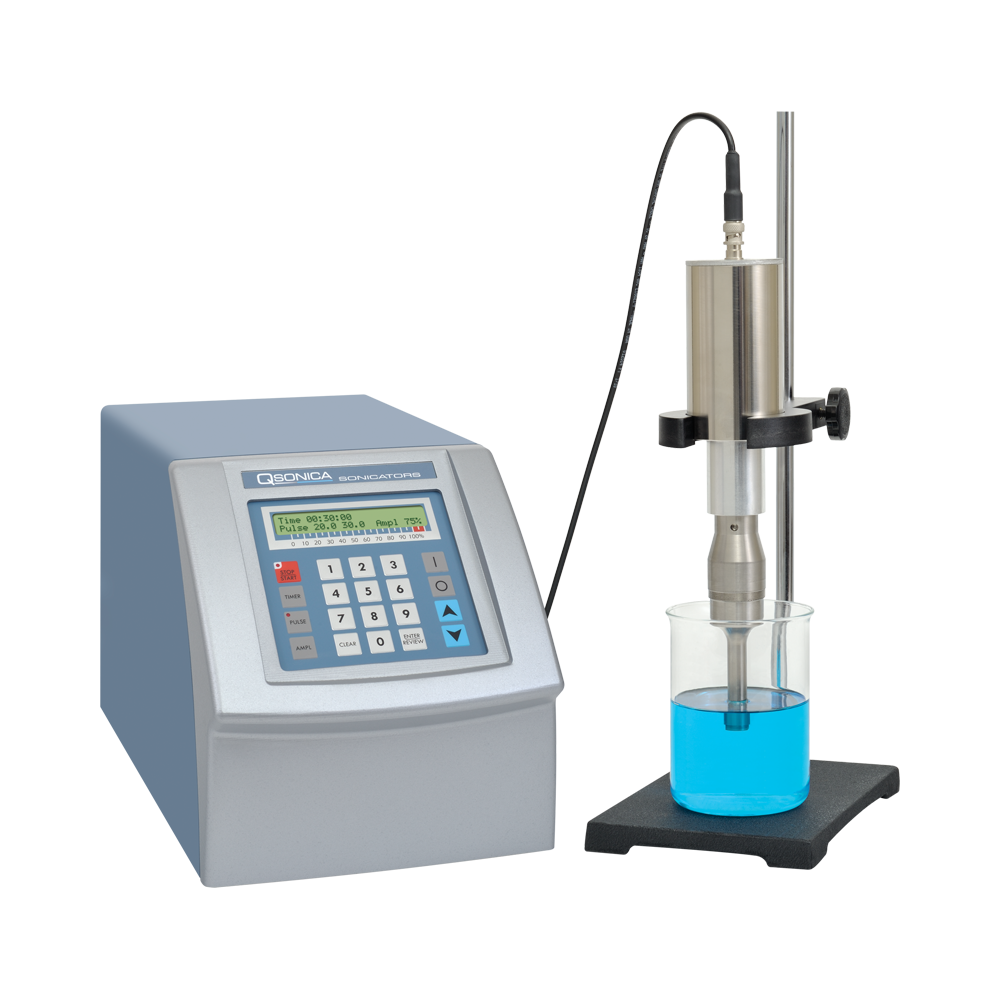
Programmable laboratory ultrasonic processor
A 500 W ultrasonic processor for laboratory dispersion, emulsification, cell lysis and homogenization, with programmable timing and a broad accessory range.
Explore product →Touchscreen laboratory ultrasonic processor
A 700 W laboratory processor with full-range amplitude control, touchscreen programming and accessory options for small samples, multiple tubes and continuous flow.
Explore product →
Industrial batch and flow ultrasonic processor
A 2,000 W system for larger batches and inline processing, with programmable amplitude, timing and optional temperature monitoring.
Explore product →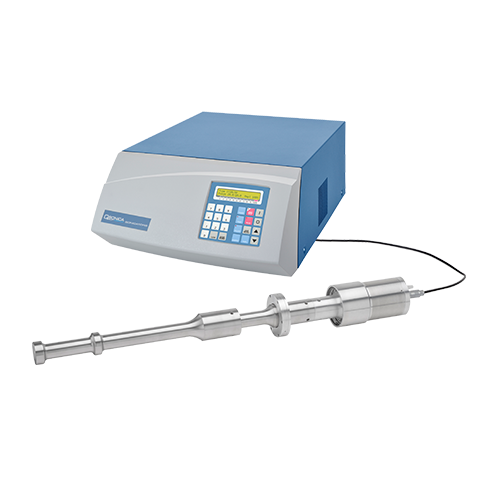
High-power industrial ultrasonic processor
A 2,500 W ultrasonic system for demanding industrial processing, with programmable intensity, pulsed output and an included high-intensity probe.
Explore product →