Formulation development
Evaluate whether the feed forms stable droplets and whether the finished particles meet the target size and shape.

Prilling turns a liquid feed into spherical granules. A vibrating jet breaks the liquid into droplets of similar size, which then solidify or set before collection.
Prilling starts with a liquid feed such as a solution, dispersion or melt. Vibration breaks the jet into a stream of droplets. The droplets then become solid granules through cooling, drying or a setting step, depending on the formulation.
Published examples span about 150 µm to several millimeters in diameter across configurations. Confirm the achievable particle size distribution with a representative feed.
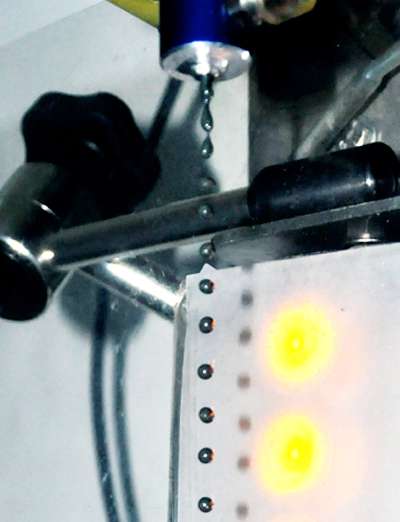
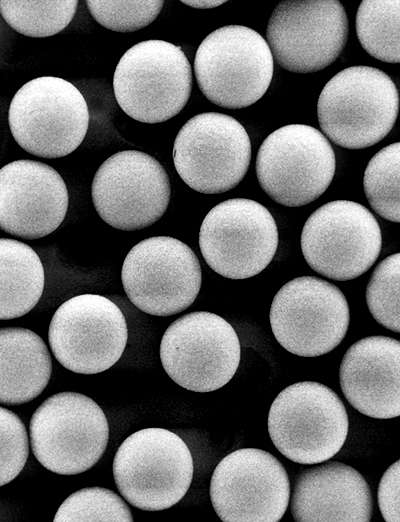
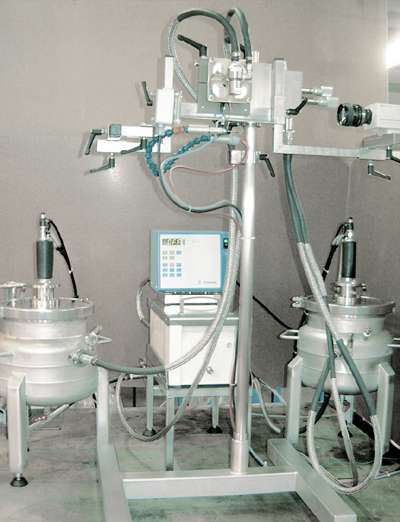
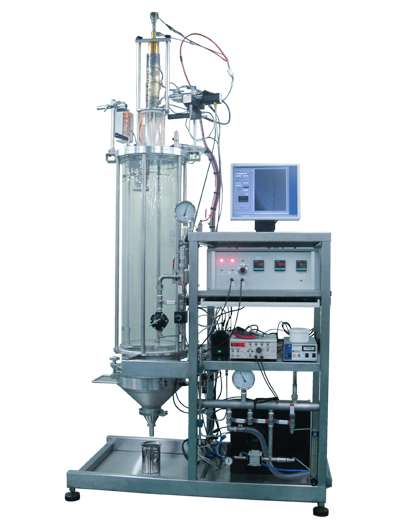
Equipment can be configured for formulation studies, pilot trials or production. Select a view to see the equipment more closely.
Evaluate whether the feed forms stable droplets and whether the finished particles meet the target size and shape.
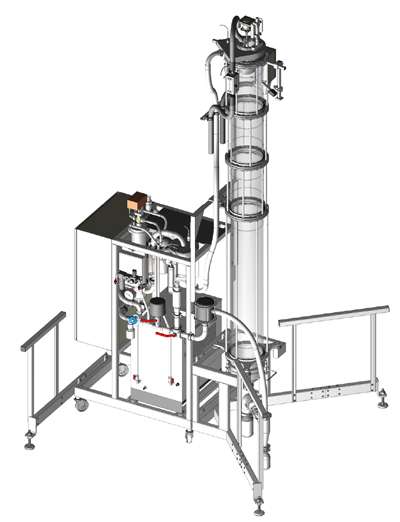
Check how the feed behaves through droplet formation, solidification and collection. Discuss controlled atmosphere and cleaning requirements for the proposed setup.
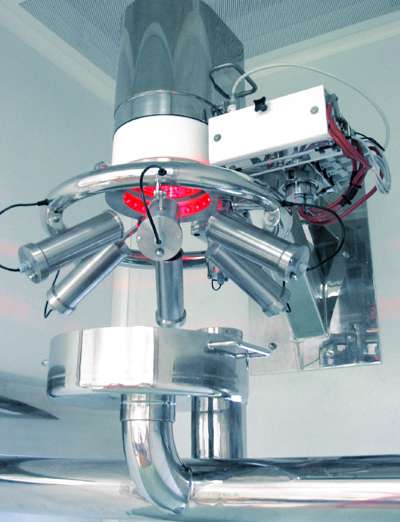
Specify the target throughput, particle size distribution and product handling requirements with Glen Mills.
Prilling can be evaluated when particle shape and size distribution matter to the next step in your process.
Share the feed material, target particle size, throughput and the property you need to measure. Include any requirements for cleaning, atmosphere control or qualification documentation.
Prilling forms granules from liquid droplets. Pelletizing typically compacts or shapes a feed before the final particle is collected.
Prilling forms droplets of similar size and lets them solidify or set. Spray drying removes solvent from sprayed droplets using a drying gas. Prilling can use cooling, drying or another setting step, depending on the formulation.
Include the feed form, target granule size range, expected throughput and the properties you need to verify, such as shape, size distribution or flowability.
Start with the desired particle size and production rate. Discuss the feed and how the droplets will solidify before choosing a machine configuration.