
Should hemp preparation use one universal cut size?
No. The required output depends on the downstream operation or test. A size suitable for one industrial use may be unsuitable for another.
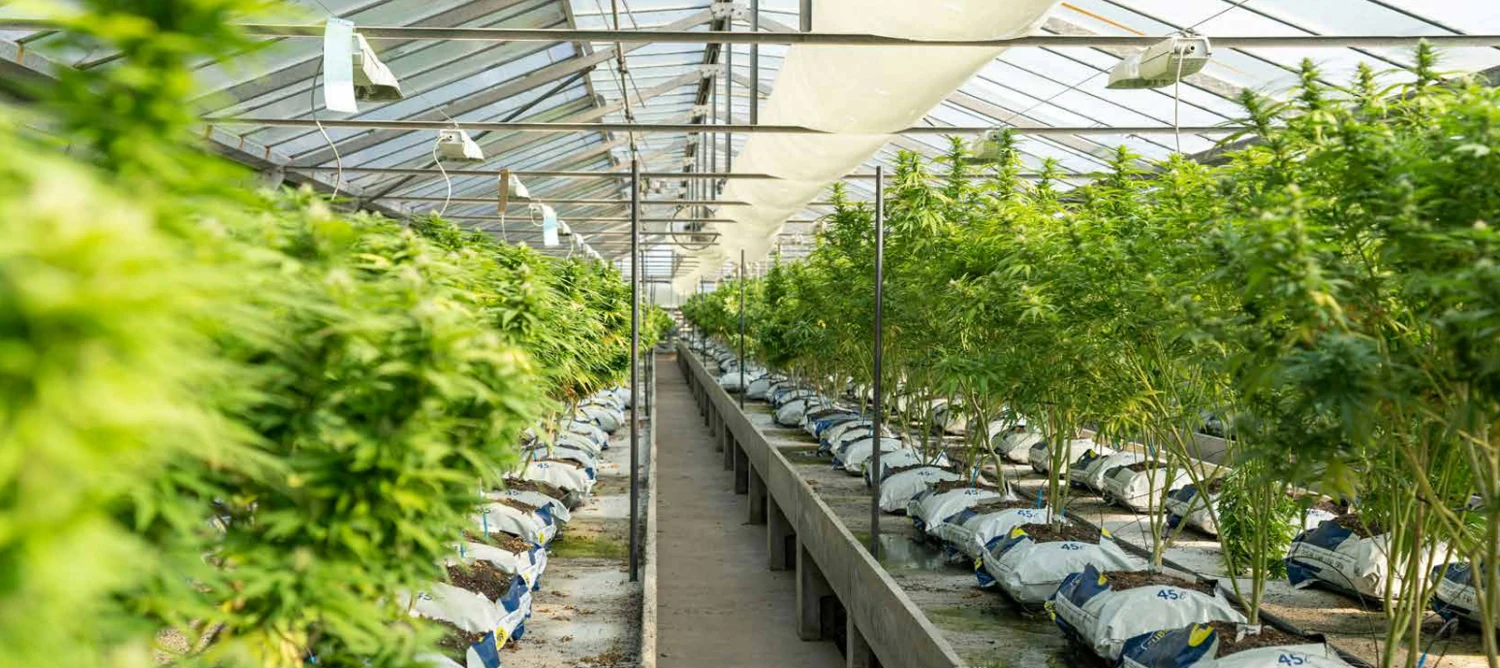
Hemp is a versatile plant material that has gained increasing attention in recent years due to its numerous applications and industrial importance. Hemp is a variety of the cannabis sativa plant species and is known for its high levels of cannabidiol and low levels of tetrahydrocannabinol. Hemp has been used for centuries for a variety of purposes including fiber, food, and medicine. However, in the last three years, there has been a significant development in the use of hemp for industrial purposes such as building materials, biofuels, and textiles.
Applications and industries where hemp fibers are used One of the most promising applications of hemp is in the construction industry. Hemp fibers can be used to create a range of building materials, including hempcrete, a lightweight and strong material that can be used for walls, floors, and insulation. Hemp-based construction materials have several advantages over traditional materials, including their low environmental impact, thermal insulation properties, and fire resistance.
Another area where hemp has gained significant attention is in the biofuels industry. Hemp can be used to produce biofuels such as biodiesel and ethanol, which are renewable and environmentally friendly alternatives to fossil fuels. Hemp-based biofuels have several
advantages over traditional fuels, including their lower carbon emissions and potential for higher yields per acre.
Hemp is also being increasingly used in the textile industry. Hemp fibers are durable and strong, making them an ideal material for clothing, bags, and other textile products. Hemp textiles are also more sustainable than traditional textiles, as they require less water and pesticides to grow and can be processed without the use of harsh chemicals.
In addition to these applications, hemp is also being explored for its potential in a range of other industries, including food and cosmetics. With its numerous benefits and growing popularity, hemp is set to play an increasingly important role in the development of sustainable and eco-friendly industries in the coming years.
Hemp grinding is the process of breaking down hemp plant material into smaller pieces or particles. The grinding process is an important step in the production of various hempbased products. One of the primary benefits of hemp milling is that it allows for the extraction of various components of the hemp plant, for example the fibers. In this discussion we demonstrate the use of the Retsch Cutting Mills and Rotor Mills which are suitable to grind several kg of hemp plant materials per hours down to a homogeneous sample.
Application example: grinding volumes of several kilogram per hour The RETSCH Cutting Mill SM 300 was used for grinding pre-cut stem parts of the plants down to 1 mm particles without too long fiber parts > 10 mm. The 6-disc rotor and a 0.75 mm bottom sieve were employed, and the mill was operated at 3000 rpm. Depending on the individual sample, a throughput of 1 kg in 5 min was possible, resulting in an average throughput of ~7.5 kg / h. It is strongly recommended to use the cyclone unit to improve the sample discharge from the grinding chamber and prevent clogging of the sieve with fine particles. Glass bottles of various sizes or receptacles of 5 l or 30 l can be attached to the cyclone for sample collection.
Cutting Mill SM 300 with cyclone
To obtain finer particles, a two-step grinding process using the Cutting Mill SM 300 for-precutting and the Rotor Beater Mill SR 300 for fine grinding is recommended. While the SM 300 grinds the sample much quicker, the SR 300 produces much finer particles. Therefore, combining the two milling systems greatly improves the process. This is demonstrated in the following with two samples, hemp hurd and hemp fibers.
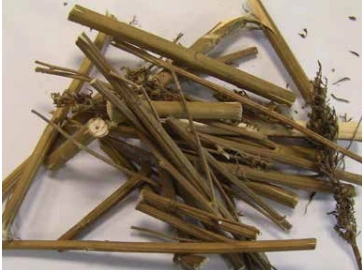
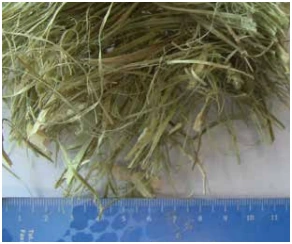
The hemp hurd sample was slowly poured into the funnel of the mill whereas the hemp fibers were fed as bundles to the machine. Both samples were pre-cut in the SM 300 using the V-rotor and a 1 mm bottom sieve. To facilitate sample discharge, the cyclone was used as described above. The sample was ground in both cases to fibers sized approximately 1-10 mm.
Rotor Beater Mill SR 300 with vibratory feeder, 30 l vessel and cyclone
The fine-grinding step was done for both samples in the SR 300 at 10.000 rpm using a 360° ring sieve with aperture size 0.08 mm. Again, the cyclone was employed to improve sample discharge. The hemp hurd was pulverized to 86 % < 100 µm, the hemp fibers to 76 % < 100 µm. The required grinding times for 1 kg of sample are shown in table 1.
| Sample | pre-crushing time [min] | fine grinding time [min] | total process time [min] | Sample throughput [kg/h] |
|---|---|---|---|---|
| Hemp hurd | 5 | 15 | 20 | 3 |
| Hemp fibers | 5 | 25 | 30 | 2 |
Conclusion
The Retsch Cutting Mill SM 300 and Rotor Beater Mill SR 300 are versatile laboratory-scale mills for grinding hemp and similar materials to a fine powder or flour. Both mills can handle a wide range of fibrous samples and produce consistent particle sizes. While these mills are designed for laboratory-scale applications, they are also suitable for grinding at least 2-3 kg/h in pilot-scale applications. Safe and user-friendly operation and a wide range of accessories of different materials make both mills easy to use in many application fields.
Plan the configuration for your material.
Distinguish analytical homogenization from preparation for a production step. Plant part, moisture and fiber length affect what a useful prepared material looks like. Specify whether the aim is a representative test portion, a controlled cut fraction or material that can enter another process.
| Consideration | Information to provide |
|---|---|
| Plant fraction | Stalk, leaf or other material |
| Material condition | Moisture and fiber length |
| Output use | Analysis or subsequent processing |
How should the application examples be used?
The results describe the materials and configurations discussed here. Confirm equipment options, contact materials and operating conditions for your own sample before adopting a method. A demonstrated endpoint does not guarantee the same outcome for a different material.
Discuss material testing with Glen Mills or request further information or a quote.