
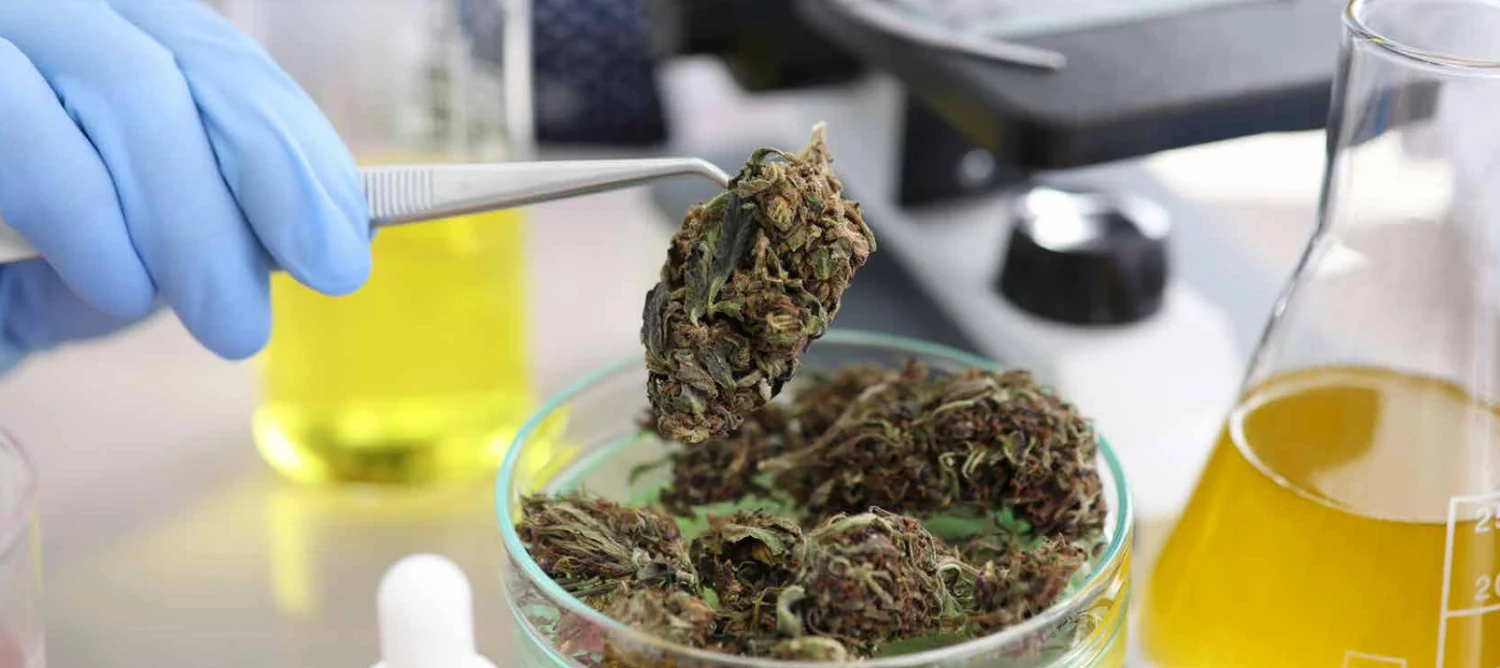
Does milling establish product potency or legal compliance?
No. Milling supports sample preparation. Potency, contaminants and compliance require the appropriate validated analyses and current applicable requirements.
Introduction The European cannabis market is growing rapidly and the drive to legalize cannabis takes concrete shape. In October 2022, the plan was debated in Germany to no longer legally classify cannabis and the active substance tetrahydrocannabinol (THC) as narcotics and to allow the cultivation of cannabis in Germany. For this, however, factors such as regulation and product safety must be properly understood and implemented. In April 2023, it was decided that there should initially be non-profit associations that can grow cannabis for recreational purposes and sell it to members for consumption. A sale in shops is planned as a second step, but only with scientific support in regional model projects.
CBD, short for cannabidiol, is a natural compound of cannabis. Its popularity has increased due to its wide range of uses in consumer products and growing list of health benefits. Since 2019, the European Food Safety Authority (EFSA) has classified CBD products as novel foods under the EU Novel Foods Regulation, meaning manufacturers need authorization to market their products and quality control is an essential task. Additionally, all medicinal cannabis sold in Europe must be produced and tested according to Good Manufacturing Practices (GMP) to be suitable for storage and distribution along with Good Distribution Practices (GDP) certification.
Tools for Quality Control
The analytical toolbox contains a wide range of system configurations, starting with the indispensable, neutral-to-analysis sample preparation with a variety of laboratory mills from RETSCH (ball, rotor, knife or cutting mills), followed by sample digestion with microwave laboratory devices and microwave-accelerated solvent extraction systems from CEM (MARS6 and EDGE) and ending with instrumental analysis by Shimadzu with the HPLC cannabis analyzer for active ingredient analysis, LCMS-8060 triple quadrupole mass spectrometer for pesticide and mycotoxin analysis, triple quadrupole mass spectrometer TQ-8050 NX for terpene analysis and ICPMS-2030 for determination of heavy metals. For a representative and reproducible analysis, all areas covered by the three companies mentioned above need to be carefully considered.
Potency Testing: CBD, CBDA, THC and THCA
The quality control of cannabinoids is essential for the correct labeling of cannabis products, both medicinal and edible. The potency of cannabis is usually determined by the levels of a few selected major cannabinoids such as THCA, THC, CBD and CBN, although the plant contains more than 500 unique compounds including over 80 chemical alkaloids.
Homogenization
Before the actual analysis, samples must be sufficiently homogenized to ensure they represent the original sample and that the analysis is reproducible. However, the grinding of plant parts can pose some challenges for the user, especially when they are oily and difficult to homogenize, as in the case of cannabis. Based on decades of experience, the RETSCH application experts are there to help. The selection of the best suited laboratory mill and accessories and the entire process depend primarily on the amount of sample to be pulverized and the subsequent analysis. The sample amount should be large enough to represent the entire sample; a sample of just a few grams, i.e. a few petals, may not adequately represent a heterogeneous sample such as cannabis flowers.
For potency testing, the Mixer Mill MM 400 and a special adapter can be used to simultaneously homogenize up to 8 samples in conical centrifugal tubes. For this purpose, the dried flowers are deep-frozen at -20°C and then 4 g are filled in each tube. After adding 2 x 15 mm steel grinding balls, homogenization can take place at 30 Hz for 3 minutes. A grind size of 1-2 mm can be achieved in this way. This method leads to highly reproducible analysis values with minimized sample loss for CBD, CBDA, THC and THCA and also saves time due to high sample throughput, short grinding times and disposable tubes which don’t require cleaning. This method is also suitable for homogenizing samples for pesticide analysis. After grinding, a portion of 500 mg can be used for the subsequent steps.
Mixer Mill MM 400 with adapter for centrifugal tubes for the simultaneous homogenization of up to 8 samples, e.g. as sample preparation for potency testing
Extraction
In the classic Soxhlet extraction, the CBD and THC-containing samples are typically extracted under reflux with solvent volumes of 250 - 500 ml for many hours, usually up to 24 hours. This relatively simple working step takes a lot of time and causes high costs due to the use and disposal of large amounts of solvent. In addition, the space requirement for the Soxhlet apparatus is immense. Complete fume cupboards are required and in terms of sustainability it needs to be considered that hundreds of liters of drinking water are used for the reflux cooling of the Soxhlet apparatus. On the other hand, time- and cost-saving as well as sustainable analysis methods are becoming increasingly important both in research and in routine analysis. With the EDGE solvent extraction system, tedious solvent extractions are carried out quickly, easily, safely and cost-effectively.
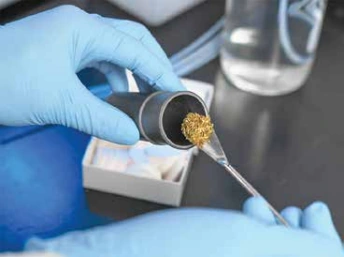
CEM's EDGE is an excellent choice for laboratories that need to extract cannabinoids (and pesticides) from cannabis and its products with high recovery rates and reproducible results . The EDGE is an automated, simple system that uses solvents to quickly and effectively extract samples. The extractions in the EDGE are carried out under pressure at defined temperatures, which leads to a strong acceleration of the reaction kinetics. In addition to this faster desorption of the analytes from the liquid or solid matrix, the sample is heated and cooled in a few seconds using a special process. 500 mg of homogenized sample are filled into the Q-Cup which is placed in the autosampler. The gripper arm moves the Q-Cup into the sample chamber and where it is automatically sealed pressure-tight. After adding the solvent, the cell is quickly heated to a defined temperature at elevated pressure and kept at constant conditions for a few minutes so that the analytes are dispersively released from of the sample. The solvent extract is automatically filtered through the Q-Cup Disk, then cooled and transferred to the sample tube.
Accelerated solvent extraction is significantly faster than Soxhlet, ultrasonic, classical ASE, QuEChERS, or other conventional extraction methods, while using far fewer solvents with significantly less labor. The space required by the EDGE is approximately equivalent to a DIN A3 sheet, so the device is very small and can be set up practically anywhere, even outside of a fume cupboard.
Analysis
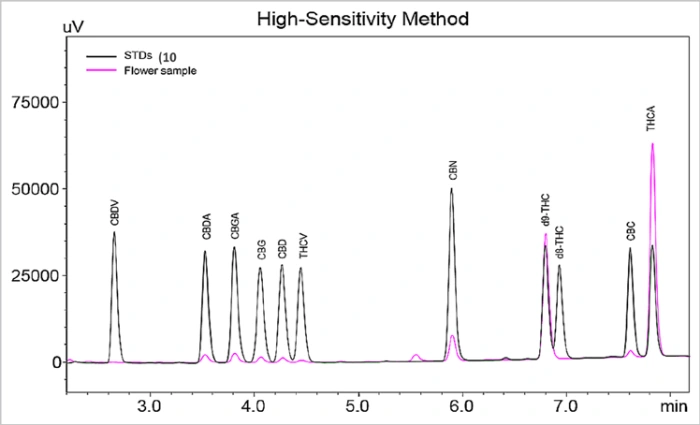
HPLC has become the gold standard for quick and easy cannabinoid analysis, as this method can separate and detect all cannabinoids. In addition, the HPLC-UV method offers good linearity, a low limit of detection, and high precision in retention time and peak area for the cannabinoids of interest .
With the Shimadzu Cannabis Analyzer , all eleven important cannabinoids can be determined. The basis is the compact i-Series Plus with UV detection. The ready-prepared methods allow an easy start with cannabis testing. The i-Series Plus automates sample preparation, such as sample dilution or addition of reagents. This reduces the risk of measurement errors caused by manual steps and ensures highly reproducible and reliable data, not only when analyzing cannabis, pharmaceutical products and food samples. The i-Series Plus meets the requirements for data integrity in the pharmaceutical industry with special functions.
Shimadzu Cannabis Analyzer based on the compact i-Series Plus with UV-Detector
Terpene Analysis
Terpenes are organic aromatic compounds formed in the trichomes (where THC is produced) and are essential medicinal hydrocarbon components that influence the overall homeopathic effect.
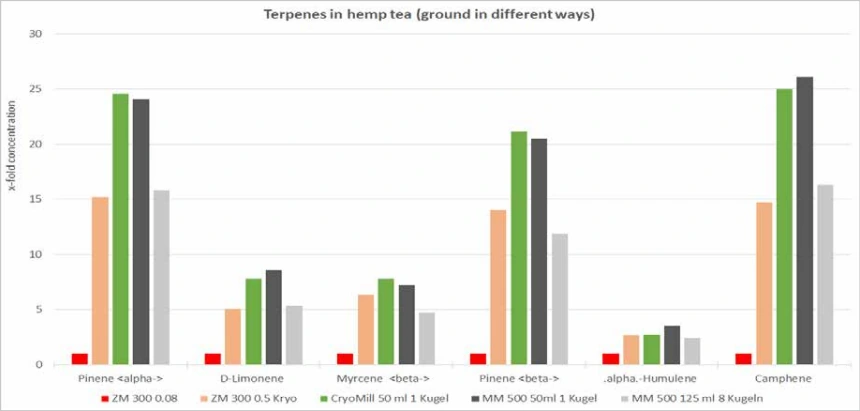
A very important consideration when homogenizing samples for terpene analysis is to avoid heat as this could lead to the volatile terpenes’ loss, which would falsify the results of all subsequent analyses. It was shown that closed grinding systems such as ball mills are particularly suitable for the analysis of terpenes . In addition, they can also be used cryogenically, which prevents the loss of volatile components and at the same time improves the breaking properties of oily samples so that thorough homogenization is possible. In the CryoMill or in the MM 500 control, a maximum of 1 x 20 ml sample or 2 x 40 ml samples can first be embrittled with liquid nitrogen within a few minutes and then pulverized. Both systems are particularly safe and convenient. The cooling is automated, and there are no freely accessible liquid nitrogen baths the user could come into contact with. Programmable cooling breaks should be long enough to really prevent heat generation.
In ball mills, samples such as dried cannabis flowers can be ground down to 0.1 mm. Larger sample quantities of up to approx. 4 liters can be homogenized in the Ultra Centrifugal Mill ZM 300. An optional cyclone generates an air flow to cool the sample. To keep heating to a minimum, ring sieves <0.5 mm should not be used. A final fineness of approx. 300 µm is typical and sufficient for good follow-up analysis .
CryoMill with 50-liter tank for liquid nitrogen
The ground samples can be analyzed directly. The characterization of the terpenes and their synergistic effect with the cannabinoids is easily possible with Shimadzu gas chromatography (GC) systems, and ranges from pine or pine aromas to scent notes of fresh citrus.
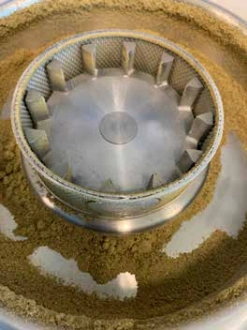
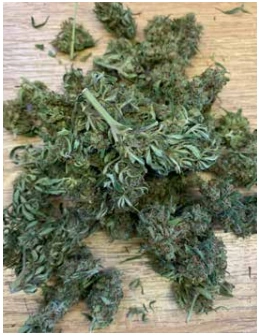
Cannabis flowers before and after cryogenic grinding in a ball mill (a total of 4 min for 20 g sample) or the ZM 300 (10 min for 500 g sample).
The Shimadzu GCMS-TQ8050 NX with the HS-20 headspace sampler and the NIST spectra library can identify more than 3.000 aromas and fragrances, thus fulfilling an important requirement for creating terpene profiles, which serve as a quality criterion for cannabis plants. The same system configuration can be used for the analysis of residual solvents, while an additional liquid autosampler is used for pesticide analysis.
Pesticide Analysis
Pesticides used in commercial cannabis cultivation can be carcinogenic, mutagenic and generate serious health problems, particularly in immunocompromised consumers of medicinal cannabis products. Due to the risk of pesticide exposure from inhaled and consumed cannabis products, the pesticides in plant material and its products need to be monitored. The mills discussed in the previous sections are suitable for grinding and homogenization. Generally, extraction from finely ground samples yield better results which is another advantage of ball mills.
As matrices, cannabis and its related products have proven to be difficult to extract, and more traditional pesticide extraction methods such as QuEChERS have shown some disadvantages. Therefore, a better extraction method is required. CEM's EDGE (see Potency Testing section, Figure 2) is ideal for pesticide analysis. The EDGE extraction system has been developed for rapid automated solvent extraction of samples. This means that different samples can be extracted quickly in just 5 to 10 minutes. The extractions in the EDGE are carried out under pressure at defined temperatures, which leads to a strong acceleration of the reaction kinetics. In addition to this faster desorption of the analytes from the liquid or solid matrix, the sample is heated and cooled in a few seconds using a special process.
Shimadzu offers the most sensitive and comprehensive line of liquid chromatography-mass spectrometry systems (LC-MS/MS), in the European market. For example, a high sensitivity LC-MS/MS analysis of 211 pesticides in dried cannabis products is possible in less than 12 minutes with a Shimadzu LCMS-8060 NX triple quadruple mass spectrometer.
Mycotoxins
Because of the high moisture content in cannabis plants, long-term storage can lead to a fungal growth known as mold, where the mycotoxins are toxic secondary metabolites. For example, aflatoxins are a subgroup of mycotoxins that are primarily found in soil and decaying vegetation. In Europe, the EU Commission has set strict guidelines for sampling and analysis methods to control mycotoxins.
Similar to the sample preparation for potency testing, the Retsch rotor or ball mills can be used for sample preparation before analysis of mycotoxins, the extraction is carried out easily and quickly in the EDGE. The Shimadzu LCMS-8050 triple quadrupole mass spectrometer enables the cannabis laboratory to test mycotoxins quickly and with high sensitivity in the required concentration range.
Heavy Metal Analysis
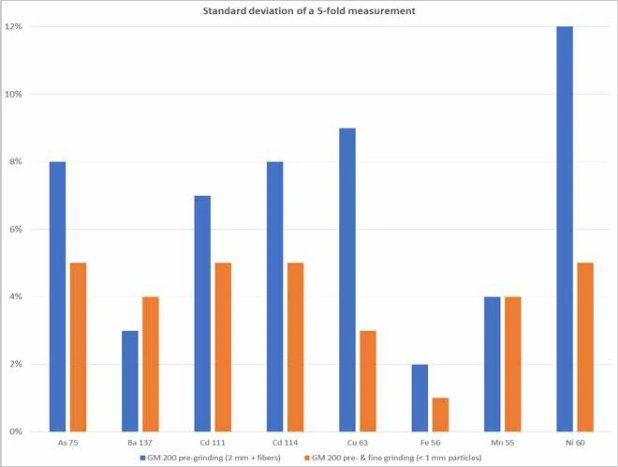
During their growth, cannabis plants can absorb toxic heavy metals such as lead, cadmium, arsenic and mercury from the soil. If samples are analyzed for heavy metals, the Knife Mill GM 200 is also suitable in addition to the beforementioned ball mills and ZM 300 rotor mill. It is particularly easy to use and homogenizes samples up to 200 ml in one go. It has been shown that a particle size of <1 mm is sufficient to achieve very good reproducibility. The standard deviation was below 5 % for all analyzed elements. If a shorter grinding time is selected, which results in larger (2 mm) particles, standard deviations of up to 12 % can be expected . Appropriate care in the homogenization process therefore pays off by minimizing such particle size effects.
10 s grinding: 2 mm + fibers
20 s grinding: <1 mm
Knife Mill GRINDOMIX GM 200
Grain size effects on the reproducibility of heavy metal analysis in cannabis flowers: After 10 s grinding (interval at 4000 rpm) in the Knife Mill GM 200, fibers remain, the corresponding standard deviations in heavy metal analysis are higher than with samples ground for 20 s with a final fineness < 1 mm (10 s interval, 4000 rpm + 10 s 10000 rpm).
In the case of heavy metal analysis, special attention must be paid to choosing the right grinding tools. Since mechanical particle size reduction is always associated with abrasion of the grinding tool, the use of steel tools inevitably leads to a falsification (increase) of the heavy metal values in the sample. This can be avoided by choosing, for example, zirconium oxide tools in the case of ball mills or titanium tools in the case of GM 200 or ZM 300. It can be clearly seen in Figure 10 that steel tools increase the measured concentration of heavy metals and lead to incorrect results.
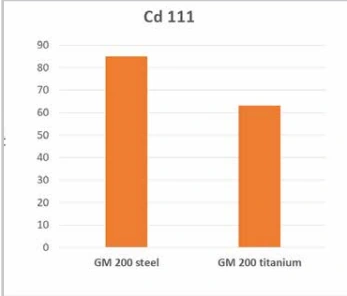
Effects of the grinding tool material on analysis results. Abrasion from steel tools leads to increased values of heavy metals and thus falsifies the analysis. This falsification can be avoided by using zirconium oxide or titanium tools.
There are different methods for determining trace metals in plant material such as cannabis and hemp or edibles. All require mineral acid digestion to destroy the organic matrix and dissolve trace metals to obtain a liquid sample. The MARS 6 from CEM is suitable for this . It is the only system that uses on-board sensor technology to recognize vessel type and sample number to create a custom algorithm to ensure the highest quality extract. With options for remote system control and hands-free temperature control of all vessels, the MARS 6 is capable of handling even the most difficult samples. In contrast to digestion systems with convective heating, "microwave digestion systems" are able to dissolve the solid sample within a short time. Since the digestion times are often reduced significantly with the help of microwave energy, this means a considerable gain in time and therefore also cost savings, especially for routine operation. Almost any sample material can be digested more quickly with microwave-accelerated digestion compared to conventional methods.
For microwave digestion, 0.5 g cannabis sample is placed in a MARSXpress Plus vessel together with 9 ml HNO3 and 1 ml HCl. After the initial reactions are completed, the vials are capped and loaded into the rotor, which can temperature-controlled digest up to 24 samples in a single run. When the rotor/turntable with the sample vessels has been inserted into the MARS 6, the pre-programmed "cannabis method" is started using one-touch technology with just one "click" on the touchscreen of the MARS 6. The Mars 6 recognizes all relevant digestion parameters, so that after just a push of a button in this "One Touch" App the digestion takes place automatically. This includes controlling the reaction parameters of time, pressure and temperature, counting the containers, optimal microwave power and container type. In addition, the temperatures of all containers are displayed visually on the MARS 6 SmartPhone touch screen. The innovative sensor technology directly controls the kinetics of the digestion reactions and then regulates the optimal microwave exposure.
The CEM MARS 6 Microwave-System
Heavy metals such as arsenic, cadmium, chromium and lead are natural components of the earth's crust and typically occur in our environment and thus in water and soil in different concentrations. The concentration of heavy metals in plants intended for consumption must be carefully controlled due to their potentially dangerous toxicity. Cannabis in particular is a plant that extracts heavy metals from the soil, which are then accumulated in the plant.
The Shimadzu ICPMS-2030 inductively coupled plasma mass spectrometer, with its newly developed collision cell to minimize interferences, provides the sensitivity needed to measure ultra-low concentrations of these toxic metals with high accuracy.
Conclusion
Shimadzu’s, CEM’s and RETSCH’s analytical toolbox, covering the full range of instrumental analysis and sample preparation systems, enables cannabis laboratories to work efficiently and in full compliance with international regulations.
This article was written in collaboration with the companies CEM and Shimadzu.
Plan the configuration for your material.
Separate homogenization from the instrumental test and from any compliance decision. Oily or fibrous material may require a different treatment from a dry product. Identify the target components and the amount required for testing before selecting the mill and collection method.
| Consideration | Information to provide |
|---|---|
| Product format | Plant parts or formulated product |
| Target analysis | Components and test portion |
| Preparation control | Heating, carryover and recovery |
How should the application examples be used?
The results describe the materials and configurations discussed here. Confirm equipment options, contact materials and operating conditions for your own sample before adopting a method. A demonstrated endpoint does not guarantee the same outcome for a different material.
Discuss material testing with Glen Mills or request further information or a quote.
Explore the equipment discussed
- RETSCH GM 200 Knife Mill
- RETSCH ZM 300 Ultra Centrifugal Mill
- RETSCH MM 400 Mixer Mill
- RETSCH CryoMill Cryogenic Mixer Mill