
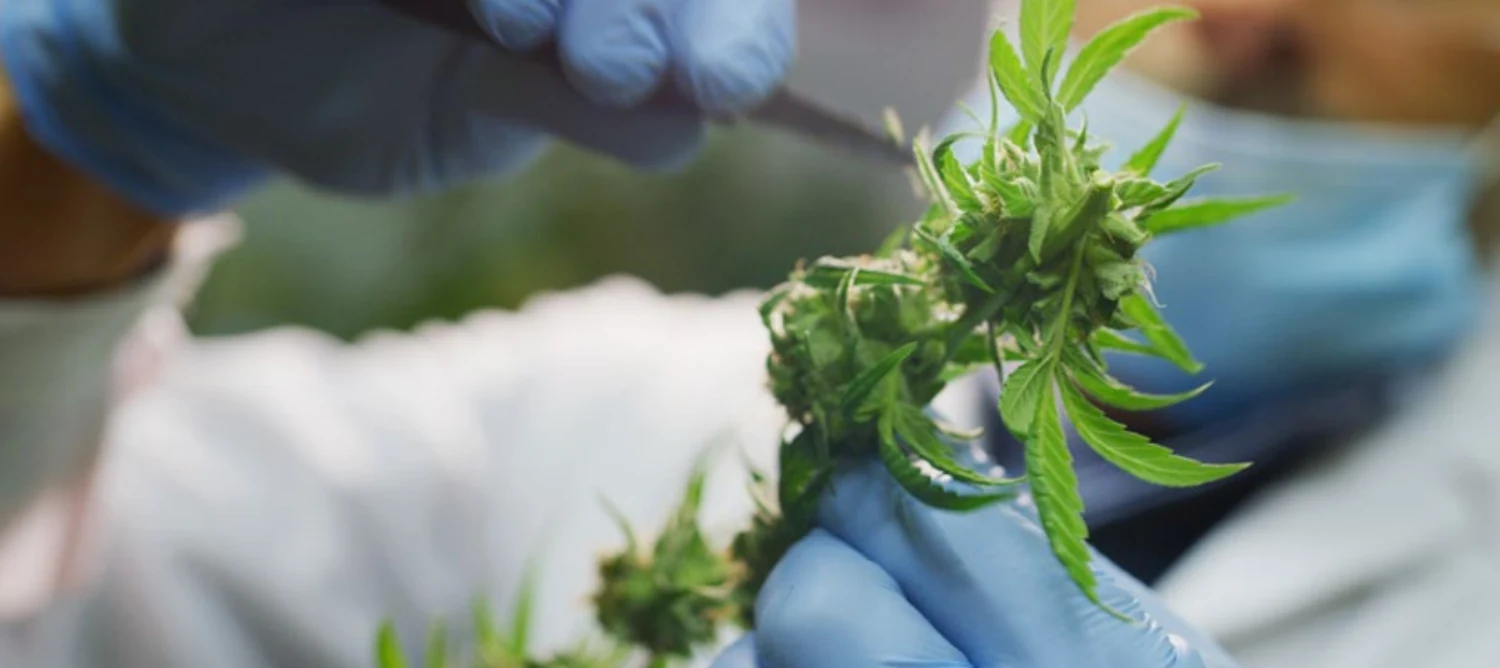
Does a small transfer loss matter in cannabis preparation?
It can, especially if the lost fraction differs from the recovered material. Assess recovery and representativeness together for the intended analytical method.
Possession of cannabis was prohibited worldwide in 1925 but today, limited consumption is legal in a growing number of countries, for example Canada, the Czech Republic or Israel. Many countries have started the process of legalizing the use of cannabis under strictly regimented conditions for medical treatment, among them Germany in 2017.
The beneficial effects of cannabis on human health can be grouped into five clusters: 1. pain/sleep; 2. gastro-intestinal; 3. neurological; 4. mood/behavior and 5. other. The main ingredients of cannabis are cannabinoids like tetrahydrocannabinol (THC), cannabinol (CBN) or tetrahydrocannabivarin (THCV), which can act as appetite suppressant, sedative or psychoactive compounds. These have beneficial effects, e. g. on metabolic disorders like diabetes, pain relief, anti-inflammatory processes, and even on the treatment of bacteria like MRSA. A positive influence on diseases like cancer, Tourette’s syndrome, arthritis, HIV, asthma, Alzheimer’s or multiple sclerosis is also attributed to cannabis. Terpenoids may act as antioxidants or anti-inflammatory agents.
The concentrations of cannabinoids and terpenoids are the main points of interest in the quality control of cannabis-related products. To ensure reliable analytical results, the sample preparation process for cannabis needs to be adaptable to the considerable complexity of the various plant matrices. There are some challenges to overcome: samples can be sticky (especially in the flower buds) and the sample amount may vary greatly. Furthermore, sample residues leading to sample loss are not acceptable for many testing labs so that common methods for grinding fatty, fibrous plant samples, such as using the Ultra Centrifugal Mill ZM 200, are no option.
Laboratory preparation example
Located in Bremen, Germany, QSI GmbH, a member of the Tentamus group, is an ISO 17025 accredited laboratory with state-of-the-art laboratory equipment and experienced, continuously trained specialists. QSI offers a comprehensive range of analyses of foodstuffs, hemp products, medical cannabis, pharmaceutical products and pharmaceutical raw materials.
They were facing the problem of homogenizing around 30 g of flower buds, which can be quite sticky, with minimum sample residues after grinding (to avoid cross contamination and due to specific legal rules in handling cannabis samples)., Cannabis samples have been ground in common grinder systems. It took them about 15 to 30 min to homogenize 30 g of sample, plus cleaning for 5 min. Retsch introduced the Mixer Mill MM 400 including an adapter for 8 x 50 ml Falcon tubes and a series of testing started in order to find out the optimal sample filling, grinding time, homogenization grade, reproducibility of the ground samples and sample residues. QSI also wanted to learn about cleaning effort or general processes like freezing the sample before grinding.
Each tube can be filled with around 4 g flower buds, thus 32 g is pulverized in one run. This is ideal if larger sample amounts are required, or up to 8 different samples are processed. Grinding balls and sample material were frozen at -22°C before grinding. In each tube 2 x 15 mm grinding balls stainless steel were added, grinding was then performed at 25 Hz for only 2 min . Cleaning of the grinding balls was very easy – rinsing with acetone is sufficient. The tubes were disposed after use. The new method requires about 3 minutes in total, whereas the former method took up to 35 minutes. Especially for testing labs with large numbers of samples every day, the new method is a great alternative.
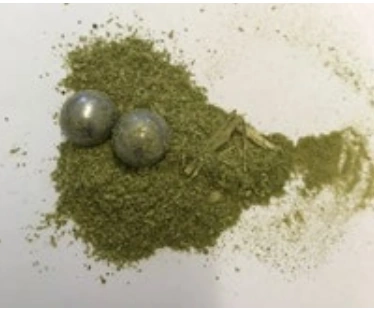
Mixer Mill MM 400 with adapter for 8 conical centrifuge tubes
Sample recovery and repeatability
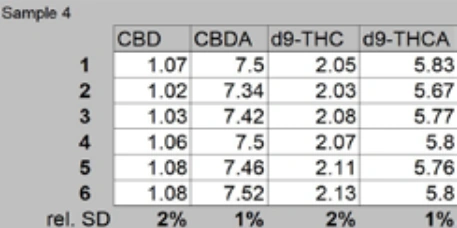
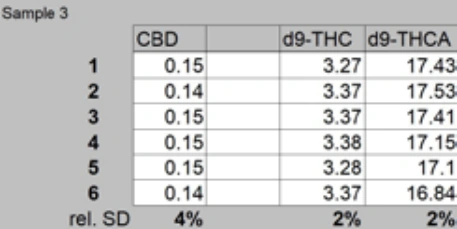
In addition to the time factor, the MM 400 offers another advantage over the Grinder: The sample loss was in a tolerable range of 4-5%. Furthermore, the relative standard deviation was usually less in samples homogenized in the MM 400, for example from 5% to 2% in the case of d9-THC for one sample (see table 1).
Conclusion
The Mixer Mill MM 400 can be used for a very quick homogenization method for Cannabis samples in disposable tubes. Up to eight samples can be processed at the same time. The sample loss is minimized, and the extraction results show less standard deviation than those of manually ground samples in a classic grinder.
Plan the configuration for your material.
Choose the supported vessel format and examine how much material remains available after processing. Keep the preparation linked to extraction and analytical repeatability rather than transferring reported performance directly to another matrix. Product condition and target components should guide the comparison.
| Consideration | Information to provide |
|---|---|
| Flower condition | Moisture and resin-rich material |
| Vessel arrangement | Supported tubes and loading |
| Recovery check | Material available for extraction |
How should the application examples be used?
The results describe the materials and configurations discussed here. Confirm equipment options, contact materials and operating conditions for your own sample before adopting a method. A demonstrated endpoint does not guarantee the same outcome for a different material.
Discuss material testing with Glen Mills or request further information or a quote.