YOUR MATERIAL. YOUR NEXT BREAKTHROUGH.Explore free feasibility testing →

RETSCH / ROTOR BEATER MILL

SR 300.
Flexible grinding. More ways to collect.

A floor-standing route for coarse and fine reduction of dry, soft to medium-hard organic and inorganic materials. Interchangeable components, speed adjustment and optional cyclone collection let you tailor the preparation workflow.

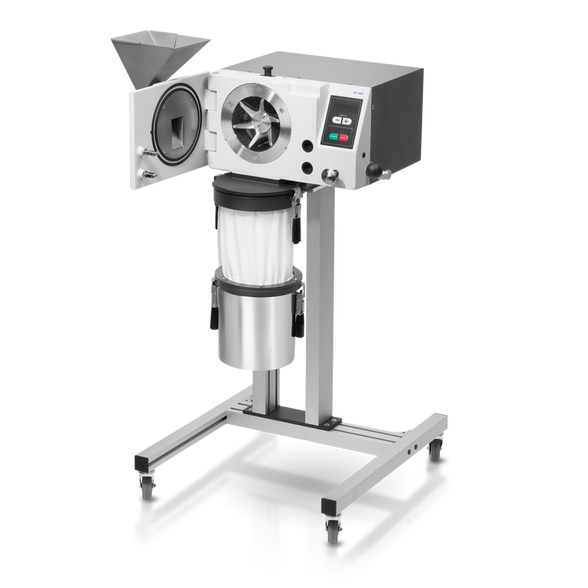
RETSCH SR 300 Rotor Beater Mill for grinding soft and medium-hard samples
FEED SIZE*< 25 mm
FINAL FINENESS*< 50 µm
SPEED3,000–10,000 rpm

THE MODEL IN FOCUS

Versatile dry grinding and deagglomeration with flexible collection.

Tune impact and shear

Adjust speed in 500 rpm steps and select the sieve for the material and desired output.

Manage frictional heat

An optional distance rotor reduces friction. Cyclone-assisted discharge can help cool the sample and grinding components.

Configure collection

Use the gravity outlet with a 5 L vessel or discuss a 30 L collector and optional cyclone arrangements.

Access the chamber

A removable hopper and push-fit grinding components simplify cleaning; the central lock and electric brake support controlled access.

*Published feed limits, fineness and throughput depend on the material, sieve, speed and configuration. Sieve aperture is not the final particle size, and maximum throughput and finest output are not simultaneous guarantees.

FUNCTIONAL PRINCIPLE

How SR 300
works.

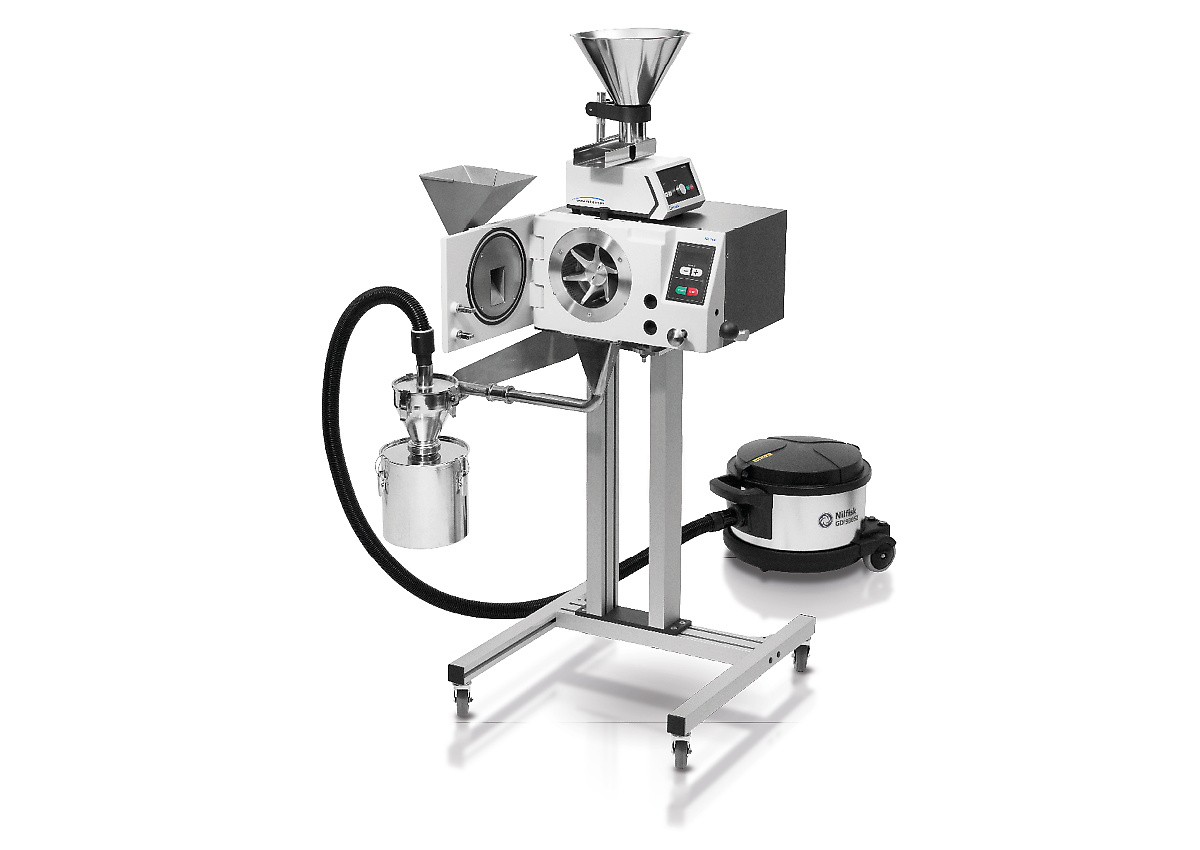
Impact and shear act between the rotor, sieve and grinding inserts. Material small enough to pass the sieve leaves through the gravity outlet. A configured cyclone system assists discharge and separates airborne material.
  • Match sample behavior and feed dimensions
  • Choose the actual sieve, speed and contact materials
  • Validate the output with a representative trial
Representative RETSCH rotor mill with feeder and cyclone for grinding samples
Configuration example; confirm the accessories and arrangement.

PUBLISHED TECHNICAL DATA

The technical
picture.

SR 300: rotor beater mill for soft, medium-hard samples.

Published feed limits, fineness and throughput depend on the material, sieve, speed and configuration. Sieve aperture is not the final particle size, and maximum throughput and finest output are not simultaneous guarantees. Confirm current electrical and installation requirements before ordering.

Maximum feed size*
< 25 mm
Final fineness*
< 50 µm
Speed at 50 Hz (60 Hz)
3,000 - 10,000 min-1 (in steps of 500 min-1)
Collector capacity
5 l / optional: 30 l
Power consumption
2.5 kW
W x H x D closed
600 x 1200 x 700 mm (with base frame)
Net weight
~ 60 kg (with base frame)
All other specifications
Applications
size reduction, deagglomeration
Field of application
agriculture, chemistry / plastics, construction materials, environment / recycling, food, geology / metallurgy, medicine / pharmaceuticals
Feed material
soft, medium-hard
Rotor peripheral speed
22 ..72 m/s
Types of rotors
standard / distance
Material of grinding tools
rotor and sieves of stainless steel
Sieve sizes
trapezoid holes 0.08 / 0.12 / 0.20 / 0.25 / 0.35 / 0.50 / 0.75 / 1.00 / 1.25 / 1.50 / 2.00 mm round holes 3.00 / 4.00 / 10.00 mm
Hinged hopper
removeable hopper
Dust extraction unit
optional cyclone
Drive
3-phase motor
Electrical supply data
200-240 V, 50/60 Hz
Power connection
1-phase
Engine brake
yes, electric
Protection code
IP 41
Standards
CE

CONFIGURE THE WORKFLOW

The options shape
the result.

Standard or distance rotor

Choose the standard rotor for general preparation or review the distance rotor where frictional heat is important. Optional 180° inserts add impact for suitable hard-brittle applications; confirm suitability by testing.

Sieves & contact materials

Stainless steel rotors and sieves are listed. Sieve apertures span 0.08–10 mm across the offered shapes. Review wear contribution and cleaning against analytical requirements.

Feeding, cyclone & cold methods

Discuss DR 100 feeding, cyclone collection and collector sizes. Cold or cryogenic preparation requires a compatible procedure and complete configuration; do not assume every setup is suitable.

TYPICAL MATERIALS

Start with your sample.

Examples guide the discussion; they do not guarantee a result for every material or formulation.

Explore materials & applications

MODEL APPLICATION REVIEW

Put SR 300
to the material test.

Share the starting size, desired fineness and quantity to process. We’ll review the milling route, tools, collection and opportunities for a material trial.

  • Material and current form
  • Starting and target particle size
  • Batch size or required throughput
  • Temperature, purity, dust and cleaning constraints
Explore free feasibility testing

Discuss rental, prototyping or contract-processing availability for your application.

973 777 0777 ↗

Request an application review.

Send your inquiry directly to the Glen Mills team. Fields marked * are required.

KEEP THE RANGE IN VIEW

Compare another route.

Different feed, fineness and collection needs can point to another mill.
Return to the selection assistant
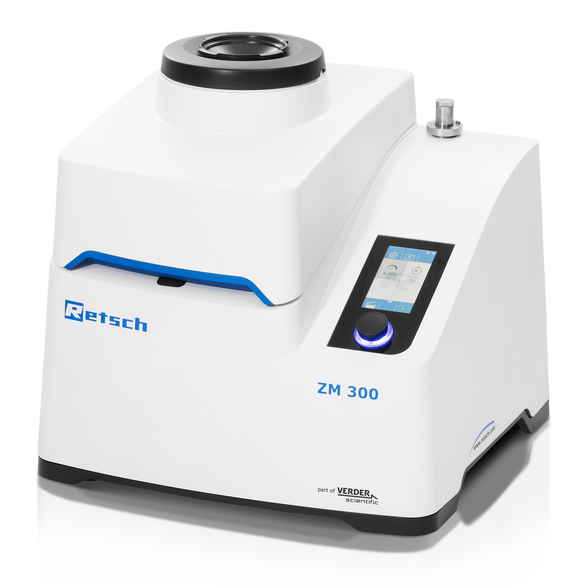
RETSCH ZM 300 Ultra Centrifugal Mill for fine grinding laboratory samples

Ultra centrifugal mill

ZM 300

Fine analytical preparation and temperature-sensitive sample methods.
Feed size*
< 10 mm
Final fineness*
< 40 µm
Collection / quantity
300 / 600 mL useful cassette volume
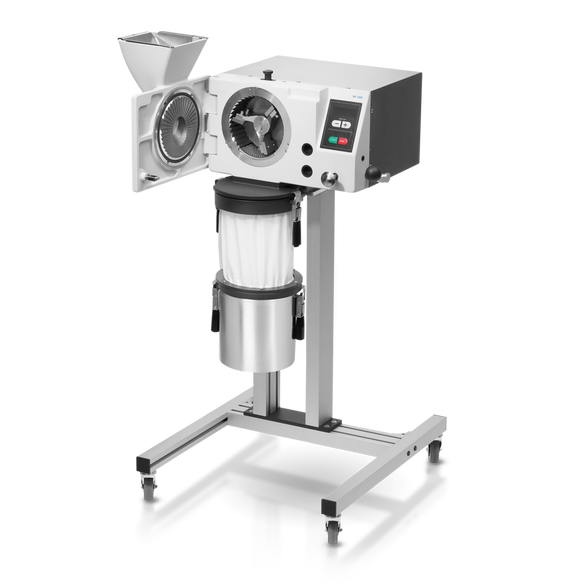
RETSCH SK 300 Cross Beater Mill for grinding dry, brittle samples

Cross beater mill

SK 300

Medium-hard, brittle mineral, glass and ceramic sample preparation.
Feed size*
< 25 mm
Final fineness*
< 100 µm
Collection / quantity
5 L / optional 30 L collector
RETSCH HM 200 Hammer Mill for grinding dry, brittle samples

Hammer mill

HM 200

Large feed, coarse reduction and higher-throughput dry preparation.

Feed size*
< 100 mm
Final fineness*
< 0.8 mm
Throughput*
Up to 1,500 kg/h*