
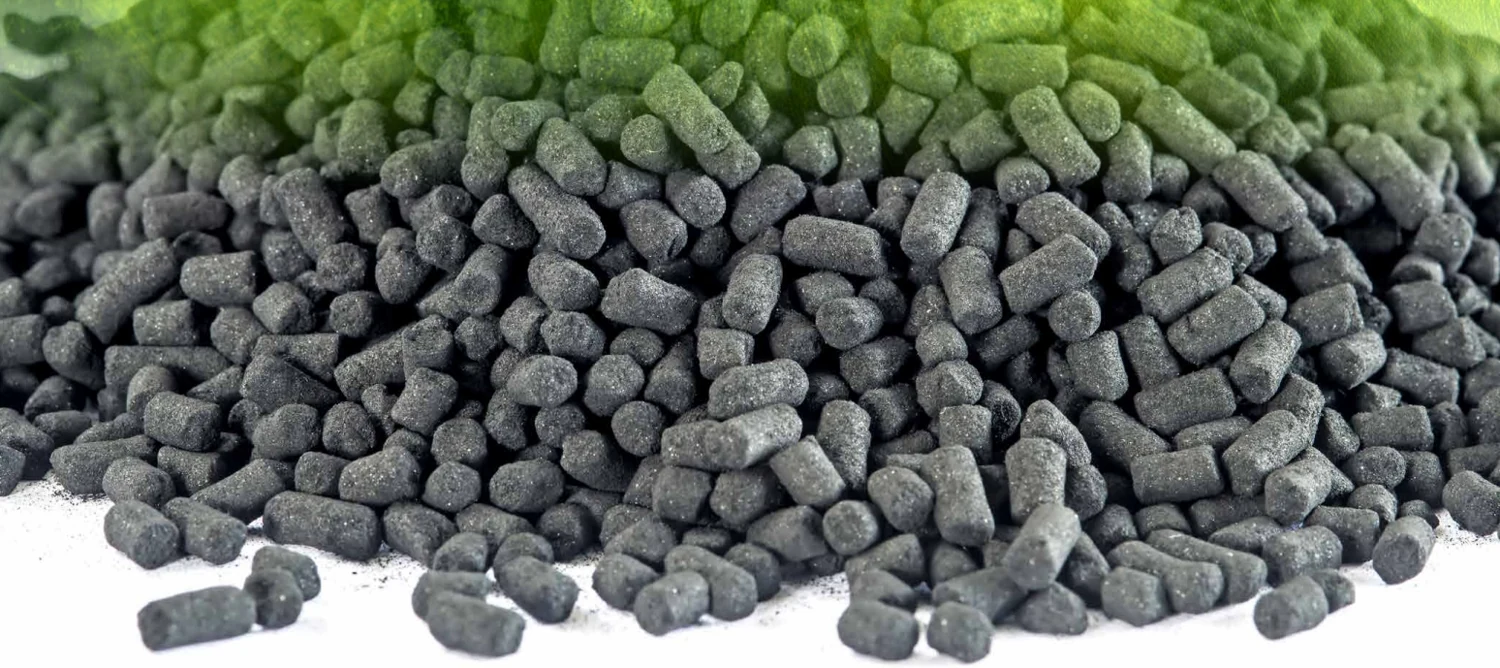
Does finer biochar automatically perform better?
No. The useful distribution depends on the intended material system and application. Performance requires the relevant test, not just a size-reduction result.
Biochar is gaining increasing importance in agriculture, environmental engineering, and industry. It can store nutrients, bind contaminants, and contribute to soil improvement. For successful use across these various applications, precise adjustment of particle size is crucial, as it significantly influences both technical handling and effectiveness. This requires efficient comminution technologies that enable uniform and reproducible processing. At Offenburg University of Applied Sciences, the Retsch Hammer Mill HM 200 is used for this purpose, allowing biochar from various raw materials to be processed efficiently. This report provides insight into the applied grinding process and presents several practical application examples, demonstrating how efficient comminution turns biochar into a high-tech material.
Milling technology
The Retsch Hammer Mill HM 200 is a powerful device designed for the grinding of hard, brittle, and fibrous materials. It operates with a robust impact mechanism that enables efficient size reduction down to fine particle sizes. The mill is designed for continuous operation and offers a high throughput rate while maintaining consistent grinding quality.
Hammer Mill HM 200
Thanks to its user-friendly operation and durable construction, it is suitable for use in both laboratory and industrial environments.
Crushing of biochar for agricultural use
One key focus is the agricultural application of ground biochar. For example, hydraulic injection of a biochar suspension into the soil requires a particle size of less than 2 mm to prevent clogging of the application system . To achieve this, the Hammer Mill HM 200 was equipped with a 2 mm sieve. In addition, a cyclone was installed to control dust formation . Dust generation can be problematic and also leads to losses of fine particles, which should instead be collected in the grinding receptacle. In this case, the biochar was slightly moistened (20 % water content) to further reduce dust formation. The continuous operation of the Hammer Mill makes it suitable for processing
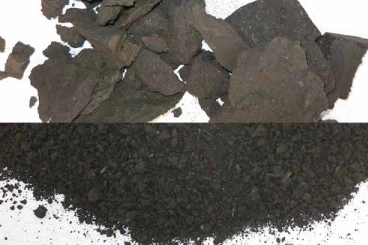
larger sample quantities.
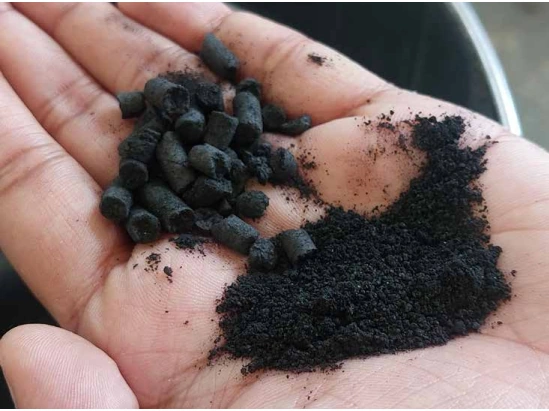
Sieves for HM 200 with various aperture sizes
Further environmental applications of biochar
Biochar is also used for the immobilization of contaminants such as nitrates, pharmaceutical residues, and PFAS from wastewater and surface water. Here too, fine grinding - similar to powdered activated carbon - is advantageous, as the increased surface area of the ground biochar enhances its adsorption capacity for pollutants.
Innovative applications of biochar
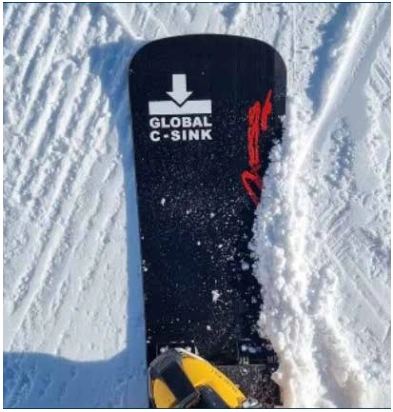
The potential uses of biochar are virtually limitless. It is added to animal feed to improve digestibility, incorporated into cosmetics to cleanse the skin, and used in household appliances to neutralize odors (Schmidt and Wilson, 2014). Biochar is also being applied in material technologies such as concrete, asphalt, and plastics. For example, the Ithaka
Institute,
in collaboration with
the
manufacturer Oxess, has produced a snowboard that is used in World Cup races ( In this case, biochar improves power transmission and reduces the conversion of kinetic energy into heat during motion (Schmidt, 2025). For such applications, ultra-fine biochar is beneficial and can be produced using ball milling.
Conclusion
The grinding of biochar at Offenburg University of
Applied Sciences using the Retsch Hammer Mill HM 200 aims primarily to explore the diverse potential applications of this material. The versatile use of biochar in agriculture, industry, and environmental technology demonstrates its great potential and adaptability across different fields of application.
Which material properties should guide a biochar milling trial?
Describe the source material, its starting size and the next process. Milling and collection should be evaluated together for a light or dusty preparation. Check the resulting distribution with the intended application test rather than assuming a particle-size change establishes improved adsorption or agronomic behavior.
| Consideration | Information to provide |
|---|---|
| Biochar input | Origin and starting condition |
| Output requirement | Size and handling form |
| Evaluation | Distribution and intended application test |
Discuss material testing with Glen Mills or Contact Glen Mills for information or a quote.