
Pulverizer guide for laboratory and industrial milling
A pulverizer is a machine that reduces solid materials to smaller particles, often a powder. The right mill depends on how your material breaks, the fineness you need and how much you have to process.
Compare pulverizer types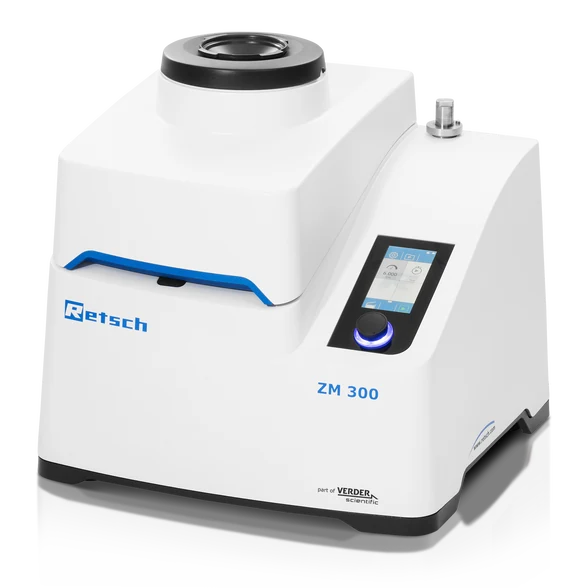
Which pulverizer fits your material?
Start with how the feed behaves. Then check the size of the largest piece, the required particle-size distribution and the working quantity.
| Material or goal | Equipment to compare | What to check |
|---|---|---|
| Large, hard pieces | Jaw crusher, then disc mill | Match crusher discharge to the next mill’s feed limit. |
| Dry, brittle solids | Rotor or hammer mill | Compare disc mills for harder analytical samples. |
| Tough or fibrous feed | Cutting mill | Consider cryogenic grinding if heat or elasticity limits the result. |
| Moist or oily food | Knife mill | Expect a homogenate. Check whether the analysis requires a dry powder. |
| Fine dry powder | Jet mill or ball mill | Compare gas and collection requirements with acceptable wear from grinding media. |
| Fine slurry or small batch | Mixer mill or planetary ball mill | Check liquid compatibility, working volume and media wear. |
Compare pulverizer types and models
Compare the size-reduction mechanism and best-fit feed, then open the model pages for specifications and tooling.
Shear
Cutting mills
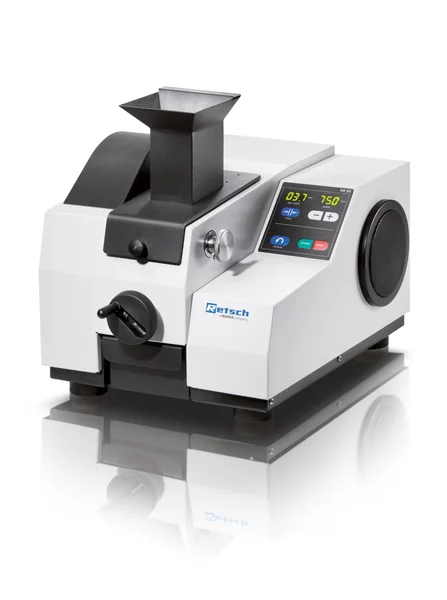
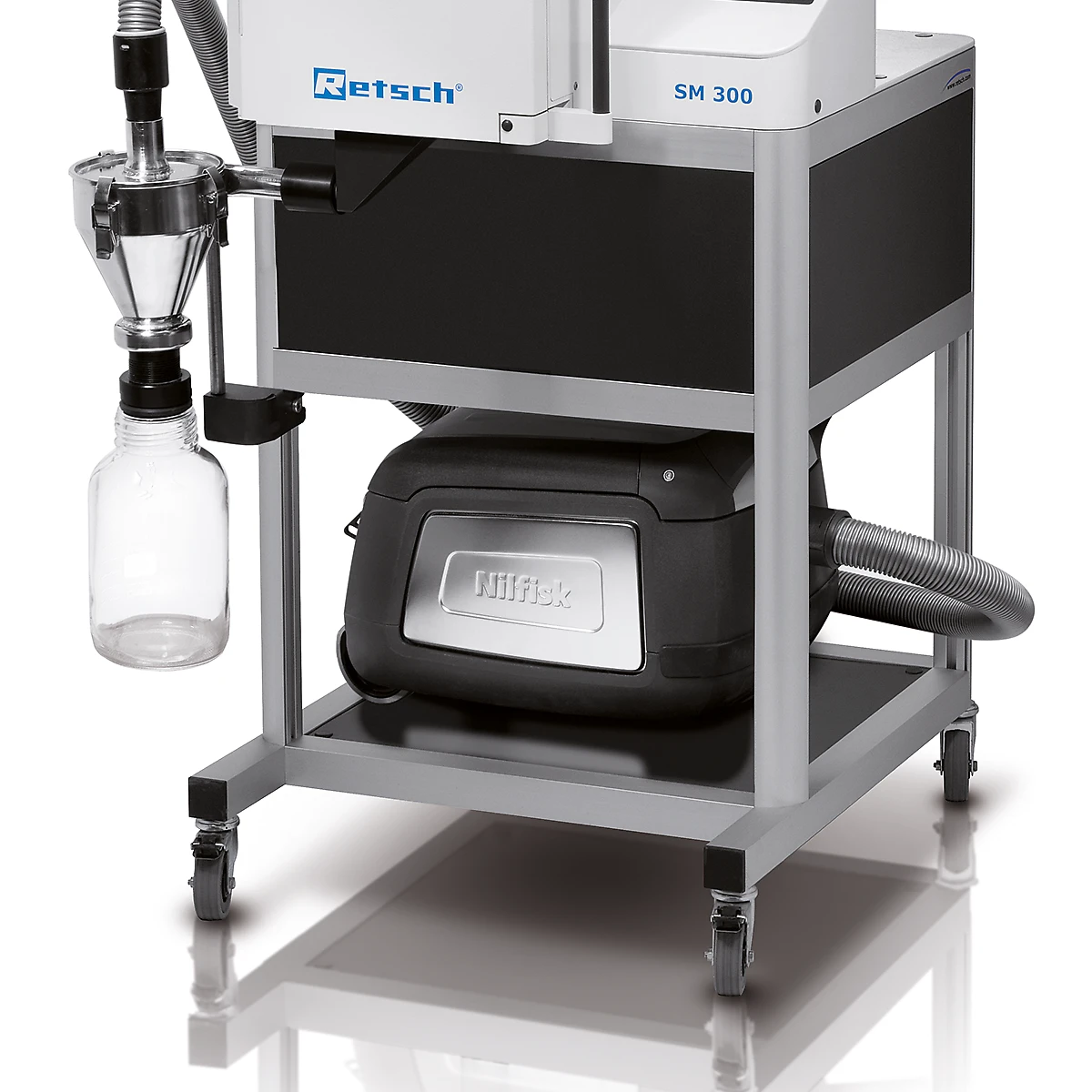
Tough, fibrous or flexible solids such as plant stems and plastic offcuts. A rotor and stationary cutting edges reduce material. A bottom screen controls discharge. Flexible feed may still need cooling.
Impact and shear
Rotor, hammer & cyclone mills
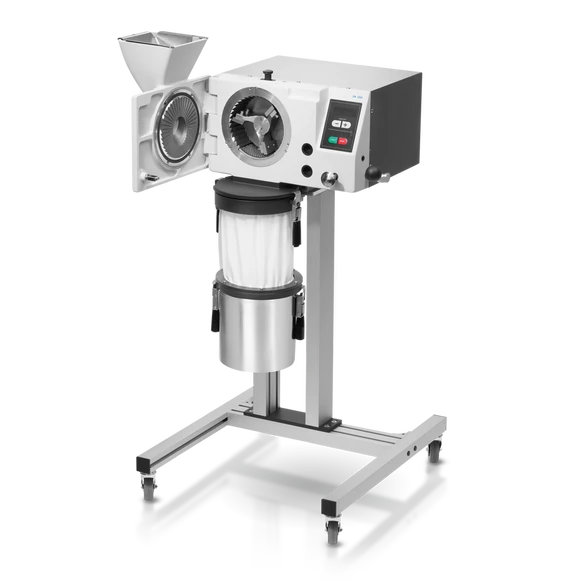
Dry, brittle or friable materials such as grains, feed and many soft to medium-hard solids. Compare the ZM 300 for fine impact and shear, beater or hammer mills for suitable coarser feed, and the TWISTER for preparing suitable food and feed for NIR analysis.
Pressure and friction
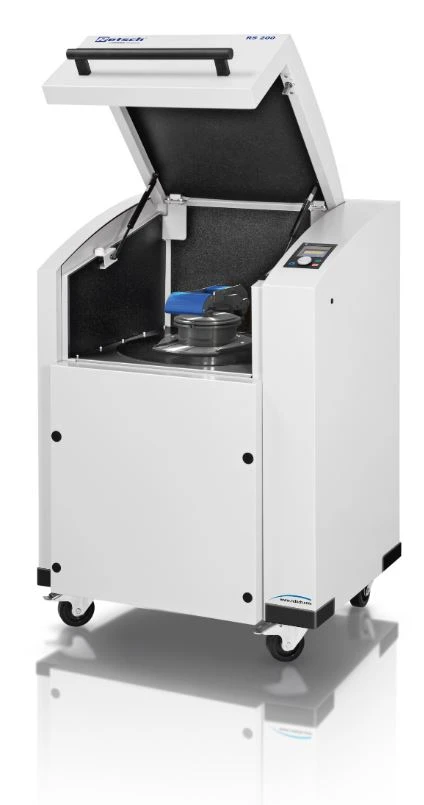
Disc & vibratory disc mills
Hard, brittle samples for analytical grinding, or suitable dry ingredients with the #43. Compare the DM 200 for disc grinding and RS 200 or RS 300 for fine batch preparation of minerals and similar solids. The #43 is suited to coffee and selected dry ingredients.
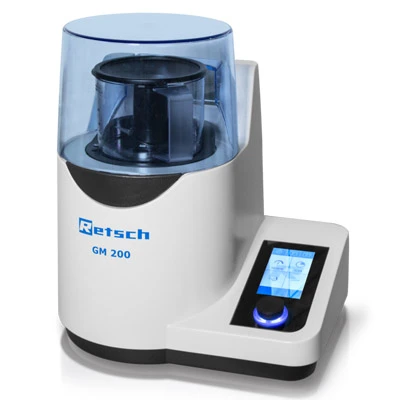
High-speed cutting
Knife mills
Soft, moist, oily or mixed food and feed samples. Use a knife mill when you need a representative homogenate. A moist or fatty feed may yield a paste instead of a free-flowing powder.
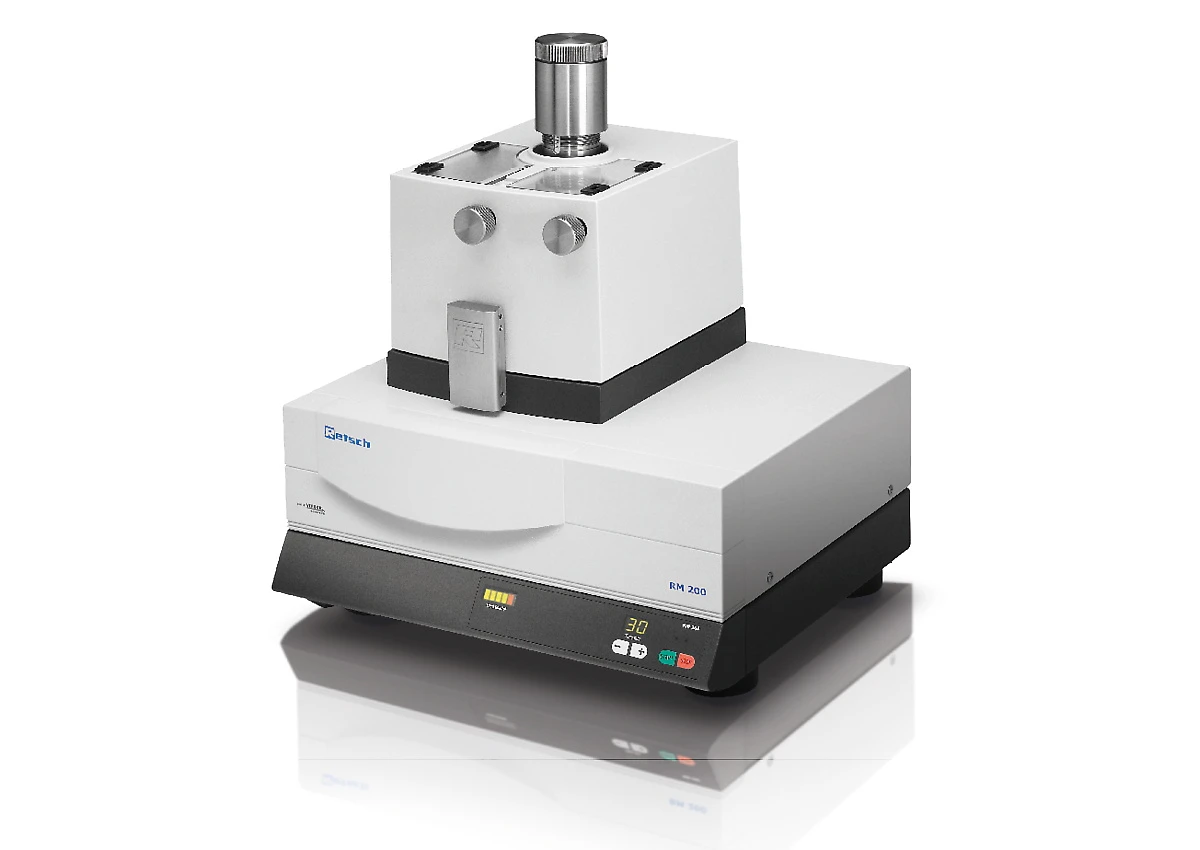
Pressure and friction
Electric mortar grinder
Small samples for gentle grinding, mixing or homogenization. The mortar and pestle grind and mix suitable dry or wet material. Select the grinding set for wear, chemistry and cleaning.
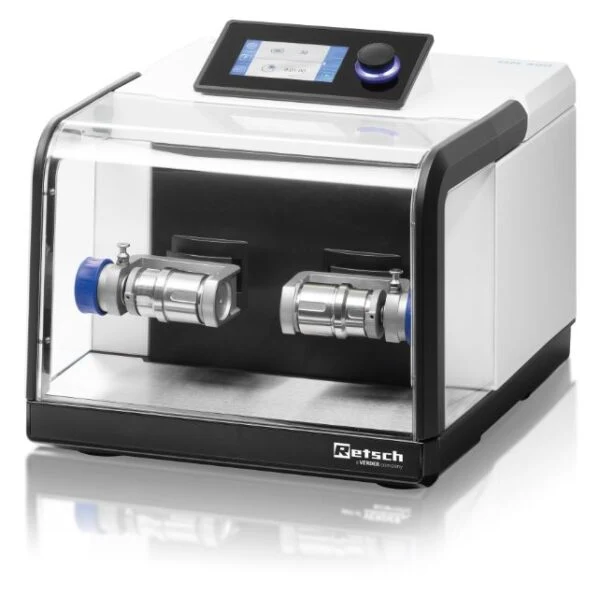
Oscillating media impact
Mixer & cryogenic mills
Small batches, parallel samples and temperature-sensitive feed. Compare the MM 400 for flexible preparation, vario for parallel batches, nano for high-energy milling and control for regulated thermal conditions. The CryoMill provides automatic liquid-nitrogen cooling for compatible samples.
Media impact and friction
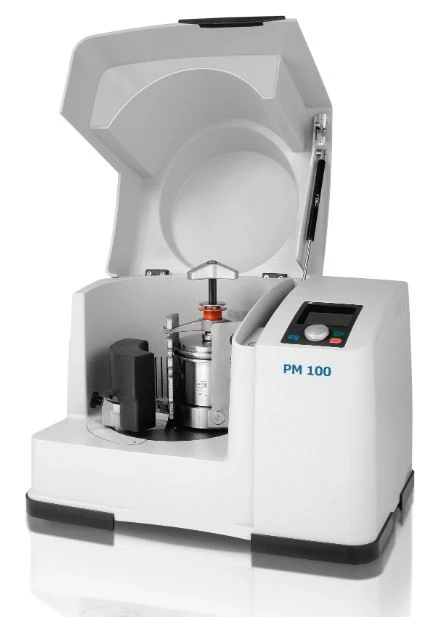
Planetary ball mills
Fine grinding, wet milling and high-energy laboratory work. Choose jar geometry, working sample volume and media together. Nominal jar volume is larger than the useful sample volume.
Media grinding
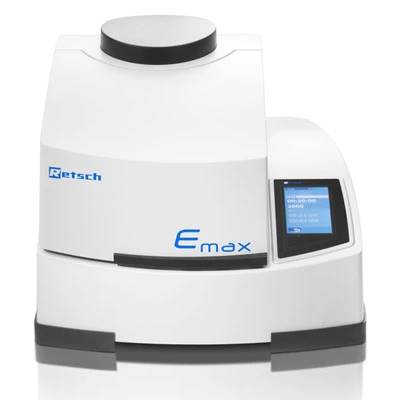
High-energy, drum & XRD mills
Intensive fine grinding, larger batches or mineral preparation for diffraction. Choose Emax for intensive ball milling, TM 300 or TM 500 for drum milling at larger batch sizes, or XRD-Mill McCrone for mineral preparations where diffraction quality matters.
Gas-driven particle collisions
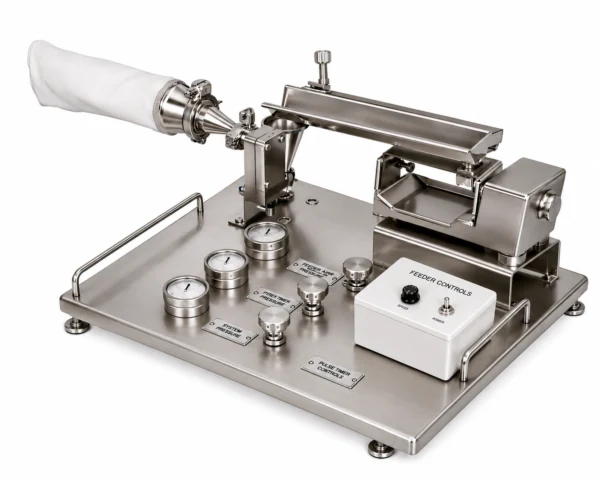
Laboratory, pilot & production jet mills
Fine dry powders where grinding media would be undesirable. Compare Model 00 and Model 02 JET-O-MIZER for lab trials, and JET-O-MIZER, MICRO-JET and ROTO-JET for pilot or production. THERMAJET supports flash drying and deagglomeration of suitable wet feeds.
What to measure in a pulverization trial
Use representative feed and agree on acceptance criteria before comparing mills. A finer powder is useful only if it still meets your recovery, purity and processing requirements.
Characterize the feed
Record the largest pieces, moisture, hardness or flexibility, and how much sample you can supply.
Choose the grinding route
Decide if pre-crushing is needed and compare dry, wet or cooled processing. Match contact materials and grinding media to your purity limits.
Measure the product
Check the relevant sieve fraction or particle-size distribution. Record recovery, temperature and wear. Use particle analysis where you need a measured distribution.
Confirm the operating rate
Measure usable output per batch or hour at the agreed fineness. Include collection, cleaning and changeover when evaluating scale-up.
Pulverizer FAQ
What is a pulverizer used for?
A pulverizer reduces solid feed to smaller particles, often a powder. In a laboratory it can prepare a representative sample for analysis. In pilot and production work it can produce a controlled size distribution for a downstream process.
How does a pulverizer work?
A pulverizer applies impact, shear, compression, friction or a combination of these forces. A hammer strikes particles, a cutting rotor shears fibers, grinding media act on the feed inside a jar, and a jet mill accelerates particles into one another.
What is the difference between a pulverizer, a mill and a crusher?
Pulverizer describes the size-reduction task. Mill describes a machine family such as a ball mill or jet mill. A crusher usually handles the first, coarse reduction stage, especially when pieces are too large for a fine mill.
Is a hammer mill a pulverizer?
Yes. A hammer mill is an impact pulverizer for compatible feed. Screen openings, feed properties and operating conditions affect the output. Verify the particle-size distribution with a representative sample.
What is the difference between a ball mill and a jet mill?
A ball mill uses grinding media inside a jar or drum and can support dry or wet processing in compatible configurations. A jet mill uses compressed gas to drive particle collisions and is typically used for fine dry powders. Review gas supply and collection as part of the jet system.
Which pulverizer is best for rock, minerals or ceramics?
Use a jaw crusher if the feed is too large for a fine mill. Then compare a disc or vibratory disc mill for hard, brittle analytical samples, or a media mill for finer targets. If the powder is for X-ray diffraction, compare the XRD-Mill McCrone and check the preparation against the analytical method.
Which mill is best for food, grain or spices?
Compare rotor, hammer or cyclone mills for suitable dry, brittle ingredients, a cutting mill for tough plant fibers, and a knife mill for moist or oily material that needs homogenization. Evaluate residue, temperature and cleanability using the actual sample.
Can you pulverize plastic or rubber?
Many tough plastics can be cut with a suitable cutting mill. Elastic or heat-sensitive grades may grind more readily when chilled. Test a representative grade and form because fillers, flexibility and heat response vary.
When should I use wet grinding?
Consider wet grinding when the product can remain as a slurry or when a compatible liquid helps disperse particles during fine media milling. Review viscosity, liquid compatibility, media wear and whether the product must be dried again.
When should I use cryogenic grinding?
Consider cryogenic grinding when cooling makes elastic material more brittle or helps preserve a temperature-sensitive sample. Validate the sample temperature and the complete cooling arrangement for the selected mill.
How fine can a pulverizer grind?
Fineness depends on feed properties, mill design, tooling and operating conditions. Some equipment makes a coarse granular product while suitable media or jet mills can produce micron-scale powders. Specify the required distribution and measurement method so a trial can verify the result.
What do D10, D50 and D90 mean?
They are particle sizes below which 10%, 50% and 90% of the measured distribution fall. State the measurement basis, such as volume or mass. D50 is the median. D90 helps describe the coarse end of the distribution.
Does a mill screen determine the final particle size?
The opening influences which particles can leave the mill. Particle shape, wear, feed rate and operating conditions affect the actual distribution. A screen opening is a setup detail. Measure the product to confirm the size specification.
How do I reduce contamination and sample carryover?
Select contact materials around the elements or substances that matter to your analysis. Confirm cleaning and verify with a blank or carryover check where relevant. For media mills, assess jar and ball wear. For jet mills, assess liners and the collection path.
How do I compare throughput and recovery?
Specify the usable mass per batch or required rate at the target fineness. Measure collected product, retained material and losses during a trial. For batch equipment include loading, unloading and cleaning time. For continuous equipment include feeding, collection and utilities.
Can I use a laboratory pulverizer for production?
Lab trials establish whether the mechanism and settings can meet your target. For production, confirm sustained throughput, size distribution, temperature, recovery, utilities and cleaning at pilot scale before selecting the system.
What should I send Glen Mills for a recommendation or quote?
Share the material, starting particle size, desired size distribution or analytical method, sample quantity or throughput, and any temperature, wear, cleaning or containment limits. Glen Mills can review the application and discuss free feasibility testing.
What is a BioPulverizer?
The BioPulverizer is a mortar-and-pestle system for fragmenting hard-frozen tissue before extraction or further homogenization. For frozen-tissue grinding, also compare the CryoCup Grinder II.
Find a pulverizer for your material
Tell Glen Mills what you’re starting with, the particle size you need and how much material you have to process.
Discuss your application