YOUR MATERIAL. YOUR NEXT BREAKTHROUGH.Explore free feasibility testing →

ROTOR MILLS

PX-MFC 90 D.
Hammer Mill.

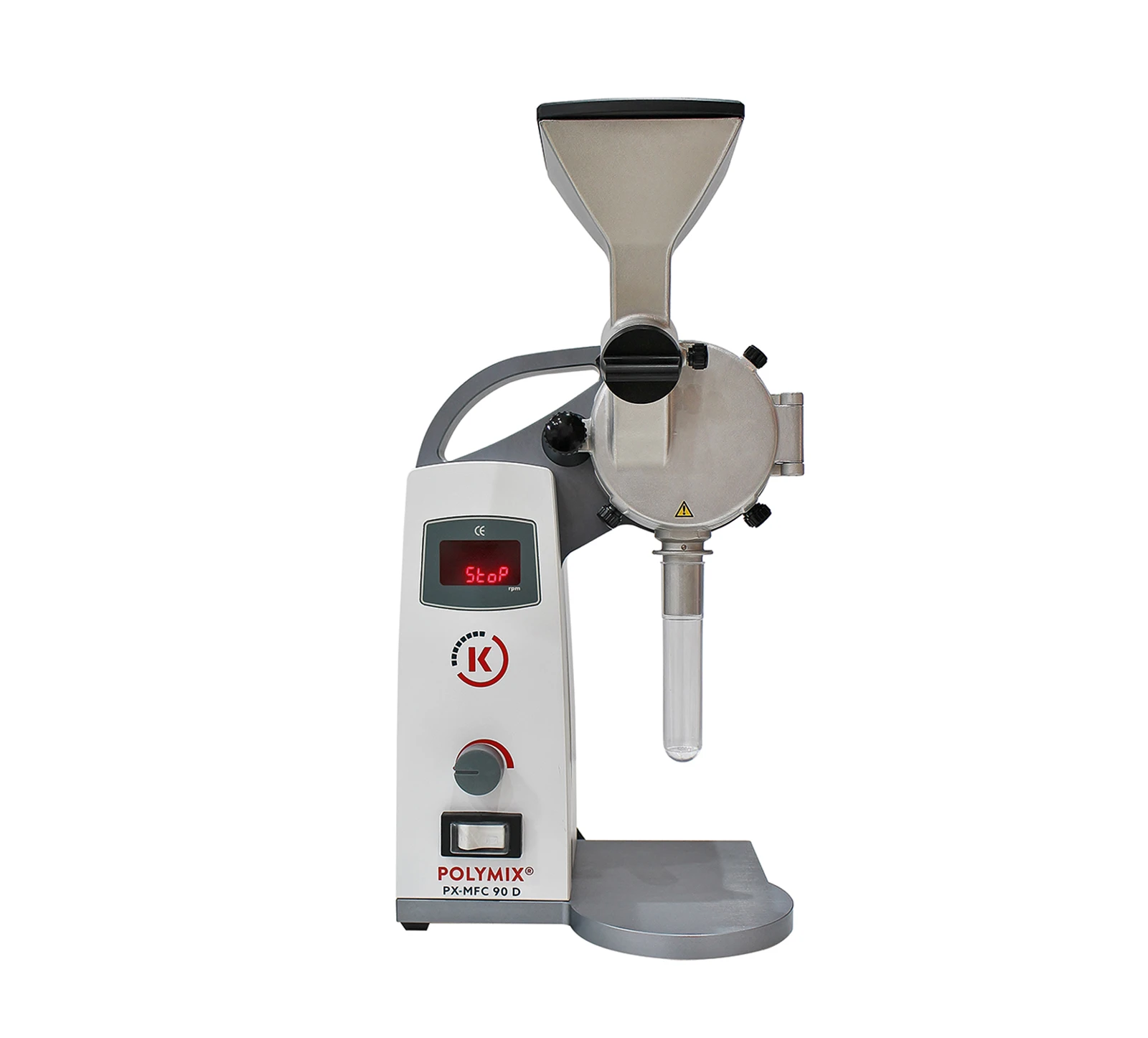
Compact dry-sample preparation with interchangeable blade and hammer attachments, variable speed, ten sieve sizes and tube collection.

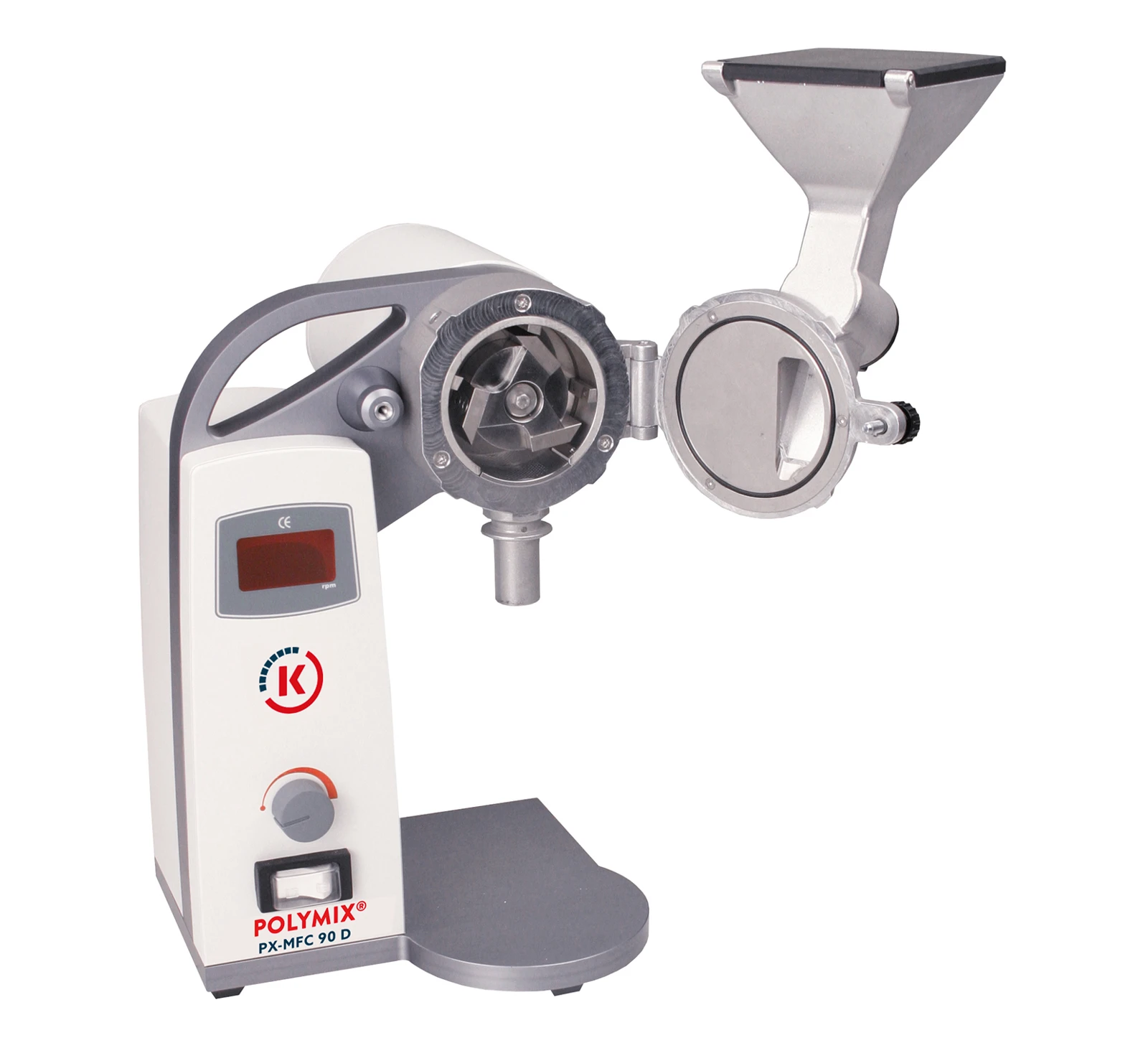
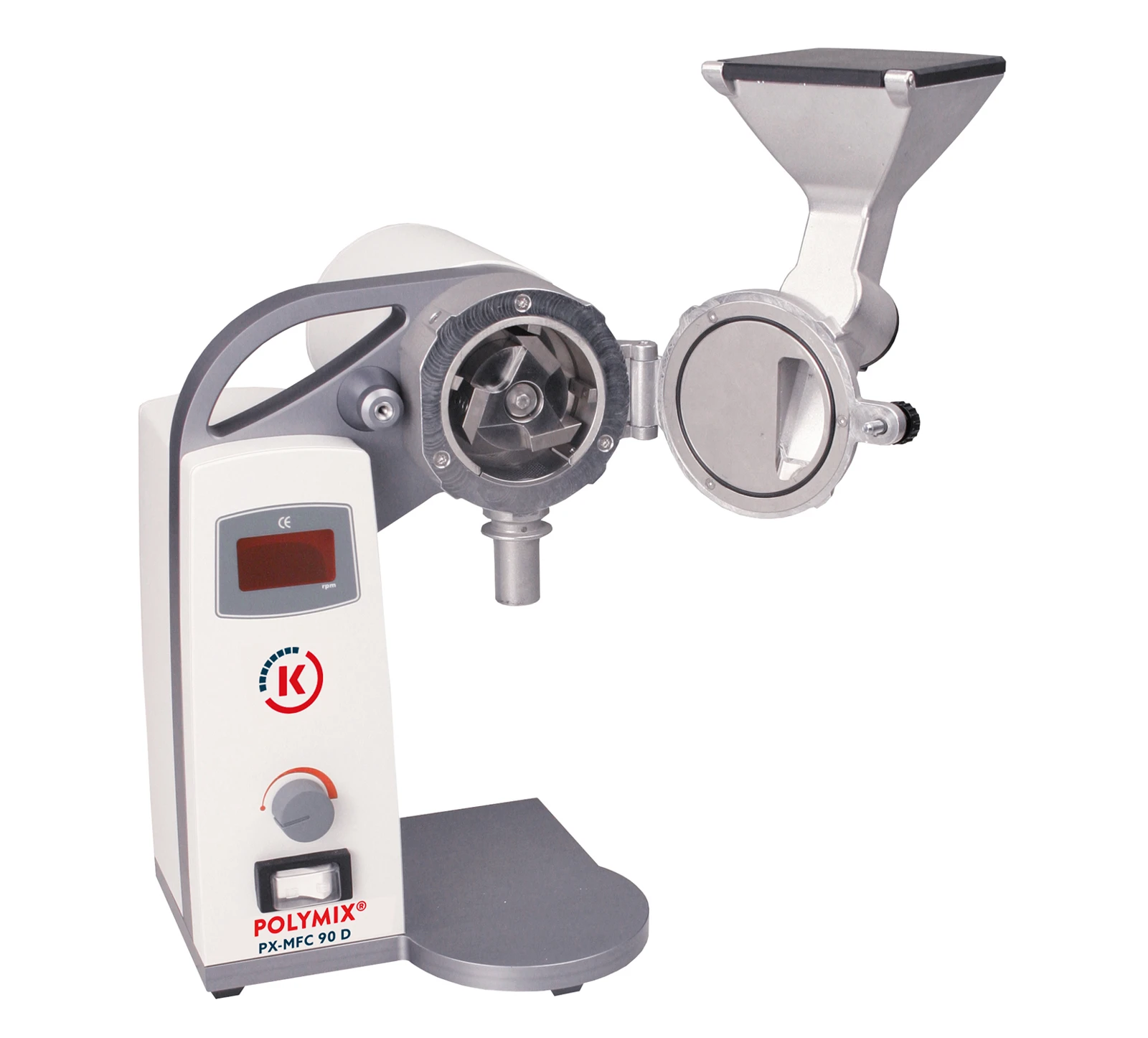
PX-MFC 90 D product photograph
Power1,000 W
Speed range50–6,000 rpm
Funnel volume300 mL
Sieve range0.2–6 mm

THE PRODUCT IN FOCUS

Model overview

One compact mill. Two grinding approaches.

The PX-MFC 90 D prepares dry solids for analysis and quality control. Choose blade grinding for stringy or fibrous samples, or hammer grinding for suitable brittle samples. The hardened stainless-steel attachments can be exchanged as the method changes.

A 1,000 W drive, 50–6,000 rpm speed range and 12 kg benchtop design support flexible laboratory preparation. The 300 mL funnel feeds the grinding chamber; this figure is not a guaranteed useful batch capacity.

Both mill packages include a power cable, the selected grinding attachment, a 2.0 mm sieve, tool set, a rack and 12 collection tubes. The blade package also includes an attachment removal tool. Choose the supply and plug version appropriate to the installation.
PERFORMANCE & OPERATION

Features. Operation. Handling.

Control feeding, speed and discharge

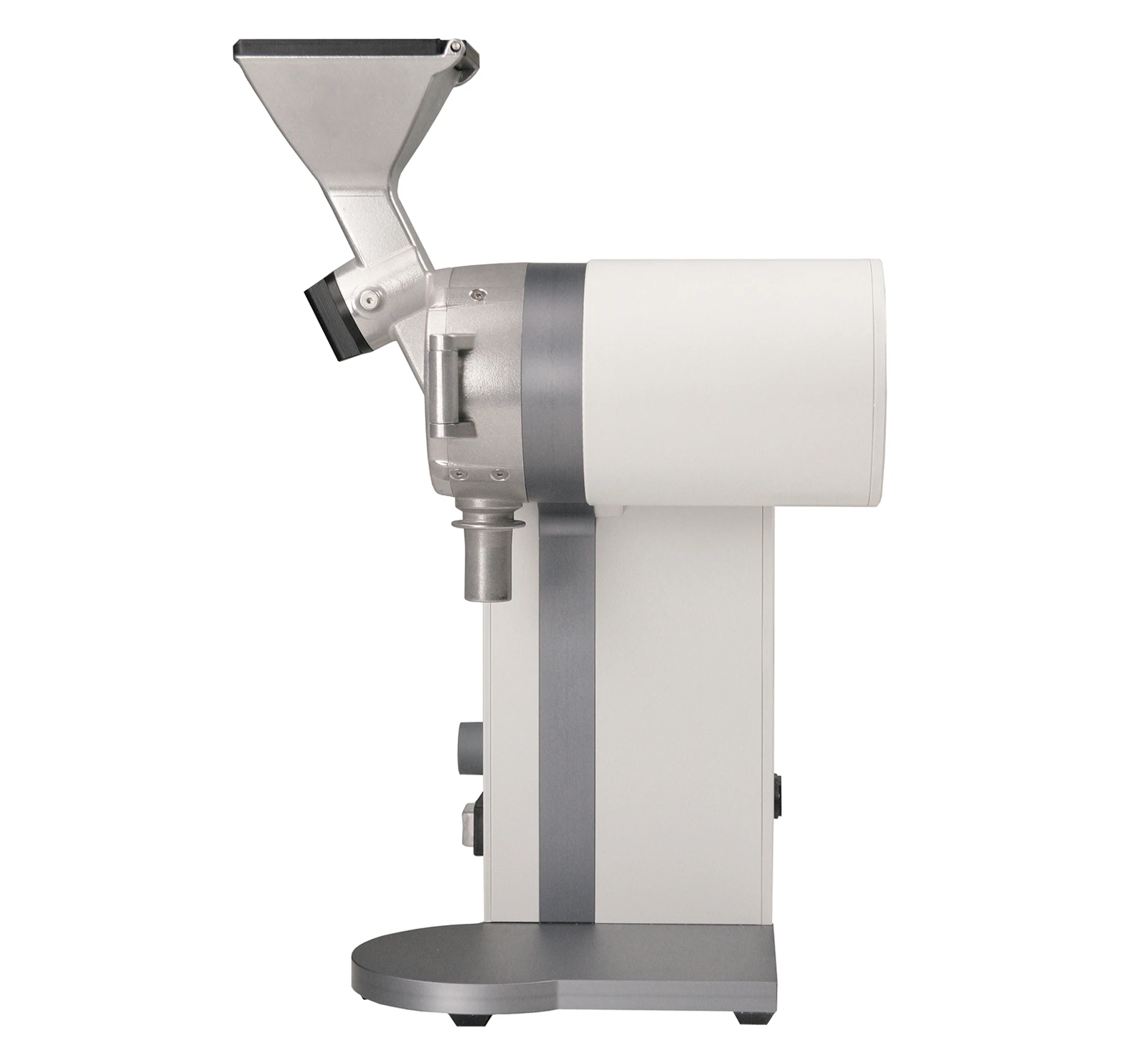
A gearless direct drive provides a 50–6,000 rpm operating range. The illuminated display shows speed and operating status. A hinged-lid funnel and turnstile dosing arrangement control sample addition; refilling during operation depends on the product and approved procedure. A close-fitting pusher can help feed material into the chamber.

Prepared material passes through the sieve to a collecting tube with an NS29 ground joint. The 300 mL figure describes the funnel, not a validated working sample capacity.

Cleaning, handling and protection

Change sieves without tools and exchange grinding attachments to adapt the mill to the sample. Solid machined parts and hardened components support wear resistance. The carrying handle helps with bench handling.

The maintenance-free three-phase motor uses a gearless direct drive. Opening the grinding chamber stops the motor; integrated protection monitors overload, excess heat and jams. A dust-protected main switch and automatic standby complete the operating controls.

APPLICATIONS & METHODS

Build the process around the sample.

Blade grinding: dry, fibrous and stringy samples

A rotor with three hardened knives cuts against three stationary cutting bars. The sample circulates through the chamber until it passes the selected sieve. Oversize material stays in the chamber and can be recovered by opening it after the mill has stopped.

Examples to evaluate include wood, bark, roots, leaves, straw, cork, grass, turf, dried resins, coal, fiberglass, plastic pellets and other synthetic materials. Leather, wool, cotton, linen, paper, textiles and felt are further cutting applications. Suitable dry, fat-free biological materials include dried fruit, dried meat, fish fins, fish bones and feathers.

Three-knife blade rotor and stator with three cutting bars

Hammer grinding: dry, brittle samples

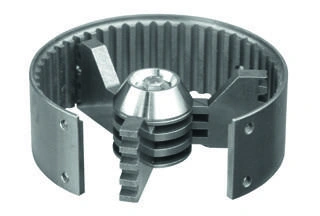
A three-arm rotor with hardened impact hammers works against a grooved stator. Repeated impact reduces suitable brittle solids; the sieve controls discharge into the collecting tube, while oversize particles remain available for recovery after stopping.

Application examples include dried grain, oats, malt, pectin, dry beans, fish skeletons, nut shells, bones, pebbles, rock, amber and ceramics. Raw or roasted coffee beans are also listed as examples, but suitability must be checked against actual fat content and sample behavior. The platform’s reference to hardness up to Mohs 6 applies to suitable material and grinding configurations.

Three-arm hammer rotor and grooved stator

Analytical workflows and sample limits

Use the mill for general solid-sample preparation, composition or content analysis, quality control and pollutant analysis, including suitable soil and food samples. A dry ground sample can be prepared for subsequent dry analysis or analysis in a liquid; this does not make the mill a wet-grinding system.

Use dry samples with low or no fat content. Wet or high-fat material can clog the sieve and grinding chamber and compromise the result. Review a different preparation method for those samples.

Fineness and staged preparation

Product-dependent particle sizes below 40 µm are reported as attainable. An approximate guide is one-fifth of the sieve aperture: a 0.2 mm sieve corresponds to about 0.04 mm (40 µm). This is not a guaranteed particle-size distribution.

For suitable samples, two or more passes through progressively smaller sieve apertures can improve fineness. Select the attachment, speed, feed and sieve sequence through representative material trials, and verify the output against the analytical method.

TOOLS & CONFIGURATION

The right tools for the task.

Choose a blade or hammer package

Blade package: three-knife rotor, stator with three cutting bars, attachment removal tool, 2.0 mm sieve, tool set, power cable, tube rack and 12 collection tubes.

Hammer package: three-arm hammer rotor, grooved stator, 2.0 mm sieve, tool set, power cable, tube rack and 12 collection tubes.

For either package, the available supply choices are 100–120 V with a power cable, or 230 V with a Swiss (CH), European (EU) or UK power cable. Confirm the chosen version against the local supply. The blade and hammer attachments are also available separately, each with its associated tool.

All ten sieve options

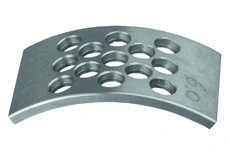
Choose hole diameters of 0.2, 0.5, 0.8, 1.0, 1.5, 2.0, 3.0, 4.0, 5.0 or 6.0 mm. A 2.0 mm sieve is included with each mill package. Sieve changes do not require tools; choose a single aperture or a staged sequence to suit the material.

Example sieve attachment; choose from ten aperture sizes

Feeding and sample collection

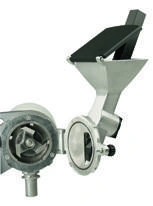
Feeding pusher (stodger)Helps insert light or fibrous material that does not reach the grinding chamber under its own weight.
Collection tubesSet of 12 tubes for the PX-MFC 90 D; discharge uses an NS29 ground-joint connection.
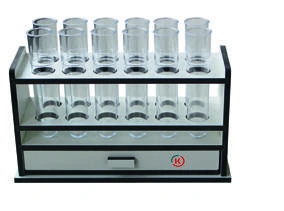
Tube rack with drawerHolds 12 collection tubes and provides a drawer for organized handling.
Feeding pusher for fibrous material
Rack with a drawer and twelve collection tubes

TECHNICAL INFORMATION

Specifications & reference data

Technical specifications

Power (W)1000
Funnel volume300 ml
Product dischargeFor collection tubes with norm grinding NS29
Sieves0.2 to 6 mm mesh size
Grinding attachments (convertible)Hammer grinding attachment / blade grinding attachment
MotorWear-free three-phase motor / Gearless direct drive / Security system auto-off
Speed range50 – 6000 rpm
Sound level (without load)70 dB(A) for 6000 rpm
Supply voltage100 – 230 V ± 10 %, 50Hz / 60Hz
Relative humidity (max.)80 % in storage / 80 % during operation
Operating temperature0 – 40 °C
Protection class acc. to DINIP 20
Measurements (L x W x H)325 x 251 x 480 mm
Weight12 kg
EMC standardsIEC / EN 61000-6-2 / EN 61000-6-3
Safety standardIEC / EN 61010-2-51

Match the actual ordered supply voltage and power cable to the installation. Sound level is quoted at 6,000 rpm. Achievable fineness, working quantity and feed dimensions require sample-specific confirmation.

YOUR MATERIAL. YOUR NEXT STEP.

Put the process
to the material test.

Tell us what you’re processing and what needs to change. We’ll help define the equipment, accessories and a useful trial.

  • Material and starting particle size
  • Target fineness and required quantity
  • Temperature, purity and cleaning requirements