Emphasize final fineness
A steep crushing chamber and high-frequency jaw movement support a published result of 90% below 0.5 mm in one working run.

RETSCH / POWER & FINAL FINENESS
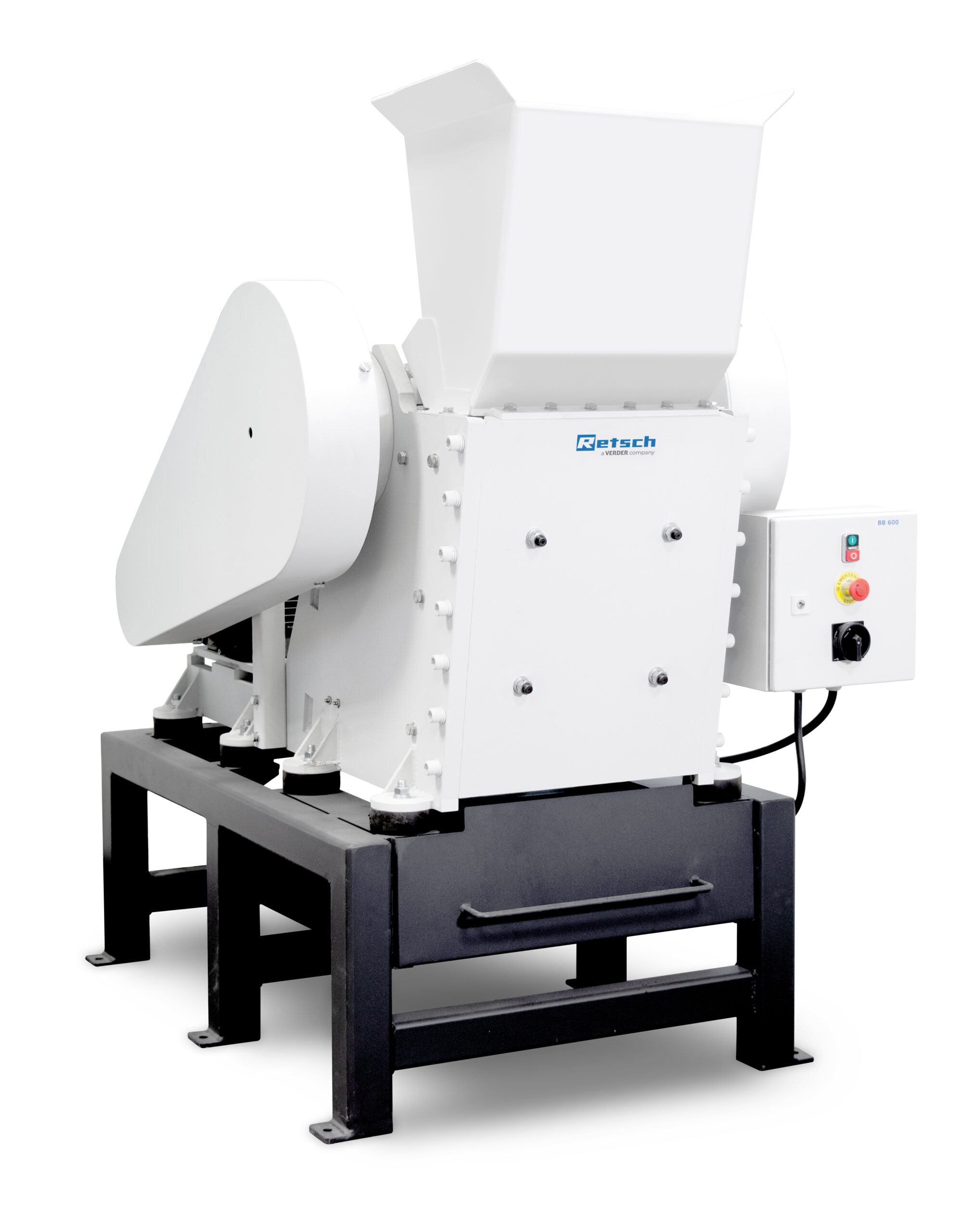
A floor-standing jaw crusher that combines feed below 110 mm with a published final fineness of 90% below 0.5 mm. Throughput can reach 500 kg/h, depending on the material and settings.
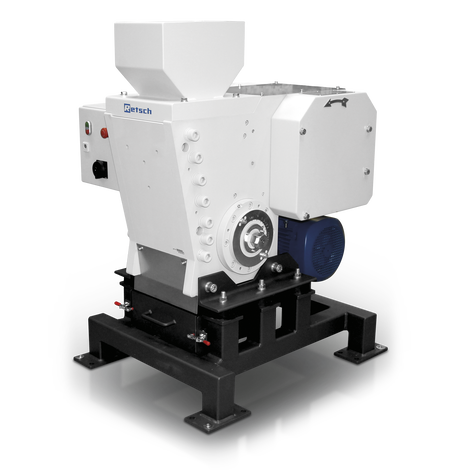
THE MODEL IN FOCUS
A steep crushing chamber and high-frequency jaw movement support a published result of 90% below 0.5 mm in one working run.
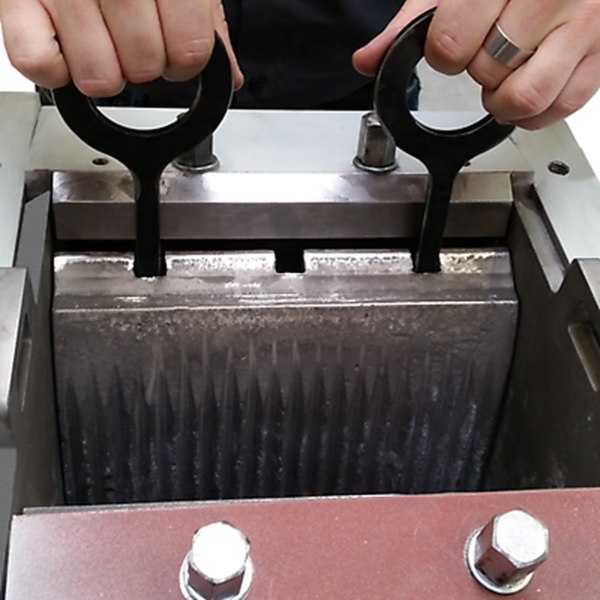
The breaking jaws can be rotated 180° to use both sides. Discuss manganese steel and NiHard 4 around wear and sample requirements.
A 15 L collector supports batch work. Dust extraction and optional process-line configurations help connect crushing to the surrounding process.
*Feed size, final fineness and throughput depend on the material, jaw selection, gap setting and configuration. Published capacities are not simultaneous performance guarantees.
PUBLISHED MODEL DATA
BB 500 uses pressure for coarse and pre-crushing of medium-hard, hard, brittle and tough materials.
Feed size, final fineness and throughput depend on the material, jaw selection, gap setting and configuration. Published capacities are not simultaneous performance guarantees. Confirm current electrical and configuration requirements before ordering.
Original Glen Mills product pageJAW MATERIALS & CONFIGURATION
Match wear materials and the complete crushing route to the sample and the analysis.
Published tool-material options for BB 500: manganese steel, NiHard 4. Confirm the exact combination and wear contribution for your material; a named heavy-metal-free grade does not eliminate every possible source of sample contamination.
Use the 15 L collector for batch preparation or discuss an optional process-line version for continuous operation. Feeding, collection, protection and electrical requirements depend on the installation.
The BB 500 jaws can be rotated 180° to use both sides. Review wear patterns, inspection and service requirements with the team and the operating instructions.
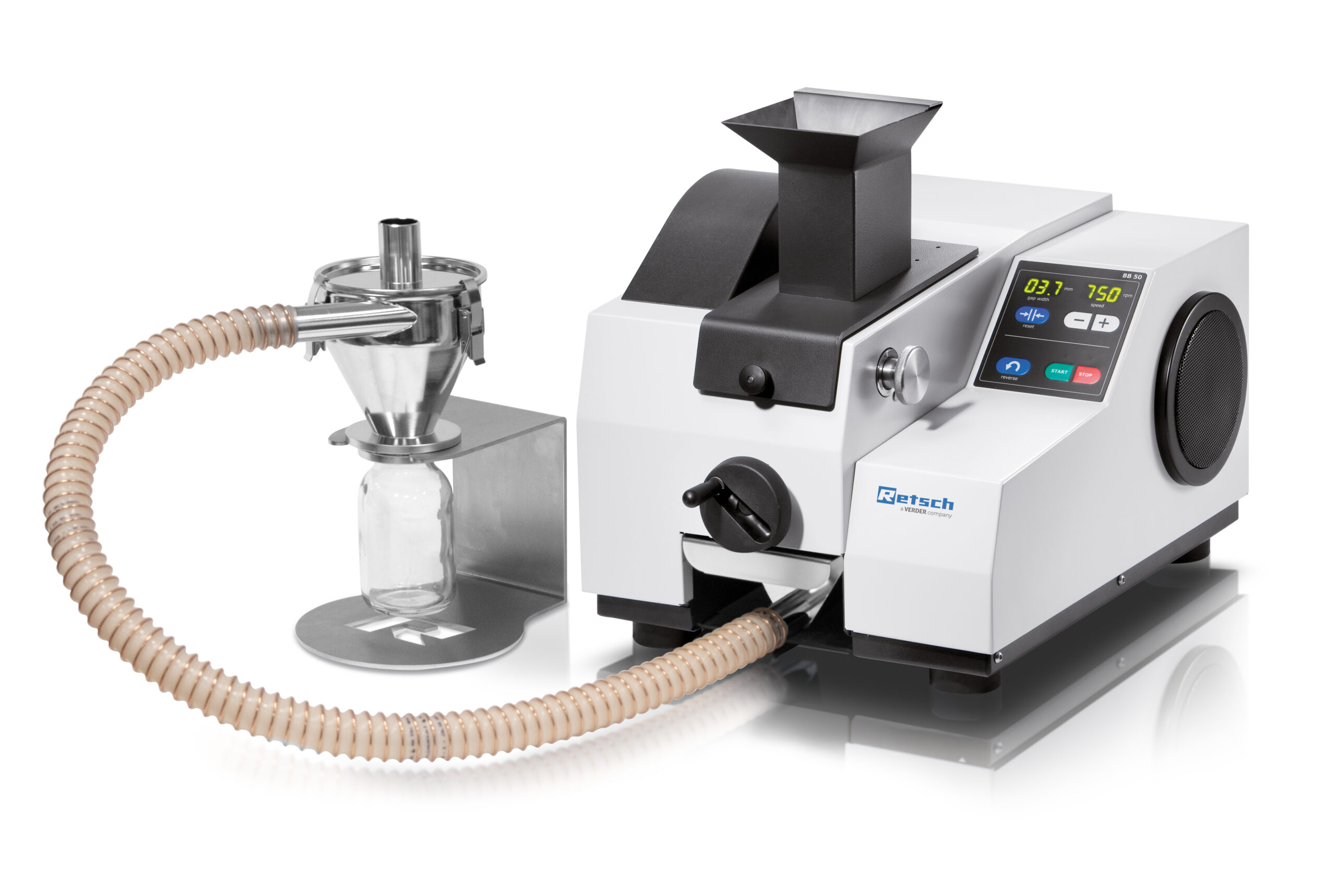
OPTIONAL CYCLONE COLLECTION
Discuss cyclone-assisted collection to help reduce sample loss and dust exposure during crushing. Retrofit options are listed for BB 50, BB 250, BB 400 and BB 500; confirm the setup for BB 500.
Discuss cyclone compatibilityPRESSURE. MOVEMENT. CONTROL.
Material enters through the hopper into a wedge-shaped chamber. One jaw is fixed while the other moves, applying pressure to reduce the sample. Particles pass to the collector when small enough to move through the discharge gap.
Watch the jaw-crushing principleRETSCH animation illustrates the principle using the BB 100.
Check maximum dimensions, hardness, brittleness and the material’s breaking behavior.
Choose a model, jaw material and gap suited to the required result.
Assess the size distribution, recovery, wear and throughput with representative material.
TYPICAL MATERIALS
Discuss material properties, purity requirements and downstream analysis alongside the model specifications.
MODEL APPLICATION REVIEW
Share the feed material, starting dimensions and target particle size. We’ll help review the jaw material, collection method, electrical configuration and practical next step.
COMPARE THE NEXT OPTION
Explore related starting points.
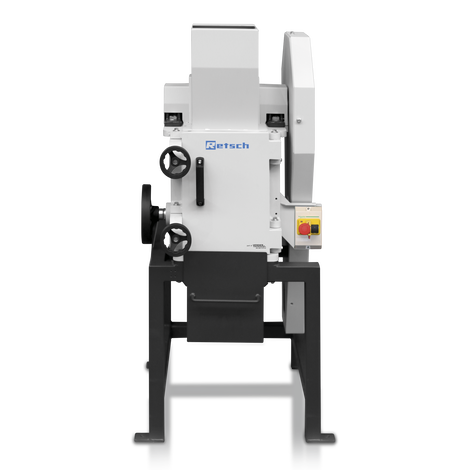
LARGE FEED. FRONT ACCESS.
Large feed with a fine result
MAXIMUM FEED & THROUGHPUT
Largest feed and highest throughput