
Does a temperature or pressure change prove reaction completion?
Not by itself. Evaluate the event against the chemistry and independent characterization of the prepared material.
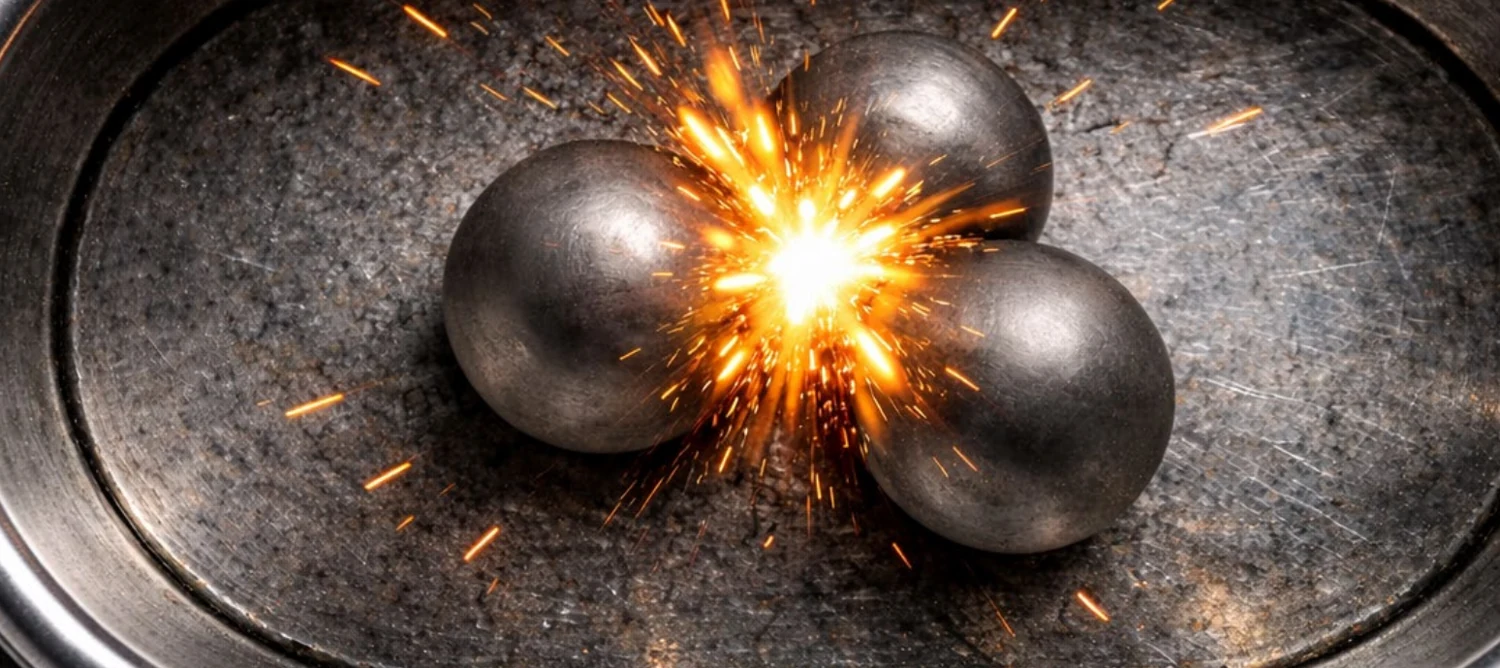
Mechanochemical synthesis is an innovative method used to produce new materials and phases by initiating chemical reactions through the application of mechanical energy, resulting in unique properties and structures. One example of this is the mechanochemically induced self-propagating reaction (MSR). In an MSR, the reaction - once initiated - releases heat and rapidly spreads through the material in an exothermic process. Monitoring temperature and pressure during such reactions provides valuable insights into their initiation and progression.
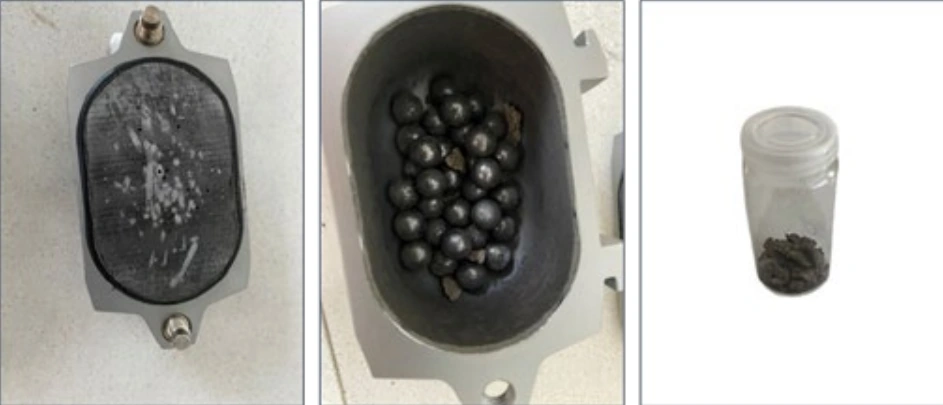
A mechanochemical synthesis was conducted in a Mixer Mill MM 500 nano, in a 125 ml stainless steel jar, equipped with a GrindControl for the gas and pressure monitoring during the milling. The elemental precursors were transferred to the jar together with 32 x 10 mm stainless steel balls. The reaction was conducted under an air atmosphere, at 20 Hz. Pictures of the setup are shown in Figure 1. The milling process was stopped when a sudden change in the temperature and pressure indicated the successful completion of the MSR.
The mechanically-induced self-propagating reaction event in the synthesis was monitored by using the GrindControl system. After 20 seconds of milling, an explosion took place, and the dramatic change of the pressure from 0 to 730 mbar was pronounced. The temperature was also increased.:
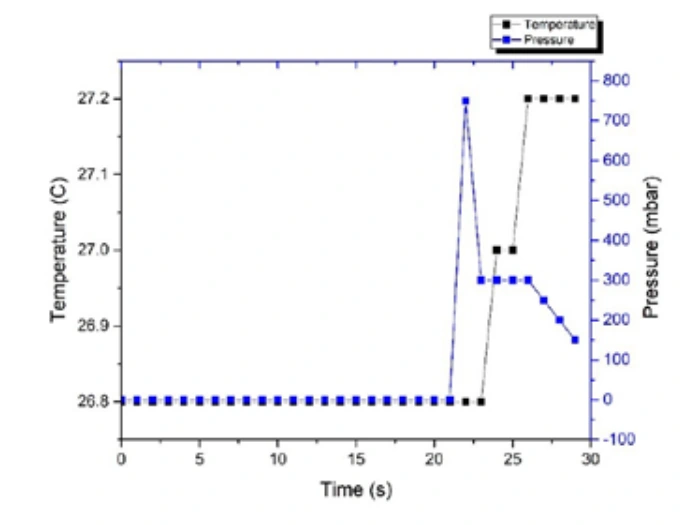
Using the GrindControl gives the advantage of precisely observing the ignition time during the synthesis, as this is the only parameter of interest for the reaction.
The Mixer Mill MM 500 nano At A Glance
The Mixer Mill MM 500 nano is a compact and versatile benchtop instrument specifically designed for dry, wet, and cryogenic grinding of up to 2 × 45 ml of sample material. With a maximum frequency of 35 Hz, the mill belongs to the class of high-energy ball mills, delivering a high energy input to achieve particle sizes down to the nanometer range or to drive mechanochemical reactions.
The specially designed Screw-Lock grinding jars allow for easy filling and enable the use of the GrindControl functional lid for real-time monitoring of temperature and pressure during the grinding process.
When active temperature control is required in addition to monitoring, the MM 500 control can be used, featuring heating and cooling options of the jars during the milling process.
Summary
The successful integration of precise milling technology with advanced in situ monitoring demonstrates how mechanochemical processes can be better understood and optimized, as illustrated by the example of monitoring a self-propagating reaction in the MM 500 nano using the GrindControl system. This approach ultimately supports the development of novel materials with tailored properties.
Plan the configuration for your material.
A sudden process change is an observation that needs interpretation with the reaction system and product analysis. Record sensor configuration, the sample formulation and the milling program together. Monitoring can help locate an event, but it should not be equated automatically with proof of a particular chemical product.
| Consideration | Information to provide |
|---|---|
| Reaction setup | Components and loading |
| Monitoring | Compatible measurement arrangement |
| Interpretation | Process signals and product evidence |
How should the application examples be used?
The results describe the materials and configurations discussed here. Confirm equipment options, contact materials and operating conditions for your own sample before adopting a method. A demonstrated endpoint does not guarantee the same outcome for a different material.
Discuss material testing with Glen Mills or request further information or a quote.