
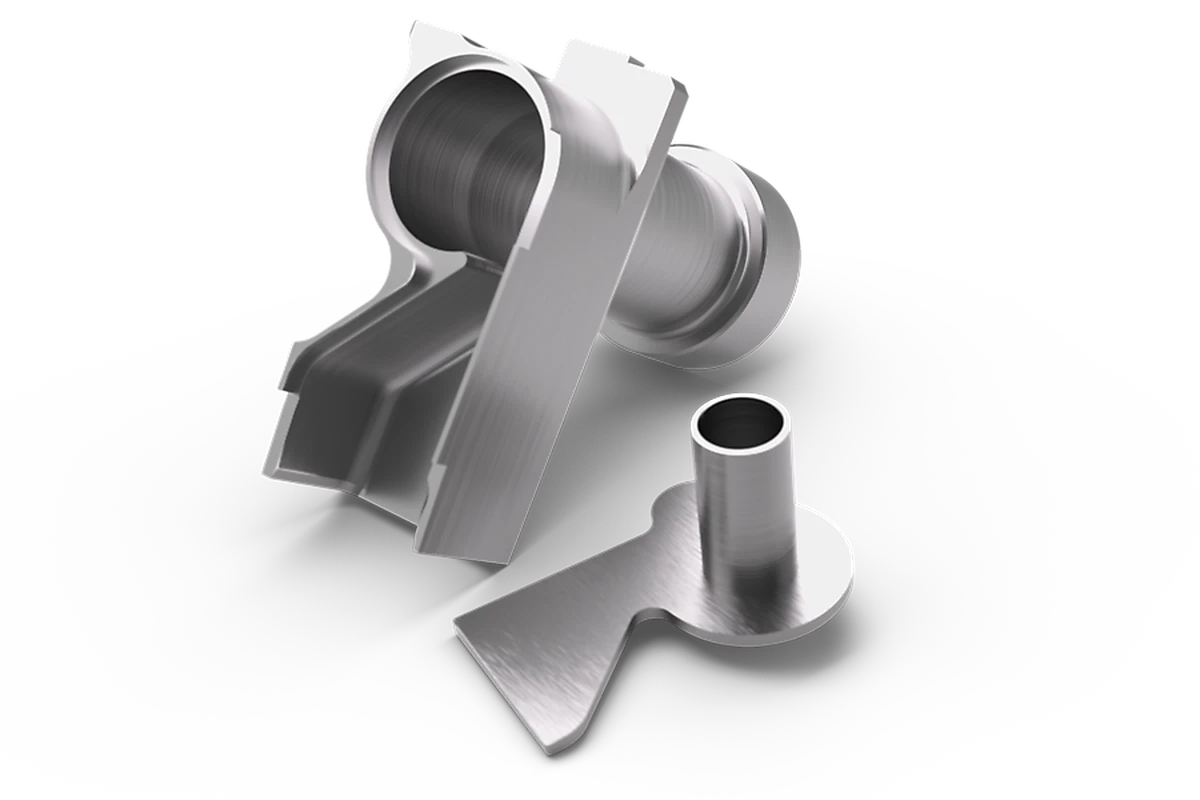
Where should you inspect the SM 50 between samples?
Inspect the hopper, rotor, chamber, bottom sieve and collection path for residues from the preceding sample. The opening hopper and removable push-fit components give access to these surfaces. Evaluate cleaning for the actual material and the next analysis.
Follow the sample from hopper to collector
The RETSCH SM 50 carries cut material through a bottom sieve toward the collection arrangement. With the instrument safely isolated according to its operating instructions, inspect the hopper, rotor, chamber, sieve and collector for material left from the preceding sample.
Which surfaces are accessible?
The EasyInspect hopper opens to expose the sample path. RETSCH describes feed pieces up to 50 × 50 mm for this hopper, with longer flat pieces possible. Record the actual feed geometry when investigating material left at the inlet. The push-fit arrangement allows the chamber, rotor, sieve and cyclone to be removed for cleaning. Inspect both faces of the sieve and the joints between components before reassembly.
For a sticky, fibrous or low-mass sample, record where residues accumulate after a trial. Compare the recovered material with the starting charge for that material and collection arrangement. Access for cleaning and measured recovery answer different questions.
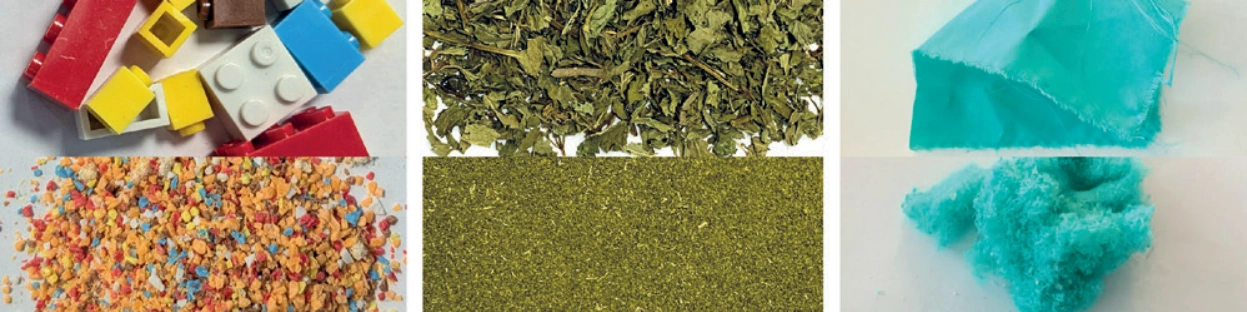
What should be inspected after material leaves the SM 50 chamber?
Evaluate the chamber and collection arrangement with the actual material. A nominally compact machine still needs enough capacity for the feed form, while small samples need attention to residues and transfer losses. Consider the complete operator cycle when comparing preparation arrangements.
| Consideration | Information to provide |
|---|---|
| Material form | Size and cutting behavior |
| Operator cycle | Loading, recovery and inspection |
| Changeover | Access and cleaning requirements |
Discuss material testing with Glen Mills or Contact Glen Mills for information or a quote.