
Does a foodGrade name validate the finished process?
No. Confirm the supplied configuration and assess it within the laboratory or production process, including cleaning and the requirements of the intended material.
Raw materials for the food or pharma industry often require a size reduction process to minimize the particle size (tea, herbs, spices). The materials can be ready for consumption, like tea, or they are used for a second processing step, like extraction of valuable ingredients.
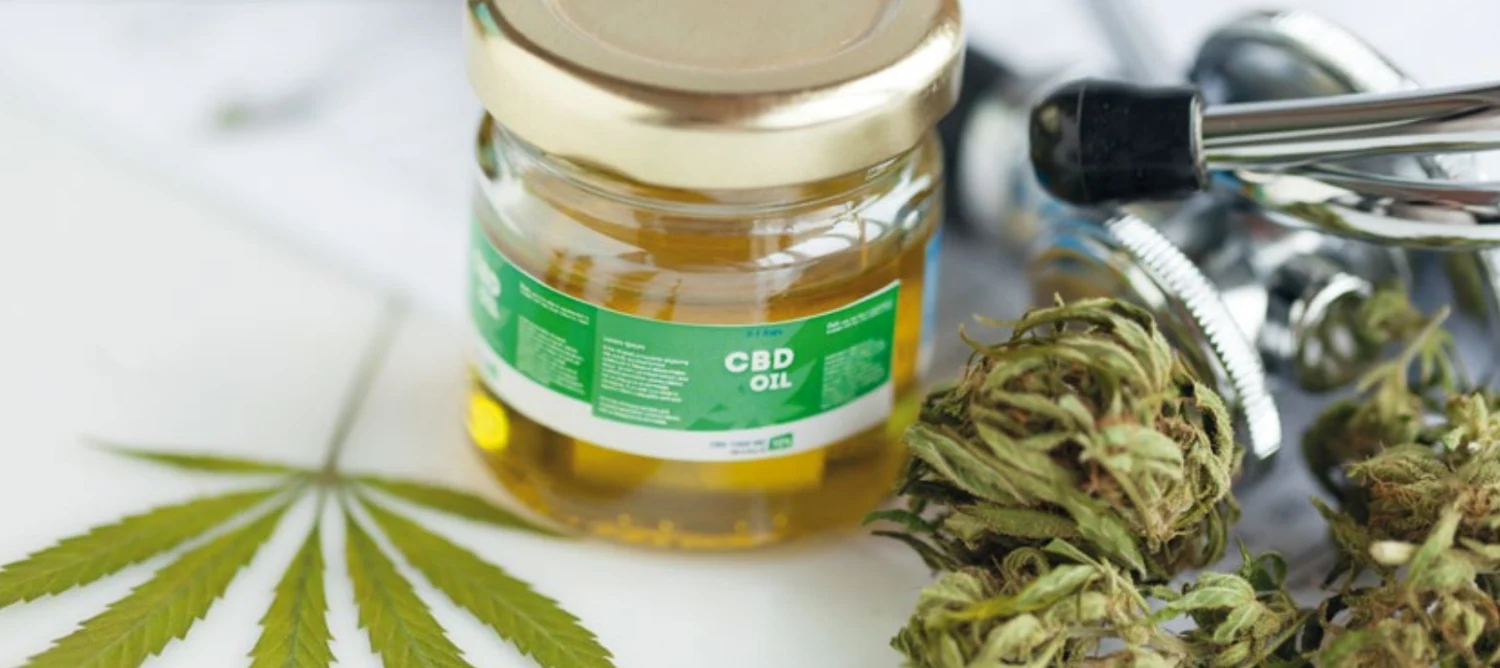
A current example is CBD oil extraction from ground cannabis plants. For both – direct use or process step prior to extraction, the specific requirements of the food and medical industries must be considered when choosing a suitable size reduction tool. Aspects like smooth surfaces, easy cleaning, and available materials like stainless steel 316L to ensure contamination-free processing should be taken into account. Retsch has launched the Cutting Mill SM 300 foodGrade for this type of applications and small-scale production of herbs and spices.
Small scale production of ground cannabis in the SM 300 316L foodGrade
Cutting mills are well-known for the grinding of soft, medium-hard, tough, elastic, fibrous samples, and heterogeneous material mixes. Thanks to the powerful 3 kW drive with high torque and RES technology, RETSCH’s Cutting Mill SM 300 excels especially in the tough jobs where other cutting mills fail. This mill allows for perfect adaptation to application requirements by variable speed from 100 to 3,000 rpm. A range of bottom sieves with aperture sizes from 0.25 - 20 mm is available, ensuring a defined final fineness. Reduction of the speed leads to a decreased fine fraction of the sample and to more particles within the
Cutting Mill SM 300 foodGrade
desired size range. Especially for cutting plant materials, the lowest speed of the SM 300 should be reduced to 100 rpm. A low speed is also beneficial for grinding heat-sensitive materials: the reduced energy input prevents the sample from getting too warm during the process.
For small scale production purposes e. g. in the cosmetic or food industry, RETSCH offers a 316L foodGrade version of the SM 300. All parts in contact with the sample are made of 316L steel or an FDA-certified stainless steel, including the long stock hopper, the parallel section rotor and the bottom sieve. For cutting harder and more compact samples (e. g. branches, twigs, stems larger than 15 mm in diameter), it is recommended to use the optional 316L rotor with blades made of FDA-certified stainless steel. An optional sample outlet and cyclone unit with 30 l receptacle are also available in 316L steel.
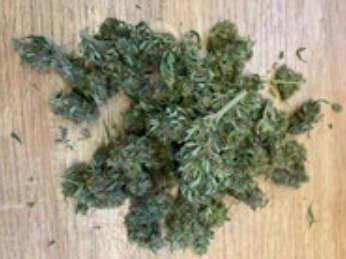
This SM 300 model is perfect for small scale grinding of dried plant materials such as cannabis (whole plants, flower buds, sugar leaves), herbs or leaves. The degree of product fineness can be influenced by the speed and by choosing a suitable bottom sieve. Specific particle size ranges required for different extraction methods (ethanol, supercritical CO2) can be obtained. Usually, for cannabis CBD oil extraction processes, particle sizes around 2 mm (extraction with supercritical CO2) or 5-15 mm (extraction with ethanol) particles are required.
Up to 25-30 kg/h dried flower buds of medical cannabis of approximately 50 mm size can be pulverized at 3000 rpm to a fineness mostly below 2 mm when using a 4 mm bottom sieve (Material supplied by the University Hohenheim, Germany). Here, the use of the V-rotor is beneficial – which is not yet available in 316L. This rotor can also be used if smaller particle sizes need to be obtained by using a bottom sieve with aperture sizes of 1-2 mm. The reduction of the speed to 2000 rpm helps to avoid sample warming and thus blockages of the sieve apertures. The exchange of the 30 l receptacle on the cyclone is easy and sample recovery is also facilitated by the smooth surfaces of the 316L material.
If larger sample particles 5-15 mm are required, e. g. for ethanol extraction, simply select a bottom sieve with larger apertures, e.g. 10 mm, and select a lower speed, e.g. 700 rpm. This results in larger particles, and less warming effects. The sample throughput was the same as mentioned above when using a 4 mm bottom sieve at 3000 rpm.
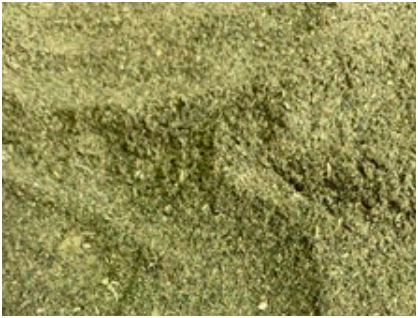
Cannabis after grinding in the SM 300 foodGrade, left: using a 4 mm bottom sieve and grinding at 3000 rpm, right, using a 10 mm bottom sieve and grinding at 700 rpm
Sample loss is negligible. Some dust remains in the grinding chamber and on the sieves or the surfaces of the cyclone and receptacle. But in the described applications, it was less than 0.04%.
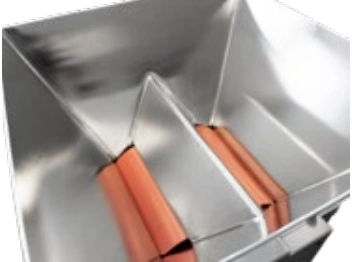
The fold-back hopper of the SM 300 is perfectly suited for easy cleaning, just like the bottom sieves without cassette or edges, where sample material might get trapped. Cleaning of the cyclone and the 30-l receptacle is also quickly done.
Small scale production of herbs and spices
The SM 300 316L foodGrade version can also be used to grind herbs or spices in smallscale production processes. Samples like dried melissa, peppermint, olive leaves, camomile, ramson, chervil are easily processed. To avoid particles smaller than 1 mm, the speed should be reduced to 700 rpm or bottom sieves with 4 mm aperture size should be used instead of smaller ones. A throughput of 10-20 kg / h, depending on the sample and the used speed and bottom sieves, can thus be achieved.
Conclusion
The SM 300 316L foodGrade version is the perfect mill for small-scale production of food (spices, herbs) or for preparing cannabis for further extraction in the medical/healthcare industry. A wide selection of accessories and the speed range of 100-3000 rpm make it adaptable to individual application requirements. Operation is safe and convenient and with the push-fit accessories, the fold-back hopper and the smooth surfaces, cleaning is accomplished in no time.
University of Hohenheim - CANNABIS NET
Cannabis and its extracts have been used for medical purposes for millennia – but various laws have prevented further research and development. As studies continue to reveal favorable findings for the use of different phyto-cannabinoids, various technological developments for large-scale production of cannabis are needed for timely product development and research purposes. Since more than four years, the University of Hohenheim, AG Cropping systems and modeling under the lead of Prof. Simone Graeff-Hönninger carries out different research projects in the context of cannabis. The research focuses on the characterization of quality parameters (e.g. cannabinoids, terpenes, flavonoids) of different cannabis strains as well as the development of the corresponding indoor and outdoor cropping systems under the given environmental conditions in Germany. The group also leads the BMWI funded international German-Canadian Network CANNABIS-NET. The network links scientists and industry partners in Germany and Canada with complementary expertise to set up collaborative research projects in the area of cannabis to close existing technological and service based gaps. The partners strike to achieve targeted improvements in cannabis breeding, cultivation, harvesting, extraction and post-harvest processing technologies, as well the development of as end-use applications. RETSCH GmbH joined the network and linked up with the leading German partners in the area of cannabis.
30 l receptacle made of 316L stainless steel
Plan the configuration for your material.
Define whether the output will be an analytical portion or material for a further production step. Review the contact materials, cleaning procedure and required cut size for that use. A particular steel grade or mill configuration does not by itself establish that a complete process meets every food or pharmaceutical requirement.
| Consideration | Information to provide |
|---|---|
| Intended use | Analysis or further processing |
| Contact surfaces | Required materials and cleaning |
| Output needs | Cut size and collection arrangement |
How should the application examples be used?
The results describe the materials and configurations discussed here. Confirm equipment options, contact materials and operating conditions for your own sample before adopting a method. A demonstrated endpoint does not guarantee the same outcome for a different material.
Discuss material testing with Glen Mills or request further information or a quote.