
Can pellet pressing replace adequate homogenization?
No. Pressing shapes the prepared material for analysis; it does not correct an unrepresentative or poorly homogenized sample.
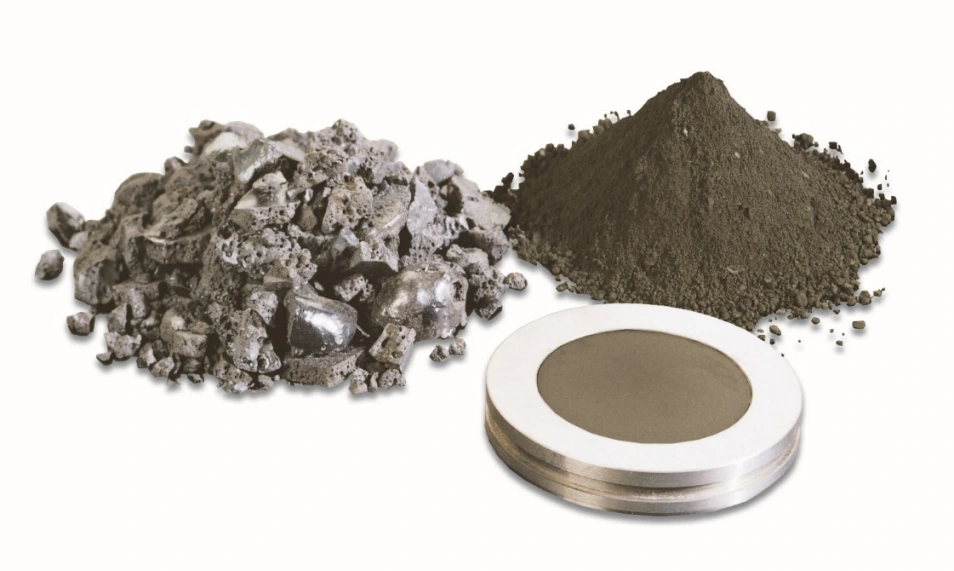
To produce high-quality cement, the mineralogical and chemical composition of raw materials as well as intermediate and finished products has to be determined. At each stage of the production, samples need to be taken, processed and analysed to ensure quality control without gaps. RETSCH offers a range of instruments that are used for sample preparation during the complete production process. The typical sample preparation process involves preliminary size reduction, sample division, fine size reduction and, depending on the subsequent analysis, pellet pressing. This article focuses on the fine grinding step explaining the use of RETSCH’s Vibratory Disc Mills to produce fully homogeneous samples and thus obtain reliable results, and on the production of smooth pellets for XRF analysis. Sample preparation has become an increasingly important issue because the detection limit of XRF analyzers has shifted to trace level in the past few years. Moreover, accurate analysis of major light elements is only possible with finely ground, homogeneous samples.
Sources of error
The overall procedure of X-ray fluorescence analysis may be divided into three different stages: sampling, sample preparation and the actual spectrometric analysis itself. Of these three, it is usually the mechanical
in this discussion. For XRF analysis, the laboratory sample consisting of a few grams often has to represent a total amount of several tons. Producing a homogeneous and representative pulverized sample from a bulk means that a fair amount of work is involved in the way of sample crushing and division, and it is here that accidental errors and errors attributable to system inadequacies may be expected to occur most frequently. As XRF measurements are not difficult to execute, the importance of reliable sample preparation is often neglected. This can lead to insufficient reproducibility and thus to incorrect analysis results. Beside the quality of the spectrometer, the quality of the sample preparation process has a decisive influence on the precision and reproducibility of the analysis results.
Required fineness and homogeneity
The deeper the X-ray enters the sample, the more it is absorbed by it so that above a defined thickness the X-ray light can no longer penetrate the sample. This also applies to the fluorescent light which leaves the sample and is then detected.
The lowest sample layer from which detectable fluorescent X-rays are
emitted is called saturation depth. It depends on the intensity of the X-rays, the type of detected atoms and the density of the sample’s surroundings (the matrix). If different elements are analyzed in the same matrix, the saturation depth increases with increasing atomic number of the element. Conversely, this means that elements with small atomic numbers are more difficult to detect. This also affects the reproducibility of the analysis. That is the reason why a fineness of at least 80 microns is required, e.g. for dolomite, to ensure reliable results when analyzing elements lighter than potassium. Another factor influencing
the quality of analysis results
the degree of
homogenization, particularly when dealing with coated or inhomogeneous samples. Only if the sample is thoroughly homogenized, can it be assured that also the inner core of e. g. a coated particle has been measured.
If different elements are analysed in the same surroundings, the saturation depth increases with increasing atomic number of the element in question. The table below shows this correlation for a selection of elements contained in cement clinker:
| Element | Atomic number | Saturation depth |
|---|---|---|
| Fe | 26 | 170 µm |
| Mn | 25 | 140 µm |
| Ca | 20 | 100 µm |
| K | 19 | 80 µm |
| S | 16 | 30 µm |
| Al | 13 | 10 µm |
X-ray saturation depth of different elements in a cement clinker sample.
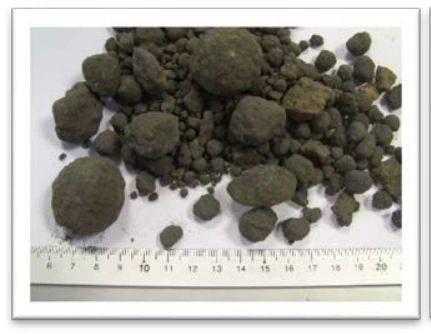
Frequently, sample materials come in large amounts and feed sizes which makes preliminary size reduction necessary, for example with jaw crushers; these powerful instruments crush the material through pressure and friction between a mobile and a fixed breaking jaw. After preliminary size reduction, a part of the sample is subjected to fine grinding. This part sample must be representative, i.e. have the same properties as the total amount to provide reliable information about the composition of the complete sample. The selection of the sample division method and instrument depends on the material and the amount. Dry, pourable bulk samples can be fed to rotating dividers via vibratory feeders whereas sample splitters are suitable for heavily flowing materials. RETSCH offers a full line of sample dividers ranging from sample splitters in 6 sizes to rotating dividers extracting part samples from a bulk of 5 to 60 liters. The part sample thus obtained is then subjected to pulverization.
Sample Pulverization with Vibratory Disc Mills
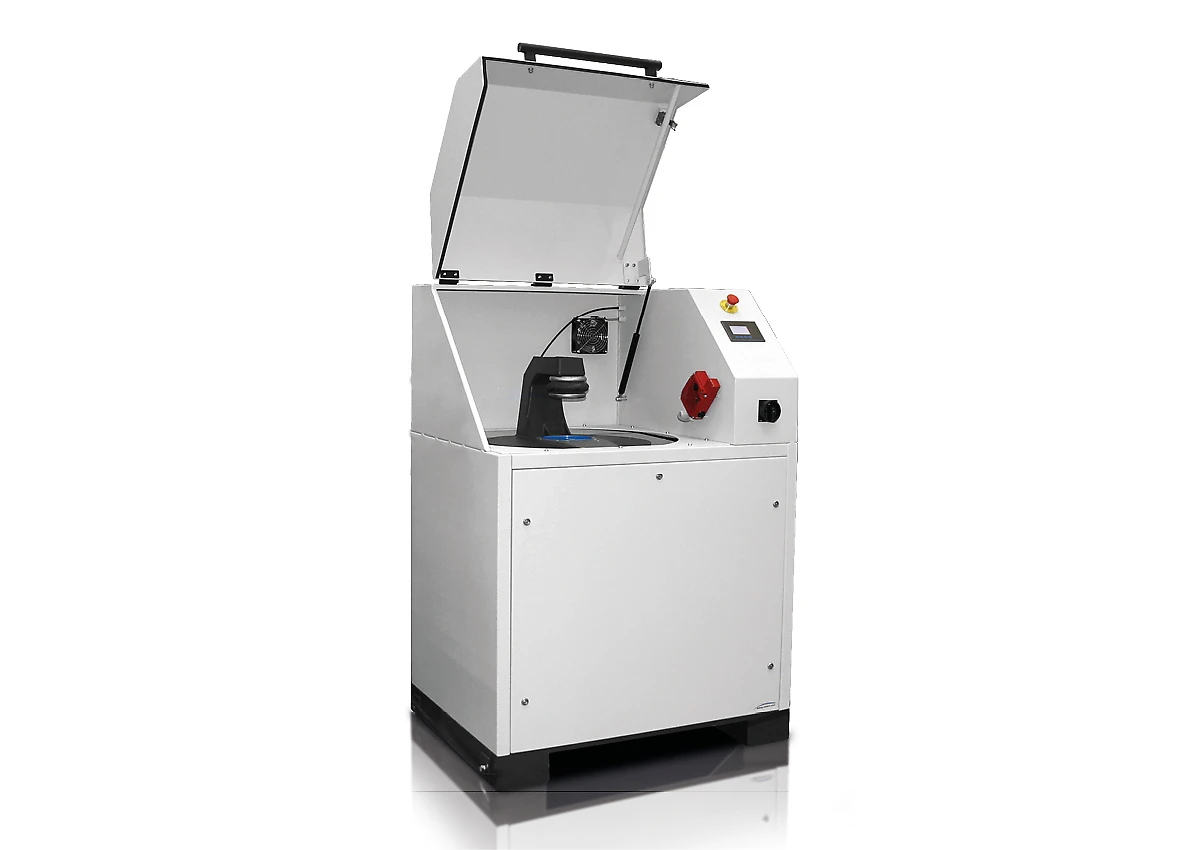
Vibratory Disc Mills such as RETSCH’s RS 200 or RS 300 XL are the instruments of choice for processing hard and brittle samples such as lime stone or clinker prior to XRF analysis. Due to centrifugal forces the grinding ring and disc act with high impact and friction on the sample, allowing both mills to produce a final fineness down to 20 µm, depending on the sample material. With this size reduction principle, the required analytical fineness is usually achieved within seconds. This is advantageous for quality control processes where the analysis results are needed quickly, e.g. for a product approval. Test grindings of tantalum oxide in
quartz sand have shown that the pulverized samples show very good homogeneity (data available on request). Consequently, a perfectly representative sample for further processing like pellet pressing or element analysis may be obtained from any spot in the grinding jar.
RS 200 for sample volumes up to 250 ml
The grinding sets available in sizes up to 250 ml accept maximum initial particle sizes of 15 mm and perform circular oscillations with 700 to 1500 rpm, resulting in extremely quick pulverization. For this model the grinding sets are available in different materials such as hardened steel, steel 1.1740 for heavy metal-free milling, zirconium oxide, tungsten carbide and agate allowing for neutral-toanalysis grinding processes. The mill recognizes tungsten carbide or agate grinding sets and automatically limits the maximum speed to 1200 rpm or 700 rpm respectively to reduce wear. Operating the mill is very ergonomic with carry handles for the grinding sets, a quick-action clamping system and a rail on which the grinding sets easily slide into the correct position.
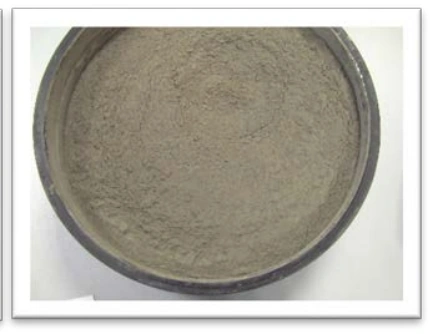
Application example - fine grinding of cement clinker: 200 ml of a sample with particle sizes up to 12 mm were milled in the RS 200 at 1500 rpm, using a grinding set of 250 ml stainless steel. After only 60 seconds, a fineness of 85 microns (D90 value) was achieved.
RS 300 XL for large sample volumes
This mill is used for the same applications as the RS 200 but accepts initial particle sizes of up to 20 mm. A maximum of 4 samples may be processed simultaneously, depending on the accessories used. The high degree of homogenization is achieved by the very effective 3-D grinding principle of this mill. The RS 300 XL accepts grinding set weights of up to 30 kg and sample volumes up to 2000 ml. The closed grinding system guarantees complete processing of the sample. The autoreverse function helps to decrease caking of the sample; a selection of grinding set materials is available for neutralto-analysis milling. The pneumatic grinding-jar clamping and the optional AutoLifter for heavy grinding sets ensure convenient and safe handling.
Application example - fine grinding of raw cement: 2000 ml of a cement clinker sample were pulverized in the RS 300, using a grinding set of 2000 ml hardened steel. The initial
Vibratory Disc Mill RS 300 XL for large sample volumes
particle size of the sample was approx. 35 mm but due to the brittle nature of the material, it was no problem to process it in the RS 300 XL without preliminary size reduction. After 6 min, a fineness of 100 microns (D90 value) was achieved. The RS 200 pulverizes this material much faster but would require a much smaller feed size. So regardless of the user’s requirements, RETSCH offers a suitable mill.
Producing Pellets for XRF Analysis
For most XRF applications pellets with a plane surface are used. Unlike loose powder, a pellet allows for detection of lower element concentrations by x-ray because the sample is more compact. In addition, a smooth surface is preferable to a rough one from an optical point of view. Usually, pellets are either produced by fusion of the sample with salt or by pressing in a pellet press. The fusion method has some disadvantages. Volatile elements such as thallium or cadmium tend to escape during the fusion process and therefore cannot be detected. Moreover, the sample is heavily diluted with lithium salt which impairs the detection limit compared to pellets. Certain elements (e.g. boron, iron, carbides) could even damage the very expensive platinum crucible. Finally, it takes much more time to produce a fusion bead than a pellet (15 minutes compared to approx. 2 minutes).
Therefore, pressing a pellet is the most common procedure for many applications – even though calibration of the spectrometer is more elaborate due to the sample matrix. A pressed pellet should basically fulfil the following quality criteria:
1. It must be homogeneous and have a smooth surface 2. The pellet must not contain loose particles which could pollute the x-ray
tube
3. The pellet should be stable (and storable)
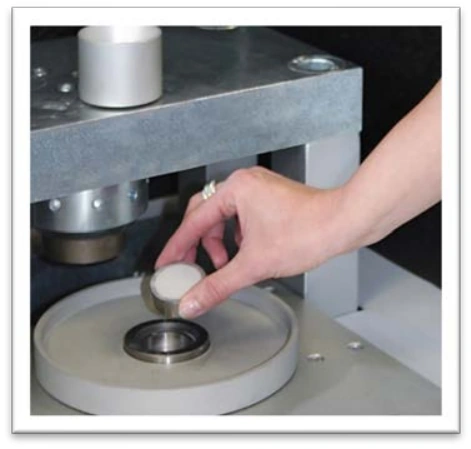
Pressing the sample can be carried out with or without auxiliary materials. Pressing without auxiliary materials (free pressing) is not very common because the pellets are usually not sufficiently stable. The most
frequently used
materials are cellulose-based or paraffin-based. Cellulose has the advantage of also acting as grinding aid, thus avoiding caking of the sample inside the grinding jar. Cellulose can be used in vibratory disc mills as well as mixer mills. Wax is added after the sample has been ground,
either manually or by mixing it with the help of polyamide balls in a plastic jar in the mixer mill. The addition of wax makes the pellet’s surface indelible.
Moreover, wax is more inexpensive than cellulose and not hygroscopic which is important if the pellets are to be stored.
To further stabilize the pellets either steel rings or aluminium cups are used. The cups can be labelled on the reverse side and are useful for storing the pellets.
RETSCH offers three different types of pellet
presses to meet different requirements. PP 25 and PP 35 are both benchtop presses with a pressure of 25 t and 35 t respectively. The PP 40 is a floor model offering individual pressure force regulation from 5 t to 40 t.
Benchtop Pellet Press PP 35
Conclusion
XRF is a powerful technique but one that requires a fully representative sample with suitable particle sizes. The sample preparation process should neither change the characteristics of the material nor add unwanted trace elements. RETSCH Vibratory Disc Mills and Pellet Presses allow users to produce precise, reproducible and contamination-free samples for XRF with a minimum of time and effort.
Plan the configuration for your material.
A smooth pellet does not prove that the material was representative before pressing. Define the particle preparation, grinding-set material and pellet method together. Reference materials and unknown samples should receive compatible treatment where the analytical method depends on comparable sample presentation.
| Consideration | Information to provide |
|---|---|
| Starting material | Heterogeneity and quantity |
| Fine grinding | Tool material and required preparation |
| Pellet method | Sample handling and presentation |
How should the application examples be used?
The results describe the materials and configurations discussed here. Confirm equipment options, contact materials and operating conditions for your own sample before adopting a method. A demonstrated endpoint does not guarantee the same outcome for a different material.
Discuss material testing with Glen Mills or request further information or a quote.