
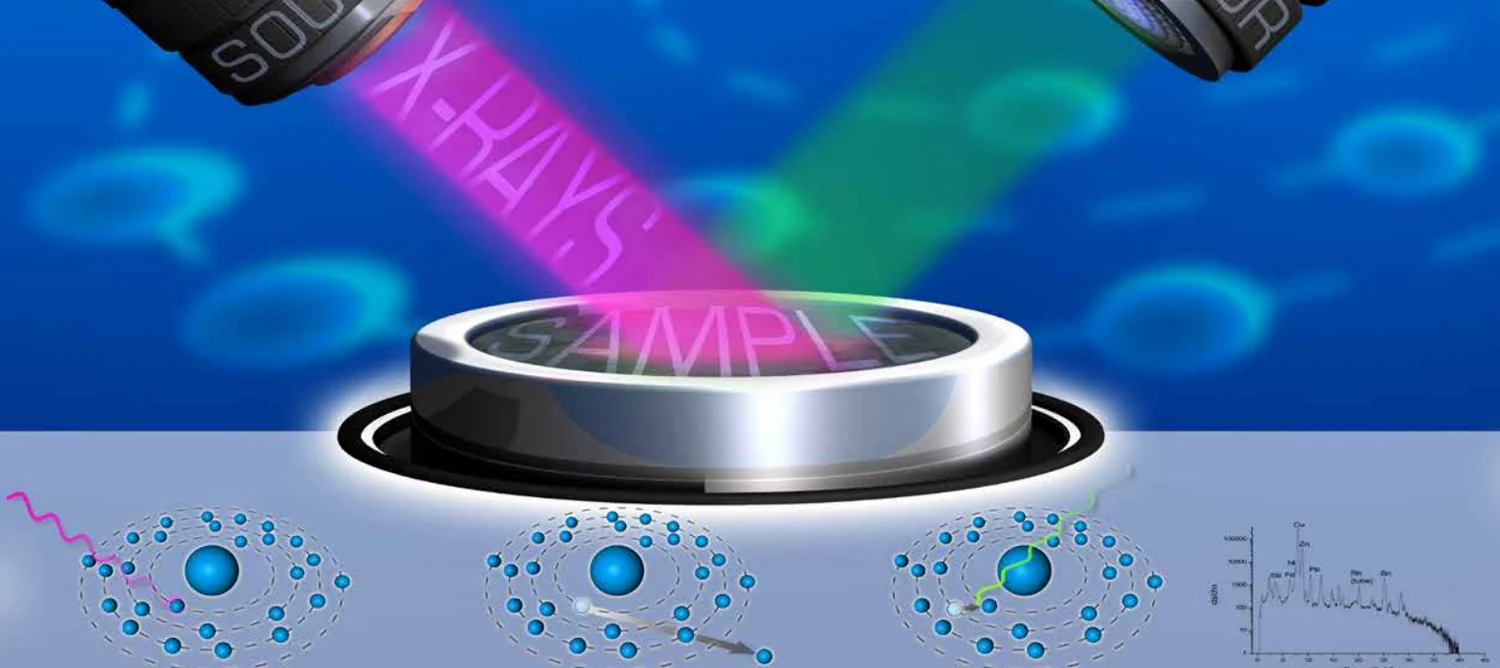
Can one prepared powder automatically serve XRF and XRD?
It may be possible for a defined method, but should not be assumed. Check the preparation's effect on the information required by each technique.
X-ray fluorescence (XRF) and X-ray diffraction (XRD) are both powerful analytical techniques used to study materials, but they serve different purposes and operate on distinct principles. In summary, while XRF focuses on identifying and quantifying elements, XRD is used to analyze the crystal structure and phase composition of materials. Both techniques are complementary and often used together to provide a comprehensive understanding of a material's composition and structure.
X-Ray fluorescence
XRF is primarily used for elemental analysis. It works by directing X-rays at a sample, causing the elements within the sample to emit secondary (or fluorescent) X-rays. These emitted X-rays are characteristic of specific elements, allowing for the identification and quantification of the elements present in the sample
X-Ray diffraction
On the other hand, XRD is used for phase identification and quantification of crystalline materials. It is based on the constructive interference of monochromatic X-rays and a crystalline sample. When X-rays interact with the crystal lattice, they produce a diffraction pattern that can be analyzed to determine the crystal structure, phase composition, and other structural properties of the material.
Retsch solutions to get reliable XRF results
The accuracy and reliability of XRF analysis heavily depend on the correct preparation of samples. Proper sample preparation ensures that the sample is homogeneous and representative of the material being analyzed. One of the critical steps in sample preparation for XRF is grinding. Grinding reduces the particle size of the sample to a fine powder, typically less than 100 µm, which is essential for achieving a uniform distribution of elements within the sample. This uniformity is crucial for obtaining accurate and reproducible results. The complete sample preparation consists of 4 steps
1. Pre-crushing in Jaw Crushers or Hammer Mill HM 200 2. Sample splitting in Retsch Sample Dividers such as PT 300 for larger sample quantities 3. Fine grinding in a Ball Mill or Disc Mill 4. 5. Sample pressing via the Retsch Pellet Press PP 40
If required: Mixing the fine sample with stabilizer Licowax in Mixer Mill MM 400
If a sample splitting is not required, the new BB 250 / DM 200 / Cyclone combination unit is most suitable to pre-crush and fine grind hard and brittle sample e.g. for cement industries in one go without any dust formation. Final finenesses down to 200 µm are obtainable with this solution.
For example, 3 kg limestone with max size 60 mm were ground in the new combination unit, with gap setting 1 mm of the jaw crusher and 0.1 mm of the Disc Mill DM 200. The connection gap was set to 10 mm to allow good sample throughput. After only 10 min, the complete sample has passed both, the jaw crusher and the dis mill with 88 % < 200 µm (61 % < 100 µm). The pre-crushing step requires approximately ¼ of the total time. The time limiting step is therefore the fine grinding. For very large sample amounts, the use of a stand alone Jaw crusher, followed by a sample division and fine-grinding of only a part sample is the best solution.
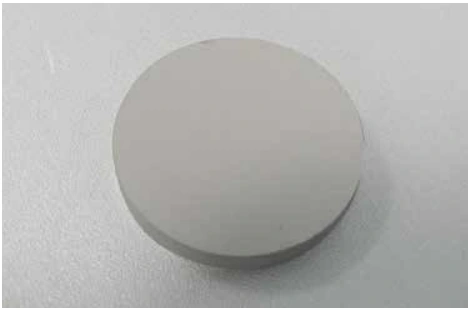
10 g fine ground sample were mixed with 2 g licowax in the MM 400 and the adapter for 4 conical centrifugation tubes for 2 min a 30 Hz. Then the sample was pressed in the PP 40 at 25 t for 30 s to obtain a stable pellet with smooth surface for optimal XRD analysis.
In summary, correct sample preparation, including thorough grinding, is vital for the success of XRF analysis. It ensures that the sample is homogeneous and representative, leading to accurate and reliable results. For easy handling Retsch offers the new combination unit BB250 / DM 200 / cyclone. This the most suitable and straight-forward process to combine pre-crushing with fine-grinding.
Let's talk about RETSCH contribution to XRD analysis
Additionally to the various devices for enabling correct XRD analysis, RETSCH equipment is designed to handle a wide variety of materials, from soft to hard and brittle samples, making it versatile for different applications. The XRD-Mill McCrone, is specifically developed for XRD analysis and offers features such as adjustable power settings and reduced noise levels, enhancing the overall user experience.
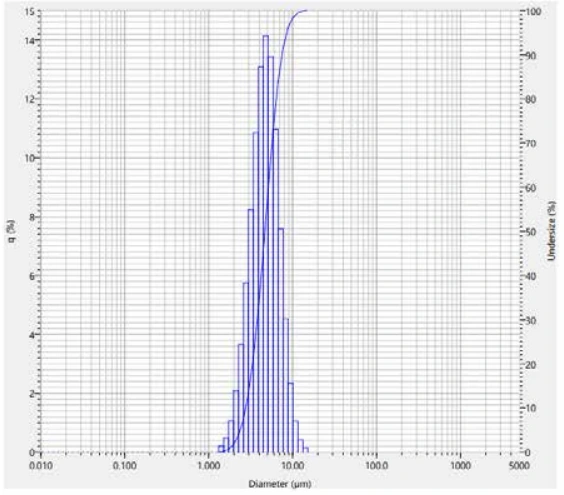
Example: The grinding jar filled with 48 grinding elements was filled with 5 g cement or concrete based sample and 9 ml ethanol. Grinding was performed for 20 min at 1500 rpm. A D90 < 7.6 µm (cement) and < 9.7 µm (concrete) was obtained – ideally for the XRD analysis.
In principle, the MM 400 can be used for pre-grinding sample to the required sample size of 0.5 XRD-Mill mm McCrone is used for the fine grinding step down to < 10 µm. It is also suitable to obtain < 10 particles, usually in just 2-5 min, but a significant amorphization rate of the sample due to the much harsher grinding conditions is to be expected - resulting in less accurate XRD measurement. An alternative to pre-crush samples is using the RM 200.
before
the
Conclusion
In conclusion, proper sample preparation is essential for accurate XRF and XRD analyses. Retsch offers comprehensive solutions for grinding and handling samples, ensuring they are homogeneous and representative. The new combination units, such as the BB250/DM 200/cyclone, streamline the process, making them ideal for various material analysis applications. Additionally, the XRD-Mill McCrone is specifically designed for XRD analysis, providing precise and reliable results.
Plan the configuration for your material.
A preparation designed to improve elemental sample uniformity may affect information relevant to diffraction. Define which properties must be preserved and which need to be changed. Keep reference materials and unknowns comparable within the chosen method, including the final presentation of the analytical portion.
| Consideration | Information to provide |
|---|---|
| Measurement | Elemental composition or crystalline phases |
| Preservation | Properties preparation must not alter |
| Comparison | Reference and unknown handling |
How should the application examples be used?
The results describe the materials and configurations discussed here. Confirm equipment options, contact materials and operating conditions for your own sample before adopting a method. A demonstrated endpoint does not guarantee the same outcome for a different material.
Discuss material testing with Glen Mills or request further information or a quote.