
Does sample preparation establish food authenticity by itself?
No. It supports the analytical input. Authenticity conclusions depend on the appropriate examination and interpretation of the prepared material.
The new generation of laboratory cutting mills: How the SM 50 from RETSCH enables flexible, precise and safe sample processing for food authentication.
The challenges of food authentication
Today, the authentication of food is one of the central tasks of
modern quality control and food safety. Increasingly complex supply chains and rising demands for product safety and traceability require analytical methods that deliver reliable, reproducible and verifiable results. The basis for this is precise sample preparation, as even minimal contamination or loss of certain sample fractions can diminish the significance of the analysis results from mass spectrometry, chromatography or molecular biological analyses. Especially with small sample quantities - such as those that occur the analysis of in random sample controls, expensive raw materials - the complete contamination-free recovery of the sample is crucial. Conventional laboratory cutting mills often reach their limits here: Either they are too large and record high sample losses, or they do not offer the process capability and flexibility for the large number of sample types and quantities that occur in contract laboratories or research facilities.
retained samples or
SM 50: The new benchmark for sample preparation in the laboratory
With the development of the SM 50 cutting mill, RETSCH has addressed these challenges and set a new standard for sample preparation with an innovative design. The SM 50 combines the compactness of a benchtop cutting mill with the performance of larger cutting mills and sets standards in terms of efficiency, flexibility and sample purity thanks to its unique, modular Total Access Concept. VViissiitt tthhee ooffffiicciiaall SSMM 5500 pprroodduucctt ppaaggee..
Total Access Concept: Intuitive handling and user-friendly cleaning
At the heart of the SM 50 is the Total Access Concept, which for the first time offers complete accessibility to all relevant components of the
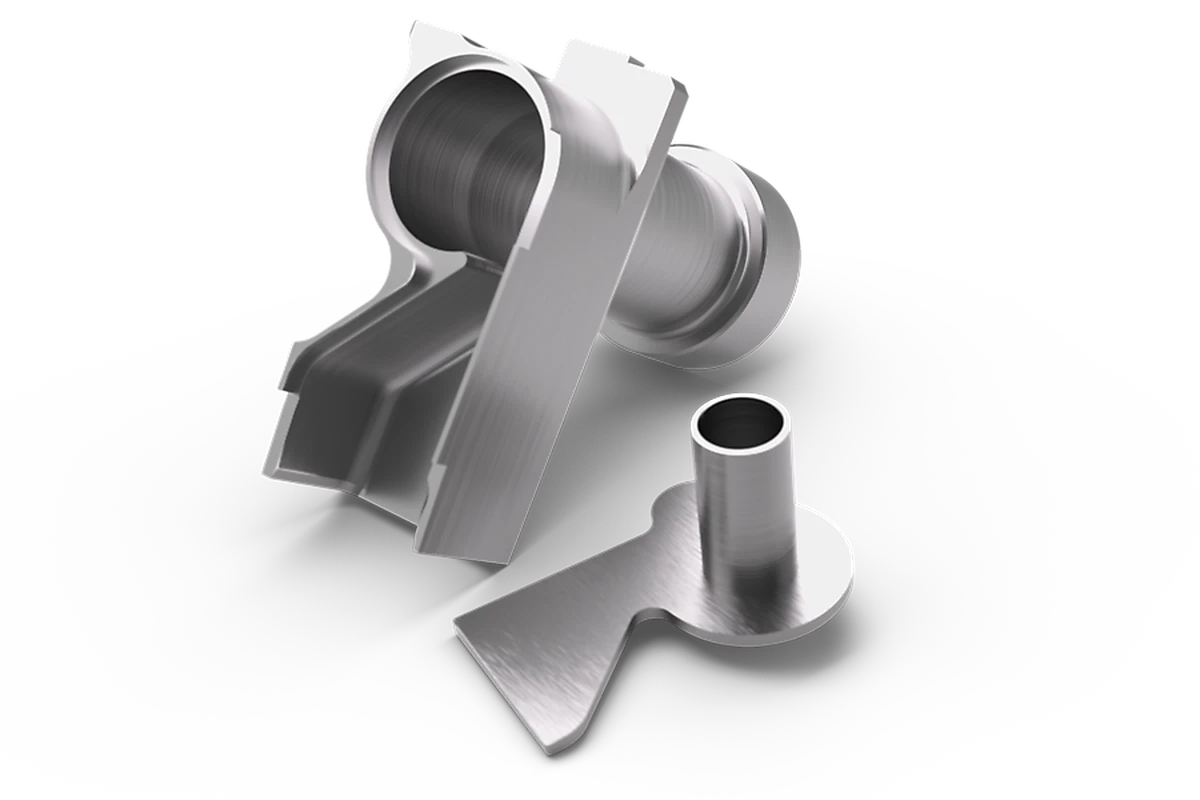
grinding process - from the hopper to the collector. The rotor, sieve and the world's first push-fit milling chamber can be conveniently removed without tools via an easy-to-operate door flap. This enables thorough and quick cleaning and minimizes the risk of cross-contamination. Even permanently installed components such as the hopper, connecting channels and housing have a straight design so that they can be cleaned effortlessly. The milling chamber components can even be cleaned with water and cleaning agents if required - a decisive advantage, especially when analyzing foodstuffs, where the highest hygiene requirements apply.
Maximum contamination-free sample recovery
The smallest sample quantities and their complete recovery are often crucial, especially when authenticating foodstuffs. The SM 50 achieves a sample recovery of up to 100 % thanks to the cyclone firmly integrated in the housing and its airflow-optimized internal design. The cyclone technology ensures rapid material transfer into the collector and minimizes dust formation and heating of the ground material - an important factor when grinding temperature-sensitive samples such as spices, herbs or fatty foods. Optionally, liquid nitrogen can be used to lower the initial temperature in advance or to embrittle soft samples. The removable milling chamber of the SM 50 is available in different materials: aluminum for standard applications, a heavy metal-free version for samples that are tested for heavy metals and a stainless steel version for maximum abrasion resistance. With the interchangeable milling chamber, various grinding tasks can be implemented for the first time without the risk of crosscontamination.
Modularity and variety of materials for a wide range of samples
The modular design enables a quick change between the different milling chambers. This also offers decisive advantages in terms of
cleaning; the overall process capacity can be increased by up to 150 %. The third aspect to be emphasized is the increased technical service life: the most important wear parts are easy to replace, which reduces operating costs and ultimately also takes sustainability into account.
Precise results thanks to flexible technology
The SM 50 offers variable speed control via an intuitive touch display, so that the grinding process can be optimally adapted to each sample and the desired result. An extensive selection of sieves with opening widths from 0.25 to 10 mm allow the fineness to be set - from coarse pre-grinding to fine powder below 250 µm (depending on material properties). The feed hopper accepts sample parts up to 50 x 50 mm, which in most cases makes pre-crushing unnecessary.
Application examples from food analysis
The advantages of the SM 50 are particularly evident in practice: 1. Pre crushing of individual sample pieces like dog chew bones, wood or vegetables with feed grain sizes of up to 50 mm is quick, uncomplicated and reproducible with a sample discharge of up to 100 %. The better alternative to manual pre-crushing. In the laboratory, dog bones with a feed particle size of 80 mm were ground almost residue-free using a 3-disc rotor at 4,000 rpm through a 4 mm bottom sieve.
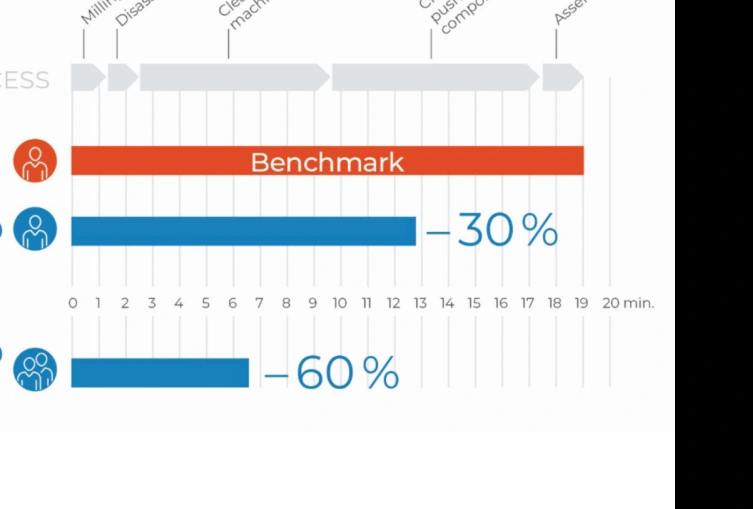
2. Herbs, feed or other bulk materials can be processed quickly one after the other. Thanks to easy cleaning, the grinding process is efficient. With a second set of grinding tools, one sample after the other can also be processed directly. A practical example: 150 ml of herbs were processed at 2,000 rpm through a 1 mm bottom sieve. External cleaning of the grinding tools can now be completed in just 10 minutes. When using a second set, the next sample can even be ground immediately afterwards.
sample types.
Conclusion: Efficient sample preparation is the key to reliable food authentication
The authentication of foodstuffs requires maximum precision and reliability in sample preparation and demands a wide variety of grinding tasks. The SM 50 Cutting Mill from RETSCH sets new standards with its innovative Total Access Concept, modular design and almost complete sample recovery. It enables contamination-free, fast and flexible work - from routine analysis to demanding research projects. This makes the SM 50 an indispensable tool for laboratories that rely on precise results, high efficiency and maximum safety in food authentication.
3. Thanks to the extensive range of accessories for different rotor types and material variants, difficult samples such as slightly greasy and sticky substances, voluminous and light materials (e.g. hay, paper, textiles) or temperature-sensitive samples can be reliably processed. In the laboratory, for example, 100 g of hay was reliably collected in a 250 ml collector using a parallel cut rotor with a 500 mm bottom sieve. (photo top right)
Sustainability and profitability
Thanks to the simple disassembly and cleaning of the most important components, not only is the risk of contamination minimized, but maintenance and operating costs are also reduced. The extended service life thanks to the simple replacement of wear-prone components and the efficient replacement of the milling chambers make the SM 50 a sustainable investment for laboratories with high sample volumes and changing
Plan the configuration for your material.
Connect the cutting setup to the test that will examine identity or composition. Avoid treating a clean-looking chamber as proof that no relevant residue remains. Compare the recovered material, cleaning procedure and subsequent assay requirements as parts of one preparation method.
| Consideration | Information to provide |
|---|---|
| Sample source | Retained portion or spot sample |
| Authenticity method | Required material and target |
| Carryover check | Relevant residues and cleaning |
How should the application examples be used?
The results describe the materials and configurations discussed here. Confirm equipment options, contact materials and operating conditions for your own sample before adopting a method. A demonstrated endpoint does not guarantee the same outcome for a different material.
Discuss material testing with Glen Mills or request further information or a quote.