
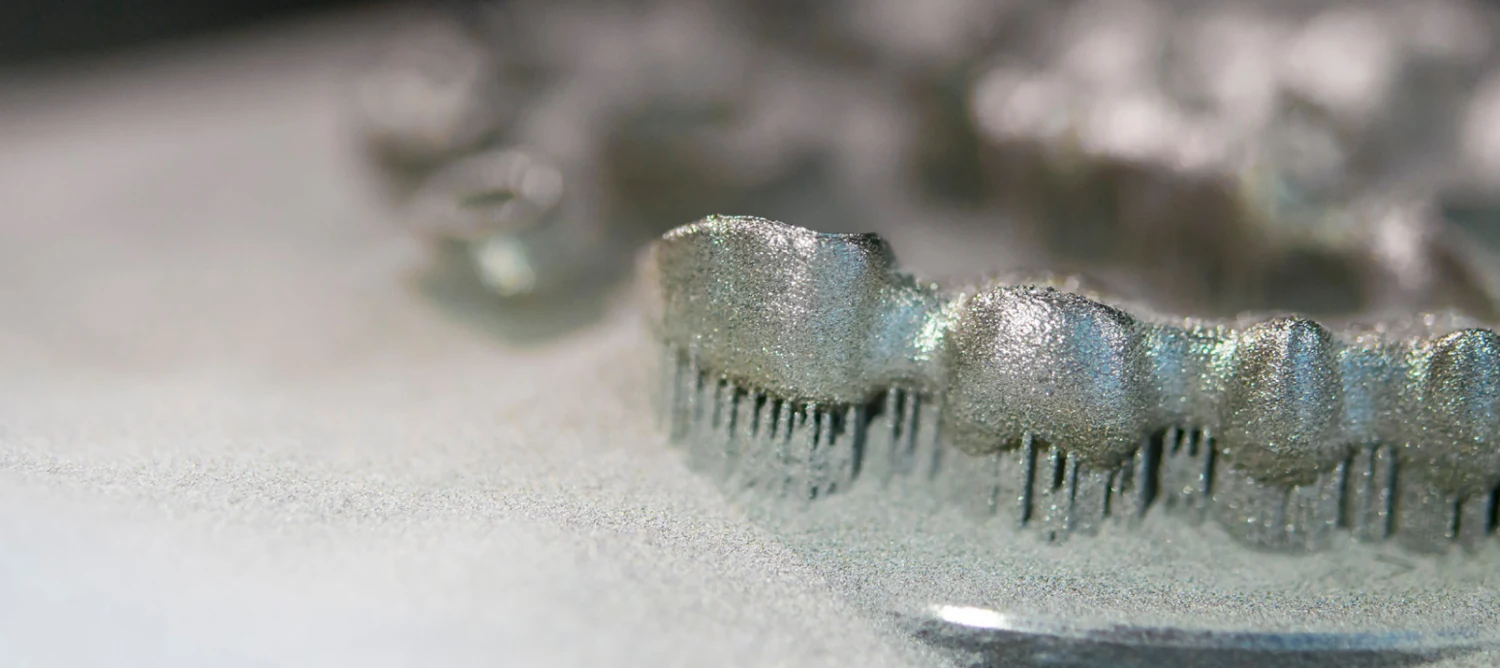
Does passing a sieve qualify dental powder for reuse?
No. Sieving addresses a selected separation task. The full material and production acceptance requirements still apply.
Customized dental prosthesis solutions such as crowns, bridges, and implants are the result of perfectly coordinated collaboration between dental practices and dental laboratories. To ensure the highest level of functionality and aesthetics in dental care, modern dental laboratories combine craftsmanship with state-of-the-art technology.
Advanced manufacturing methods, innovative materials, and high quality standards form the basis for optimal patient care. In order to balance quality and cost-effectiveness, sustainable material cycles are an important factor. Jürgen Stoltze, managing director of the Rehra dental laboratory in Solingen/ Germany, provides insight into the sustainable methods used in his laboratory. "For us, powder processing is a decisive factor in the quality of our 3D-printed work. The use of sieving machines is essential to ensure that only optimally processed powder is returned to the printing process."
Precise processing with a sieving machine: efficient reuse of metal powder
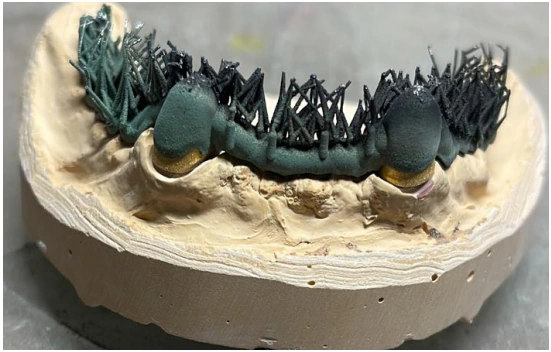
In recent years, additive manufacturing using metal powders, also known as 3D printing, has revolutionized the production of dental components. By building up metal structures layer by layer from the finest powders, dental laboratories can produce high-precision, customized, and complex workpieces efficiently and in a resource-saving manner. This technology enables improved accuracy of fit, shortens production times, and opens up new possibilities in the design of dental prostheses, benefiting both patients and dentists.
Jürgen Stoltze, Managing Director of the Rehra dental laboratory in Solingen
Metallic powders such as cobalt-chromium-tungsten alloys, titanium, and in some cases precious metal alloys are primarily used for additive manufacturing in dental laboratories. These powders are characterized by a very fine grain size, usually in the range of 10 to 30 micrometers, which enables optimal in the manufacturing process.
layer formation and high precision
The choice of material depends on the requirements for biocompatibility, strength, and corrosion resistance. Cobalt-Chromium is frequently used for crowns and bridges, while titanium is mainly used for implants.
The properties of the powder, such as flowability and particle size distribution, are crucial for the quality of the final product and are strictly controlled to meet the high standards required for dental applications.
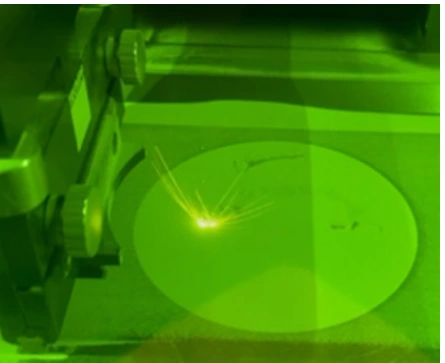
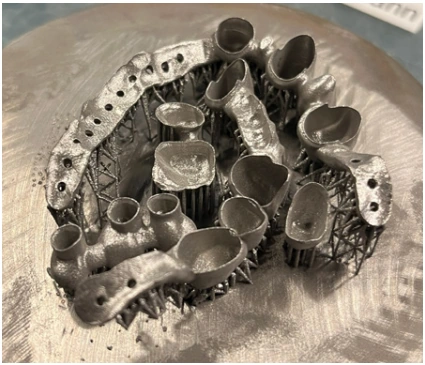
After the additive manufacturing process, unused metal powder often remains. This powder can be recovered and reused to save resources and increase the cost-effectiveness of the process. A crucial role is played by the processing of the used powder, in particular the separation of agglomerated particles, impurities, and grains that are too large or too small. Sieving machines such as the AS 200 digit cA are used to efficiently sieve the powder and sort out agglomerates, etc. before the powder is recycled. At the Rehra dental laboratory, 50 μm or 63 μm sieves are used for this purpose. The amplitude is 0.9 mm. Depending on the nature of the material to be sieved, the entire sieving takes up to 10 minutes.
The Comfort Clamping Unit and digital parameter selection make the process particularly convenient. "We reduce material consumption and at the same time benefit from stable processes and consistently high production quality – this is noticeable throughout the entire production process," says Stoltze.
Optimal recovery of fine blasting sand using sieving machines
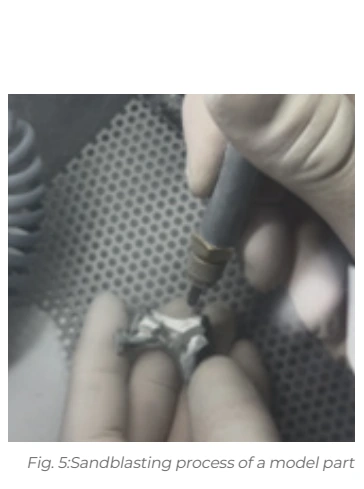
In addition to additive manufacturing with metal powders, fine blasting sand is also used for cleaning, smoothing, and preparing workpiece surfaces. Fine blasting technology enables targeted surface treatment to remove oxide layers. For uniform and controlled processing, a constant grain size distribution of the blasting medium is essential. The fine blasting sands used in dental laboratories usually consist of corundum (aluminum oxide), silicon dioxide, or glass beads and are characterized by a very fine grain size, typically in the range of 50 to 250 micrometers.
After the blasting process, a significant proportion of the fine blasting sand often remains unused and can be recovered to reduce operating costs and minimize environmental impact. The recovery process involves separating worn or contaminated blasting media by means of sieving. This is where sieving machines such as the AS 200 digit cA come into play: they enable precise separation of usable fine blasting sand from dust, fragments, and foreign particles. By precisely adjusting the sieving parameters, sand with the desired grain size can be selected for further blasting processes. This ensures the quality of the surface treatment and at the same time promotes the sustainable use of resources in the dental laboratory. Stoltze: "We see great potential for savings, especially in fine blasting technology. By using Retsch sieving machines, we recover high-quality blasting material and at the same time ensure the quality of our surface treatment."
Conclusion
The processing and reuse of metal powders and fine-grain sand is an essential component of modern dental laboratories. Retsch devices enable precise, reproducible, and economical processes that improve both product quality and sustainability. Dental laboratories benefit from reduced material costs, stable processes, and responsible use of resources - a clear added value in an increasingly competitive environment.
Plan the configuration for your material.
Describe the alloy and its process history alongside the sieve requirement. A successful separation is not a complete qualification of reused material. Record the test portion, retained fractions and cleaning procedure so that handling does not obscure the condition being evaluated.
| Consideration | Information to provide |
|---|---|
| Powder history | Fresh, recovered or blended material |
| Separation requirement | Size fraction and sieve method |
| Quality decision | Additional acceptance tests |
How should the application examples be used?
The results describe the materials and configurations discussed here. Confirm equipment options, contact materials and operating conditions for your own sample before adopting a method. A demonstrated endpoint does not guarantee the same outcome for a different material.
Discuss material testing with Glen Mills or request further information or a quote.