

Is a polymer name enough to choose a laboratory mill?
No. Feed geometry, fillers, material behavior and the downstream objective are also needed to discuss a practical preparation route.
Thermoplastics, elastomers, biopolymers etc.: Decades of R&D activities have led to the availability of well over 10,000 different polymers (types of plastic) – versatile materials that are indispensable to industry. Whether packaging, vehicle parts, electronic devices, medical products, or building materials: objects made of polymers are part of our everyday lives. The wide variety of polymers also places high demands on material processing – especially when it comes to sample preparation for analysis, the development of new materials, or recycling processes.
Efficient plastic grinding: From coarse pre-grinding to ultra-fine powders
The SM 300 cutting mill demonstrates in everyday laboratory use that injection molded parts, thick-walled packaging, or robust samples such as PET preforms can be ground reliably and efficiently. It reliably processes even bulky samples with a feed grain size of up to 80 mm and a collection volume of 30 liters, so that even larger quantities of material can be optimally prepared on a laboratory scale for subsequent analyses or research projects. The comparison shows that even large polymer parts can be crushed by this powerful cutting mill, thanks to its innovative flywheel mass design.
For fine grinding of plastic particles, a finer sieve insert can be used in the SM 300, or - for particularly fine powders - the ZM 300 ultra centrifugal mill is ideal. Thanks to its high-speed grinding principle, the ZM 300 achieves narrow particle size distributions and offers flexible fineness down to 300 µm.
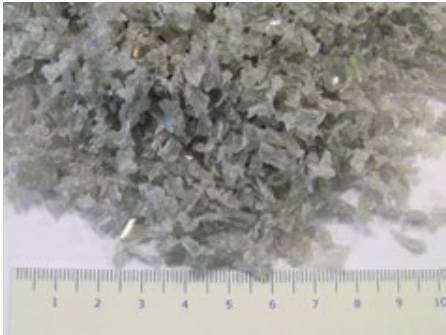
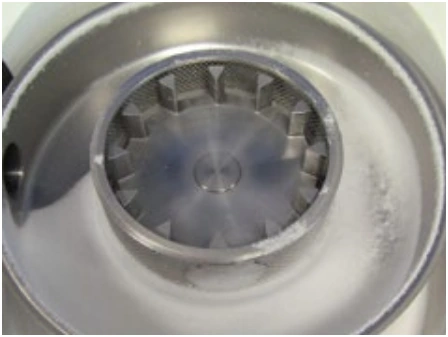
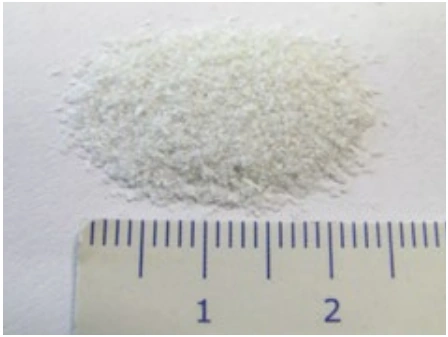
Not all plastics are easy to grind, as some are too soft for fine crushing or are temperature sensitive and may begin to melt due to heat generated during the milling process. In such cases, cooling is essential. Using a cyclone, gentle stepwise milling of small sample amounts, or active cooling - such as mixing the sample with dry ice or freezing it in liquid nitrogen - can achieve remarkable results. The CryoMill is the tool of choice for fine grinding particularly soft or temperature-sensitive samples such as rubber, elastomers, or bio-based plastics to high fineness. By continuously freezing the sample with liquid nitrogen, the material becomes brittle and can then be efficiently ground into a fine powder using the impact and friction forces typical for a ball mill.
Mechanochemistry: Sustainable approaches to plastic recycling
Mechanochemistry uses the energy and fragmentation generated during grinding to induce specific chemical changes in polymers, thereby creating new material properties. This process, known as mechanochemistry, is extremely promising. In ball mills, PET bottle waste is depolymerized through mechanochemical activation. This allows high-quality monomers to be recovered for new PET products without the use of environmentally harmful solvents. This sustainable method makes it possible to efficiently recycle plastics and even produce entirely new materials.
Sieving: Only the right grains get through
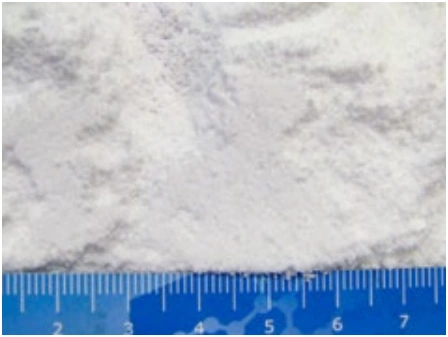
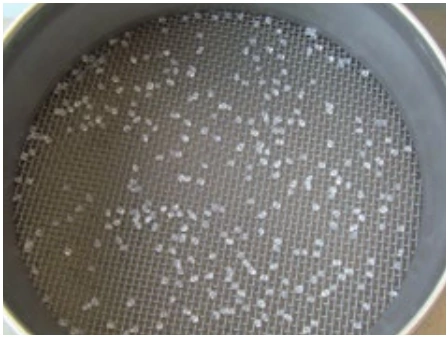
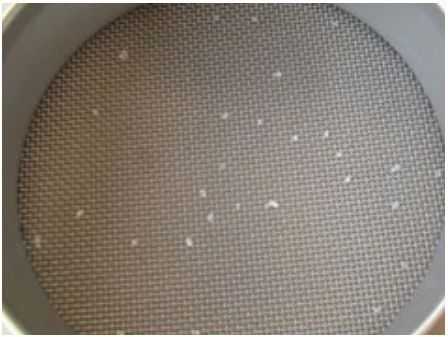
Sieving serves as an essential method for particle size analysis and for dividing materials into precise particle size fractions. Sieving machines such as the AS 450 series, with up to 450 mm sieve diameter, or the AS 200 series, with up to 203 mm sieve diameter, reliably separate powders according to grain size and ensure narrow fractions, as shown in Figure 4. In additive manufacturing or recycling, for example, sieving machines are also used to separate materials into different fractions of interest based on particle size or material type, enabling the production of homogeneous granulates or further processing. For example, to achieve optimal layer thickness and printing precision in 3D printing, precise particle size is required. Retsch sieving machines can be calibrated for measurement accuracy, while the sieves can be purchased with either certificate of compliance (ISO 3310 or ASTM E11), inspection certificate or calibration certificate. Retsch sieving products are durable and user-friendly, ensuring precise and reliable results in industrial applications.
Conclusion: Next-generation processes for sustainable polymer handling
Whether for recycling, material development, or quality control, structured sample preparation is the key to success in polymer processing. Plastic parts are turned into fine, precisely defined powders and granulates using grinding, sieving, and mechanochemical methods. Systems such as the SM 300, ZM 300, CryoMill, and AS 200 series take research, development, and production to the next level. This is how plastic waste and raw polymers are transformed into the materials of tomorrow – ready for innovations that make our future more sustainable and versatile.
Expert tips: How to master even challenging polymer applications
The preparation of polymer samples presents specific challenges and prompts targeted solutions from machine manufacturers: | The heat generated during grinding can cause the polymer to melt, resulting in material loss. In extreme cases, this may lead to blockages and hinder effective particle size reduction. → Using a cyclone and performing stepwise grinding can help prevent these issues. | Contamination from grinding tools can falsify analytical results. To avoid the introduction of heavy metals through abrasion - especially important when analyzing the chemical composition of children’s toys → suitable milling accessories are available. | Electrostatic charging can cause fine particles to adhere to the walls of the equipment, leading to sample loss. → In a cutting mill, using anti-static spray and cyclone connectors made from antistatic materials helps minimize these losses. Some polymers are too soft for effective grinding. → Pre-treatment by cooling, such as embrittlement with liquid nitrogen or dry ice, makes the material brittle and facilitates efficient crushing to achieve a fine powder. Modern mills such as the SM 300, ZM 300 and CryoMill address these challenges with special accessories, temperature control options, and robust designs.
Plan the configuration for your material.
Start with the material's actual form, including thick parts or composite pieces, rather than the polymer name alone. Choose a route that can produce the required analytical portion or research feedstock without overlooking heating and contact-material effects. A staged reduction may be more appropriate than forcing one mill to perform every step.
| Consideration | Information to provide |
|---|---|
| Polymer form | Pellets, parts or composite material |
| Breaking behavior | Brittle, elastic or heat-sensitive |
| Final use | Chemical analysis or material research |
How should the application examples be used?
The results describe the materials and configurations discussed here. Confirm equipment options, contact materials and operating conditions for your own sample before adopting a method. A demonstrated endpoint does not guarantee the same outcome for a different material.
Discuss material testing with Glen Mills or request further information or a quote.