
Does the displayed temperature directly measure the sample?
The thermal-plate reading is a process measurement. Establish the relationship to the sample for the actual configuration instead of assuming the values are identical.
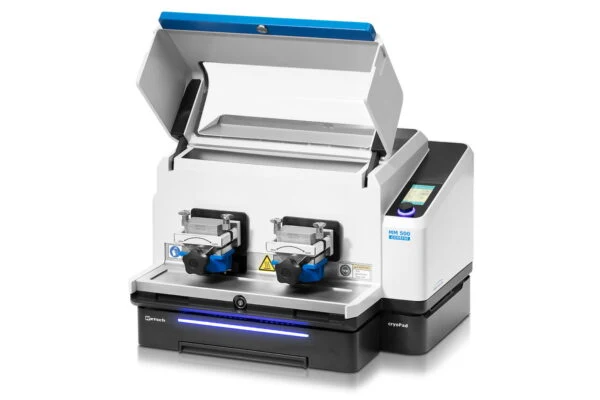
An apparently trivial yet potentially challenging point in a sample homogenisation process is to preserve the sample in its original condition. Sample preparation in ball mills, for example, is based on the physical mechanism of impact and friction. These two mechanisms result in heat development which poses a severe problem for temperature-sensitive materials. The MM 500 control is the first laboratory ball mill especially designed to process temperature- sensitive materials. The MM 500 control monitors and controls the temperature of a grinding process. With its maximum frequency of up to 30 Hz it is a powerful mill for dry, wet and cryogenic grinding processes. Furthermore, the MM 500 control features an innovative concept for sample cooling. The accessible temperature range covers an area from - 100 to 100°C, providing new approaches for sample cooling and cryogenic grinding. Even sample heating is possible.

Cooling concept
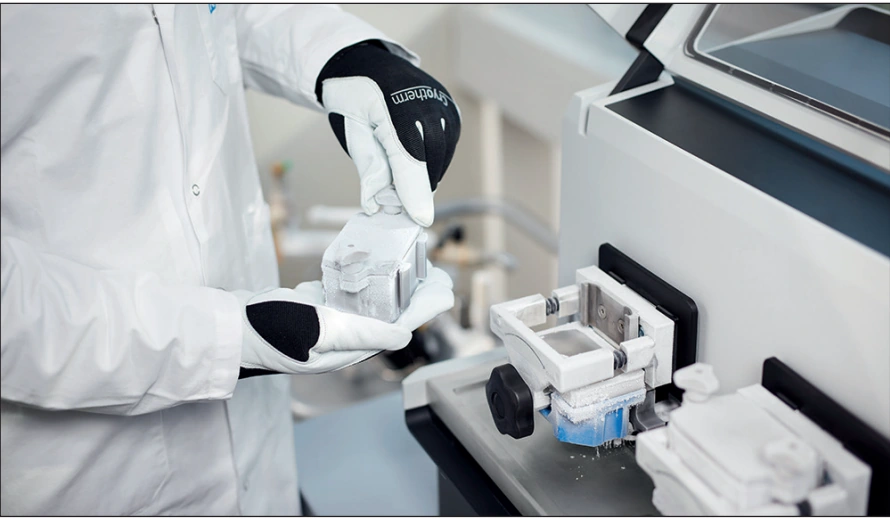
In the MM 500 control, the material is processed in Retsch Screw Lock Jars, which are simply mounted on top of thermal plates for tempering . As the grinding jars are in metallic contact with the thermal plates, heat is effectively transferred from or to the jars. The thermal plates are in turn, tempered by a thermal fluid.
Technical innovations and advanced design
The technical innovations and the advanced design of the MM 500 control offer completely new features, see also Figure 3.
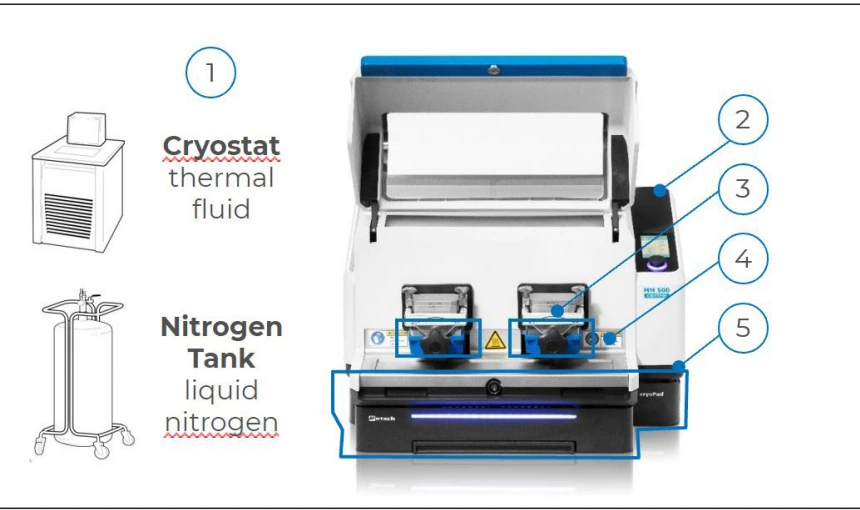
1. Different configurations: For the first time cryogenic temperatures can also be achieved without using liquid nitrogen. The innovative internal tubing system allows to use either liquid nitrogen or another thermal fluid for sample tempering. Cooling can thus be realised with a standard cryostat or a liquid nitrogen tank. 2. Temperature monitoring: The actual temperatures of the thermal plates are continuously displayed during a grinding process, providing valuable information about the heat development inside the jars. 3. Screw lock jars: Screw lock jars allow easy handling of samples and a high throughput by using two jars simultaneously with a size of up to 125 ml each. Grinding equipment of zirconium oxide and tungsten carbide is also available for cryogenic grinding. 4. Thermal plates: Allowing the indirect sample cooling and heating in a range from - 100 to +100°C. 5. cryoPad technology: If liquid nitrogen is used for tempering, the mill must be extended with the optionally available cryoPad device extension. The cryoPad technology allows for the first time to select and maintain a specific cooling temperature for tempering. The accessible area, using liquid nitrogen for cooling, covers a range from -100 to 0°C, in steps of 10. The patented PID (proportional-integral-derivative) system of the cryoPad controls the flow of liquid nitrogen through the tubing system and effectively regulates the temperature at the thermal plates.
Objectives of sample cooling / heating
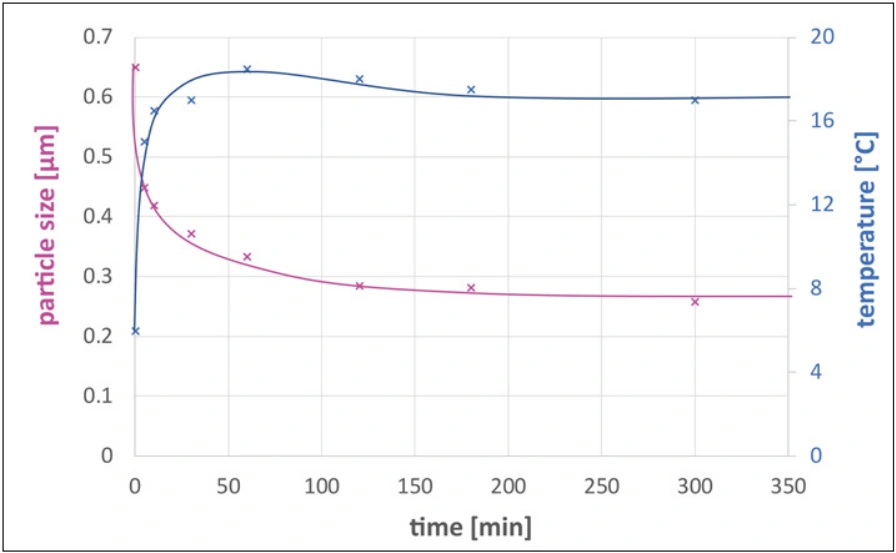
The MM 500 control offers unique benefits to handle temperature-sensitive processes. With this device cumbersome sample precooling or time-consuming grinding breaks are not necessary. Regardless of any specific industry, four different objectives are identified that require sample cooling/ heating: Sample cooling/heating can be required due to various reasons: 1. Preserve substances for analysis: Materials may change their physical or chemical structure, if heated up to elevated temperatures. This means the analyte of interest is not the same as before the sample preparation. Looking at volatile substances or at substances that evaporate at elevated temperatures, also the amount of an analyte can be noticeably modified by the heat development. 2. Embrittling: Ductile and sticky materials must be embrittled for homogenisation in ball mills. Not all samples require a temperature of -196°C as achieved with liquid nitrogen in typical cryogenic mills. The MM 500 control offers a convenient and safe cooling option with high throughput down to temperatures of -100°C. 3. Wet grinding below room temperature: Nano grinding is typically performed in wet grinding processes at high frequencies / rotations per minute. The required high energy input results not uncommonly in temperatures above 80°C. If jars are cooled with a thermal fluid, no cool-down breaks are necessary during the process and after finishing the sample preparation, see example in Figure 4. The temperature at the thermal plates is monitored throughout the whole process. Subsampling to check the fineness during a process is much easier than in other devices. 4. Mechanochemistry: Mechanochemistry and mechanical alloying processes require energy for initiating or intensifying material chemical reactions or the formation of material blends. An active heating of the jar may considerably improve the results of chemical reactions. On the other hand, the temperature regulation of the MM 500 control can also be used to maintain a defined low temperature level throughout the whole process and thereby allows to control the formation of chemical derivatives.
Application examples
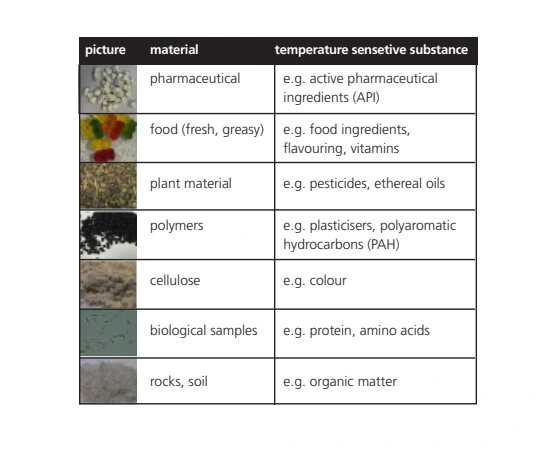
Materials, which are affected by heat development are found in almost every field of application. Agriculture, biology, chemistry, plastics, engineering, recycling, pharmaceutical, food industry, and even geology show a need for sample cooling, see table on the right.
Conclusion
The Mixer Mill MM 500 control is a true World First: the first high energy laboratory ball mill that allows to monitor and control the temperature during a grinding process. This mill offers new perspectives and possibilities for the homogenisation of temperature-sensitive sample materials, cryogenic grinding or wet grinding processes and in the field of mechanochemistry.
Plan the configuration for your material.
Distinguish the selected thermal conditions, the displayed plate temperature and the temperature experienced by the sample. They describe different parts of heat transfer. Fluid supply, jar material and the preparation cycle need to be considered together when discussing a temperature-sensitive application.
| Consideration | Information to provide |
|---|---|
| Temperature objective | Cooling, heating or a defined window |
| Thermal supply | Available fluid and laboratory services |
| Vessels | Material, volume and sample loading |
How should the application examples be used?
The results describe the materials and configurations discussed here. Confirm equipment options, contact materials and operating conditions for your own sample before adopting a method. A demonstrated endpoint does not guarantee the same outcome for a different material.
Discuss material testing with Glen Mills or request further information or a quote.