
What should be checked before changing shaker settings?
Check sample representativeness, sieve condition and loading. Instrument adjustments cannot reliably compensate for an unsuitable test portion or damaged mesh.
Frank Bath Retsch, Inc.
sizing, the classical technique of sieve analysis is often overlooked in favor of more modern methods. Yet, with the right equipment and proper care, sieve analysis yields accurate and reproducible results for a fraction of the cost. As a standalone particle-sizing technique, sieving should be considered when the majority of the particles are over 75 microns. It can also be used for smaller sizes if the results are routinely verified. Even in cases where other restrictions require the use of a particle-size analyzer, sieving can be an excellent complementary technique. In fact, every particle-sizing laboratory should be equipped with both a microscope and sieves, to allow operators to verify the accuracy of their instrument. In order to be able to perform accurate sieving, it is necessary to have: • A representative sample • Test sieves that conform to the relevant standards • A reliable sieve shaker and analytical balance • Error-free evaluation and documentation • Correct methods for the cleaning and care of equipment, especially sieves
Sampling Whenever samples are used for testing, it is vital that they accurately represent the total mass of the original material being evaluated. The most effective way of taking a representative
When fully automatic samplers are not feasible, a sample divider or riffler must be used to divide a large mass of the material into test-sized samples. Otherwise, the final result will not accurately reflect the total mass of the original ma-
terial under investigation
A number of sampling techniques are available, each achieving a particular degree of accuracy, as indicated above by their deviations from the mean size
sample is to install a fully automatic sampler at the appropriate location. If this is not possible, a sample divider or riffler must be used to divide a large mass of the material into test sized samples. If this is not done, the final result will not accurately reflect the material under investigation, leading to significant errors and causing the operators to incorrectly conclude that the analytical instruments or the material are at fault. The comparison shows a number of sampling methods and their expected accuracy.
Test sieves Sieves lie at the heart of sieve analysis, and great care must be taken to ensure that the sieves are of the correct design and are manufactured under clean and controlled conditions. These requirements are described in ASTM E 11 (Standard Specification for Wire Cloth and Sieves for Testing Purposes) and ISO 3310 (Test sieves -- Technical requirements and testing) Parts 1, 2 & 3. Each sieve that meets the standard is provided with a manufacturer’s compliance certificate, along with a permanent label that shows the following:
- Nominal mesh width • Reference to the relevant standard • Material of both sieve and frame • Manufacturer’s identification, along with part number and serial number The sieve frame should have a smooth surface and be easily stackable with other sieves. The mesh must be attached to the frame in such a way that no sample material will become trapped. One of the latest production techniques uses resistance welding, which eliminates the need for solder or epoxy. This improvement avoids potential contamination of the sample, both from the bonding material itself and from previous-sample carryover. Depending on the user’s specific requirements, new test sieves can be purchased with either a basic certificate of compliance or with a more detailed inspection certificate. While both certificates provide basic information on the sieve, the inspection certificate shows the actual measuring data of the apertures and, thus, may contribute to a more precise sieve analysis. Both certificates provide assurances that the new sieves are in compliance, but a more important issue is what
Solids Processing
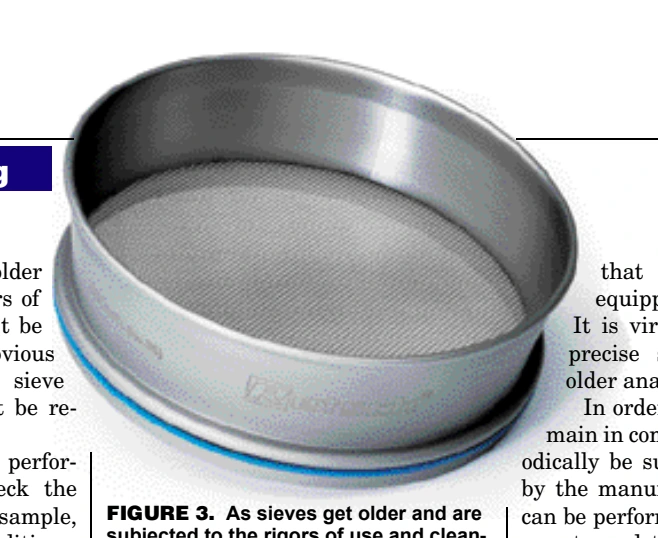
happens as the sieves get older and are subjected to the rigors of use and cleaning. Sieves must be routinely for obvious inspected damage and wear; and if a sieve shows such evidence, it must be replaced immediately. A method of verifying sieve performance is to periodically check the sieving results with a known sample, under exactly the same conditions, using as a control the results that were determined when the sieves were brand new. Another method is to use Standard Glass Spheres (range 212 to 850 mm) from the National Institute of Standards and Technology (Gaithersburg, Md.; nist.gov), see Standard Reference Material 1018.
Sieve shakers In order for particles to pass through an opening in the sieve mesh, the particle and the mesh must be moved relative to each other. This movement is induced indirectly by means of the sieve shaker mechanism; and many factors determine the probability of a particle passing through the sieve. These include the relationship of the size of the particle and the mesh opening, the direction of movement and the orientation of the particle relative to the free sieving surface. Therefore, the sieve movement and sieving time are critical elements to ensure the exact and clear separation of the individual size fractions. In all applications of sieving, including quality assurance, production and process monitoring, and research and development, you must take special care to ensure that sieve parameters are reproducible. Slight variations will offset the results of your analysis, and in turn will erroneously translate into characteristics of the sieved material. Sieve shakers have undergone some major design changes over the past few years, so it is no longer necessary to use overly noisy shakers in order to be in compliance with U.S. or other global standards. Recommended by various organizations as an alternative to the more traditional “shake and tap” sieve shakers, these models use a maintenance-free electromagnetic drive are extremely quiet and can be used safely in the
sieve
shakers
that be equipped with a digital timer. It is virtually impossible to set precise sieving times with an older analog timer .
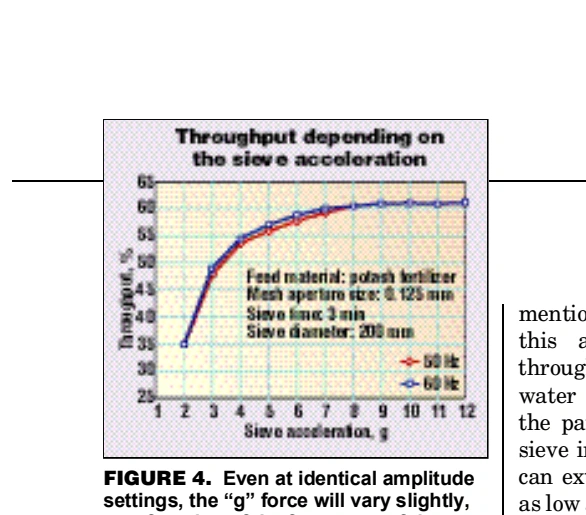
laboratory without sound enclosures. Certain electromagnetic sieve shakers take advantage of the precise and constant mains frequency (In the U.S., this is 60 Hz) and through self-amplification of the resonance, amplitudes up to 3 mm can be achieved, although, most users still adhere to the range between 1 and 2 mm. An advantage of such a design is that, for a given period of time, the same force will be applied to the particles, independent of the number of sieves used, which, because of the different weights involved, can affect the frequency of other electromagnetic sieve shakers. This stability of force allows for precise reproducibility, which is vital when comparing results from different sieve analyzers, either within the same location or from plant to plant. In addition to the amplitude generated by the sieve shaker, another and more important consideration is the “g” forces or acceleration that is generated by the sieve. This force determines how a particle is thrown up by the sieve in order for it to either more readily pass through or remain on the sieve. Even with constant amplitude settings, this force will vary as a function of the frequency of the mains supply, and should always be taken into account when comparing sieving analysis results in countries with different frequencies . A good sieve shaker allows precise setting of the amplitude and “g” forces and also comes equipped with a clamping device that is easy to use and holds the sieves securely on the shaker. Since precise timing is critical for accurate sieve analysis, especially at short sieving times, it is important
In order for sieve shakers to remain in compliance, they must periodically be subjected to recalibration by the manufacturer. Such a service can be performed at the customer site or returned to the factory. When selecting sieve shakers, check with a proposed supplier to make sure that it offers this service; and keep in mind that only sieve shakers with sieving parameters (time, intensity) that are traceable to national standards can be recalibrated at all.
Fiber- or grain-shaped particles Since sieves effectively measure the smallest linear dimension that can pass through the mesh opening, the measurement of particle size on long thin “particles,” such as grain or fibers, produces a result that does not reflect the true three-dimensional shape of the particle. This problem is not unique to sieving techniques, since any analyzer that “sees” particles in all dimensions will always produce size results that are smaller than a true volumebased result. In sieving, however, this problem is exacerbated by the fact that if the material is sieved long enough using a shaking motion, it is theoretically possible that every particle will eventually pass through the sieve, based on its smallest linear dimension. This is also one reason why sieving techniques usually produce particlesize results smaller than other techniques, such as laser diffraction. One way to minimize this problem is to use sieving machines that employ a horizontal sieving motion. This alternate direction will allow the long fibrous particles to remain on the mesh, resulting in more accurate detection of their longer dimension. In the case of sieving machines that use an “up and down” motion, there is much more likelihood that the small dimension will be exposed to the sieving surface through the throwing motion employed in these machines. Therefore, sieving machines based on a horizontal, or two-dimensional movement, will produce results that more accu-
mentioning is that of wet sieving. In this approach, the particles pass through the mesh via the action of water that is constantly flowing over the particles and down into the next sieve in a sieve tower. This technique can extend the effective size range to as low as 20 microns and is the method of choice on wet samples, such as soil. In one method, water is introduced to the top of the sieve stack and allowed to flow down through all the sieves and eventually to waste. A more precise wet-sieving technique introduces water under controlled pressure on all the sieves in a sieve stack, thus ensuring that all size fractions receive an equal chance to pass through their respective mesh sizes. Wet sieving can be performed as a separate technique, or in conjunction with a sieve shaker.
Analytical balance The balance should have a range up to 5,000 g with an accuracy between 0.01 and 0.1 g and the weighing pan must be able to accommodate a 200-mm or
8-inch sieve. Like the sieve shaker, the balance should be able to be calibrated, and it should be supplied with a computer interface. There are many suppliers of such equipment.
Evaluation Sieve analysis, like any other sophisticated analysis technique, must take advantage of existing computer technology in order to ensure accuracy, reliability and compliance with required procedures. Too often, the quality of the results is left to the care and conscientiousness of the laboratory technician, who has to weigh and record the individual sieves and fractions, calculate the size classes and create the distribution curves. This method is time-consuming and contains many possibilities for both human and systematic error. Commercially available software packages offer a solution for this important and often overlooked aspect of sieve analysis. Using electronic data from a balance and sieve shaker, these software packages guide the user
rately reflect the size of the particles and their quality as defined by internal quality-control requirements. Another consideration for the sieving of elongated particles is to use a perforated-plate sieve, as opposed to the more common wire-mesh version. This design has the advantage that the surface of the sieve is much smoother, with less danger of damage to the material being tested. In addition, the holes in the mesh can be circular, oblong or square, depending on the application. Another technique that deserves
Here Comes the Silent and Ultra-Precise NO-TAP Alternative • AS 200
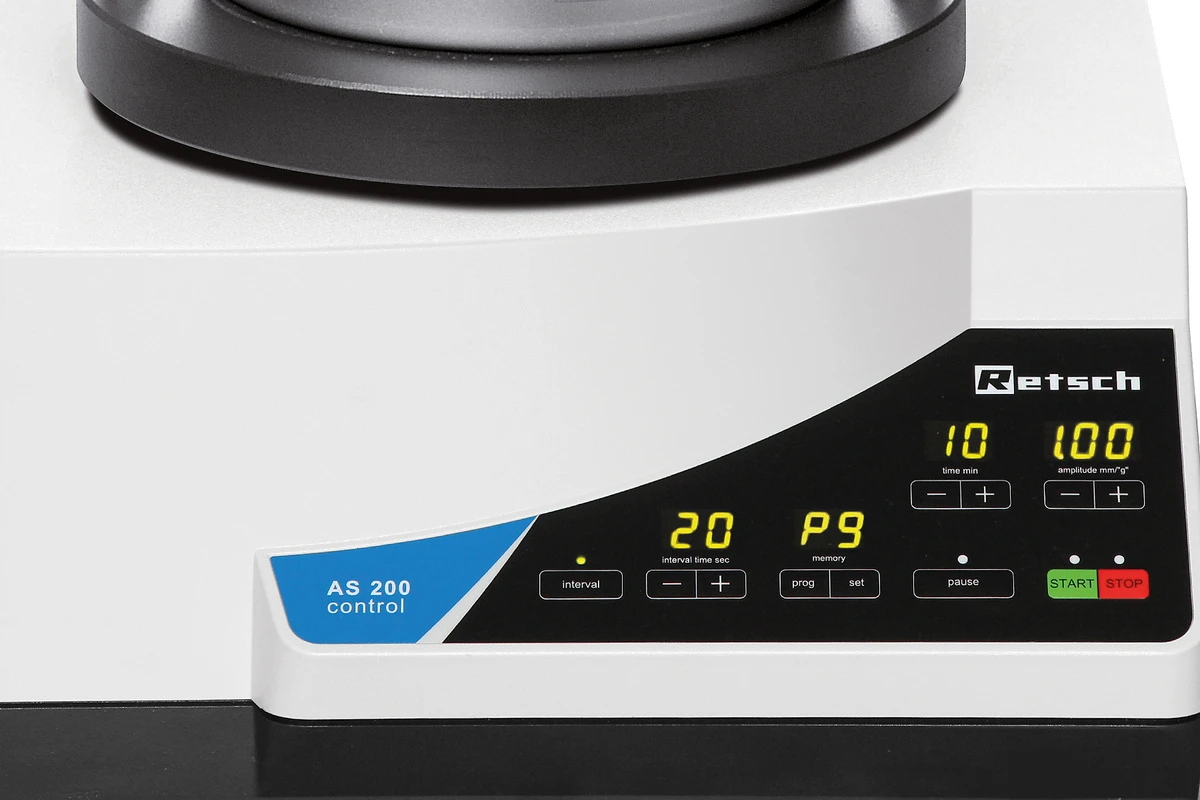
For those who are tired of having to “shut up” their sieve shaker inside a sound cabinet, tie it to a concrete base to keep it in place, or suffer from the horrendous noise, RETSCH AS 200 sieve shakers are the solution. They combine ultimate ease-of-use with the degree of reproducibility and accuracy to satisfy the requirements of modern laboratory standards. Extremely low-noise operation at only 63 dBA Stable bench-top unit that does not require any additional supports • Ultra-precise results within 5-10 minutes • Maintenance-free electromagnetic drive • Convenient “easy clamp” Inspection certificate/recalibration (AS 200 control) Interface for control via PC (AS 200 control) through software “EasySieve” Let us show you how a Retsch sieve shaker can turn your hate into love.
The Ultimate Sieving Machine
Don’t Blame the Instrument… it Might be the Sample
Decisions in Quality Control and R&D that are based on random samples may turn out to be costly mistakes. Retsch Sample Dividers ensure representative samples so that the analysis reflects the true characteristics of the entire bulk. Only such results are reliable and meaningful. Remember… Sample Wrong, Everything Wrong!
through easy to follow steps via the Windows operating system.
Since precise timing is critical for accurate sieve analysis, especially at short sieving intervals, it is important that sieve shakers be equipped with a digital timer
Furthermore, they automatically capture all the individual weights and, at the same time, control the necessary parameters of the sieve shaker to ensure that each sample is treated in exactly the same way. Such software also allows entry of the actual aperture size, which is determined during the certification process and will be slightly different than the nominal size, into the program to provide a more accurate size measurement. Both the tabular and graphical results are automatically calculated and displayed on the monitor before printing. The software allows for selection of one or more of a number of different formats, and for comparison with previous results on the same material, or with control samples for acceptance or rejection of the batch being tested. Results, along with all test parameters and operator information, can be stored for future recall.
Cleaning and care Sieves are high-precision testing instruments, but, in many laboratories, are treated no better than second-rate cooking utensils. Careful maintenance and cleaning of sieves not only help maintain the quality of results but also prolong the life of these products. Fine-mesh textile sieves are particularly sensitive to mechanical stress; and mechanical cleaning with a stiff brush will damage and distort the mesh and weaken its structure. It is dangerous to assume that the parameters under which the sieve was manufactured and calibrated still apply; and, as mentioned earlier, any sieve showing obvious visible damage must be replaced. It is recommended that a second set of “mint condition” sieves be kept to verify the performance of the routinely used products and if the results from the two sieves are found to be significantly different, then a new set be purchased which will be then used as the “mint condition” set of sieves. New sieves should be briefly immersed in a mild solvent bath to remove oily residues. During routine cleaning, care must be taken not to damage the sieve material. Sieves with mesh sizes finer than 500 microns must always be cleaned in an ultrasonic bath using water and a mild detergent, 3 to 5 minutes is usually sufficient. Mesh sizes coarser than 500 microns can be cleaned with a soft brush followed by ultrasonic cleaning. After cleaning, sieves should be rinsed thoroughly and left to dry in as upright a position as possible. Both the analytical balance and sieving machine should be recalibrated at intervals recommended by the manufacturer, and sern viced by that firm if a problem is suspected. Edited by Rebekkah Marshall
Plan the configuration for your material.
Inspect the sieves and define sample loading before adjusting shaker settings. Cleaning, wear and retained material influence separation and mass balance. A documented endpoint helps distinguish a completed separation from a convenient but inconsistent run time.
| Consideration | Information to provide |
|---|---|
| Sieve condition | Inspection and cleaning history |
| Loading | Test mass and sieve stack |
| Endpoint | Repeatability and retained-fraction evaluation |
How should the application examples be used?
The results describe the materials and configurations discussed here. Confirm equipment options, contact materials and operating conditions for your own sample before adopting a method. A demonstrated endpoint does not guarantee the same outcome for a different material.
Discuss material testing with Glen Mills or request further information or a quote.